

Contempt flashes. Weaponised silence. The predator scan. Six nonverbal clusters every manipulator uses - and how to read each one.
You notice it before you can name it. Something feels slightly off - a fraction of a second where their expression doesn't quite match the words. A touch that lingers just long enough to feel like ownership. An argument that ends with you apologising, though you're not sure what for.
This is the territory of manipulative body language: the nonverbal layer that operates beneath conscious awareness, beneath the persuasive words and the plausible explanations. It is where control is exercised most efficiently - because most of us have never been taught to read it.
The field guide below breaks that system open. Not to make you paranoid. Not to turn every conversation into a surveillance exercise. But to give you what manipulators depend on you not having: a working vocabulary for what you're already sensing.
The body tells the truth. The manipulator knows this - which is why they work so hard to make sure you're not listening to it.
Language
of a Manipulator
RULE ZERO: Before you read a single signal, understand this first.
No single gesture, expression, or posture is proof of anything. A gaze that breaks early could be anxiety, neurodivergence, or cultural deference. Steepled fingers can be confidence or habit. A torso turned away could be a bad back.
What matters is clusters - multiple signals appearing together, consistently, across time and context. One tell means nothing. Four tells in the same conversation, repeated across three encounters, in a pattern that always seems to benefit one person at the other's expense: that means something.
Read this guide with that principle as your anchor. The goal isn't to convict. It's to notice. Because noticing - clearly, calmly, without flinching - is where your power begins.
Cluster 01 - The Eyes
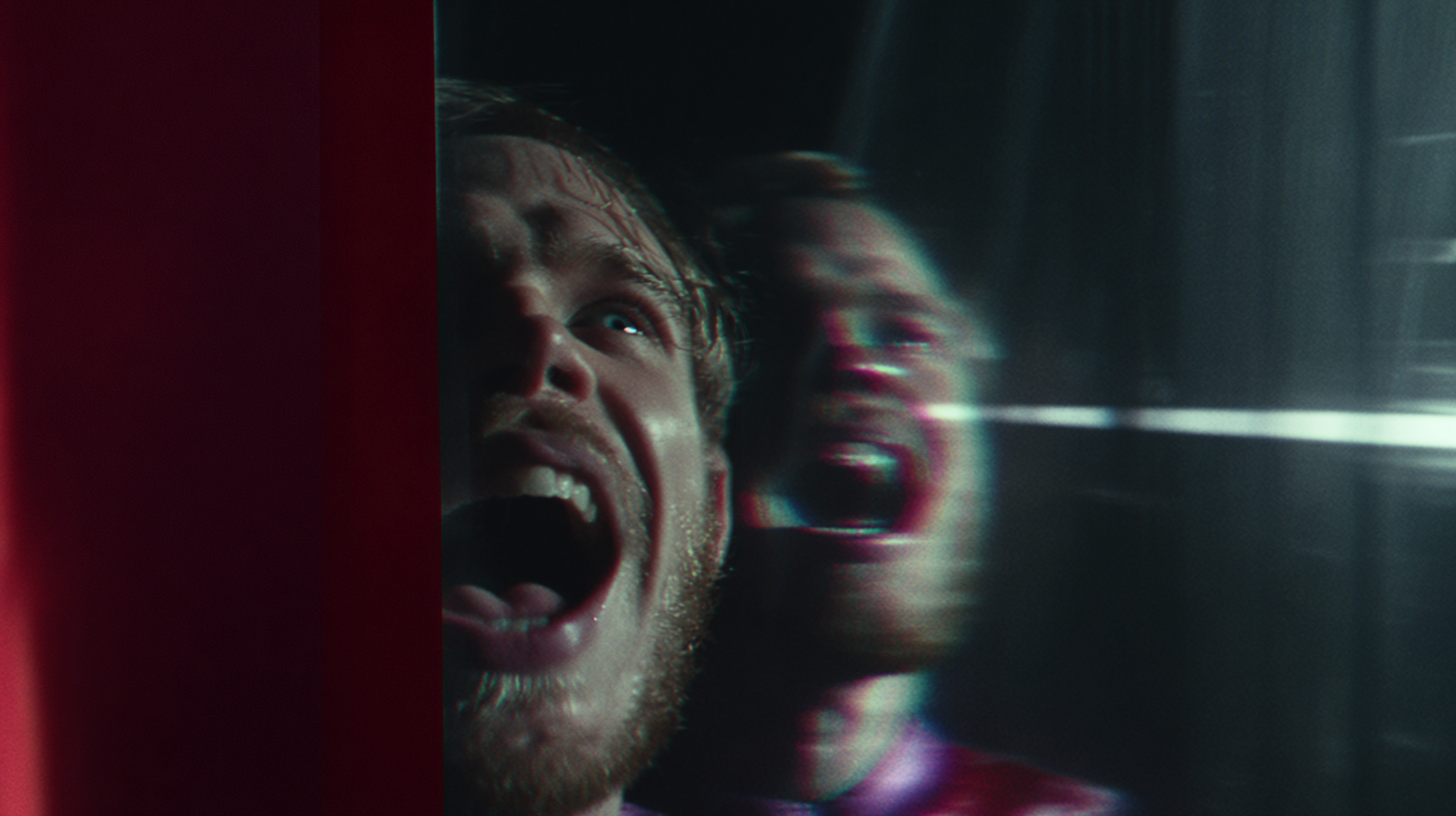
Of all the nonverbal channels, the eyes are the most scrutinised and the most misread. We've absorbed the folk wisdom that liars avoid eye contact, that dominance means holding a stare. Some of that is true. Most of it is incomplete.
The manipulator's relationship with eye contact is not about how much they give - it's about when they give it, and what they're using it for.
The predator scan
Watch what happens when you're mid-sentence and their gaze sweeps the room. Not a glance - a sweep, environmental and purposeful, as if cataloguing exits or weighing options. It lasts less than two seconds. Most people never register it consciously.
What it signals: you are not the priority. You are a variable. The person in front of you is managing the situation, not inhabiting it. This is distinct from distraction or nerves - it has a quality of appraisal that, once you've seen it, you can't unsee.
The timed gaze break
Genuine discomfort with eye contact tends to break after a statement - the relief of finishing. Deceptive discomfort breaks during, a beat before the sentence ends. The gaze exits early because the processing load of maintaining the performance has become too high. It is subtle. It is consistent in individuals who exhibit it. It is worth tracking.
 Matt Hussey
The hard stare
Used in response to challenge or accountability. Prolonged, unblinking contact that most people experience as pressure to look away, to soften, to capitulate. It is a dominance signal, not an intimacy one - and the difference matters. If holding someone's gaze reliably makes you want to retreat, ask yourself whether you're in the presence of warmth or of control.
The calculated soft gaze
The mirror image of the hard stare. Liquid, warm, almost hypnotic - deployed during love-bombing, mirroring, and the early stages of manufactured intimacy. It triggers neurological responses associated with genuine connection. The tell is its disappearance. Watch what happens to the gaze when you disappoint, refuse, or challenge. If it cuts off like a switched light, it was never warmth. It was a tool.
The gaze that made you feel chosen is the same gaze that will make you feel erased. Both are deliberate.
Cluster 02 - Microexpressions

In the 1960s, psychologist Paul Ekman documented something that would reshape how we understand deception: emotions leave involuntary marks on the face that last fractions of a second, too fast to suppress, too brief for most people to consciously register. He called them microexpressions.
Research published in Frontiers in Psychology established that microexpressions last between 1/25 and 1/5 of a second - fast enough to escape notice, slow enough to be learned. They are not magic. They require practice to read reliably. But knowing what to look for - and knowing that what you briefly saw was real - is already a significant advantage.
The contempt flash
A unilateral lip curl: one corner of the mouth pulling back and up while the other remains neutral. It lasts between 40 and 200 milliseconds. It is, in Ekman's research, the most reliable predictor of relational contempt - the belief that another person is inferior, beneath serious consideration. Notably, Dr John Gottman's longitudinal research found that contempt is the single expression most predictive of relationship failure.
When it appears on the face of someone who is simultaneously performing warmth or concern, you are watching the mask slip. Briefly. Involuntarily. Trust what you saw.
 Matt Hussey
Delayed emotion
Microexpressions are involuntary - the amygdala responds before conscious processing can intercept the signal. Genuine surprise lasts between half a second and four seconds and appears before the mind has time to construct an appropriate reaction.
Performed surprise arrives after that gap, staged at the moment the person has decided it would be useful. The delay is small. The pattern, across multiple emotions and multiple interactions, is not.
Duping delight
Ekman's term for the flicker of pleasure - a suppressed smirk - that crosses the face of a skilled deceiver at the moment a manipulation lands. It is not malevolent cackling.
It's closer to a sportsperson's involuntary micro-celebration: a flash of satisfaction immediately suppressed. You might dismiss it as nothing. Ekman's own case studies demonstrated these signals in clinical patients who later acted on concealed intentions. Trust your first read.
Over-performed sympathy
The eyebrows pitched too high. The head tilt held two seconds longer than natural. The "oh no" that arrives before they could plausibly have processed what you said. Genuine empathy is reactive and imperfect. Performed empathy is slightly too smooth, slightly too immediately appropriate. The theatrical quality is hard to describe but immediately recognisable - because you've felt the difference between being heard and being managed.
Cluster 03 - Proxemics
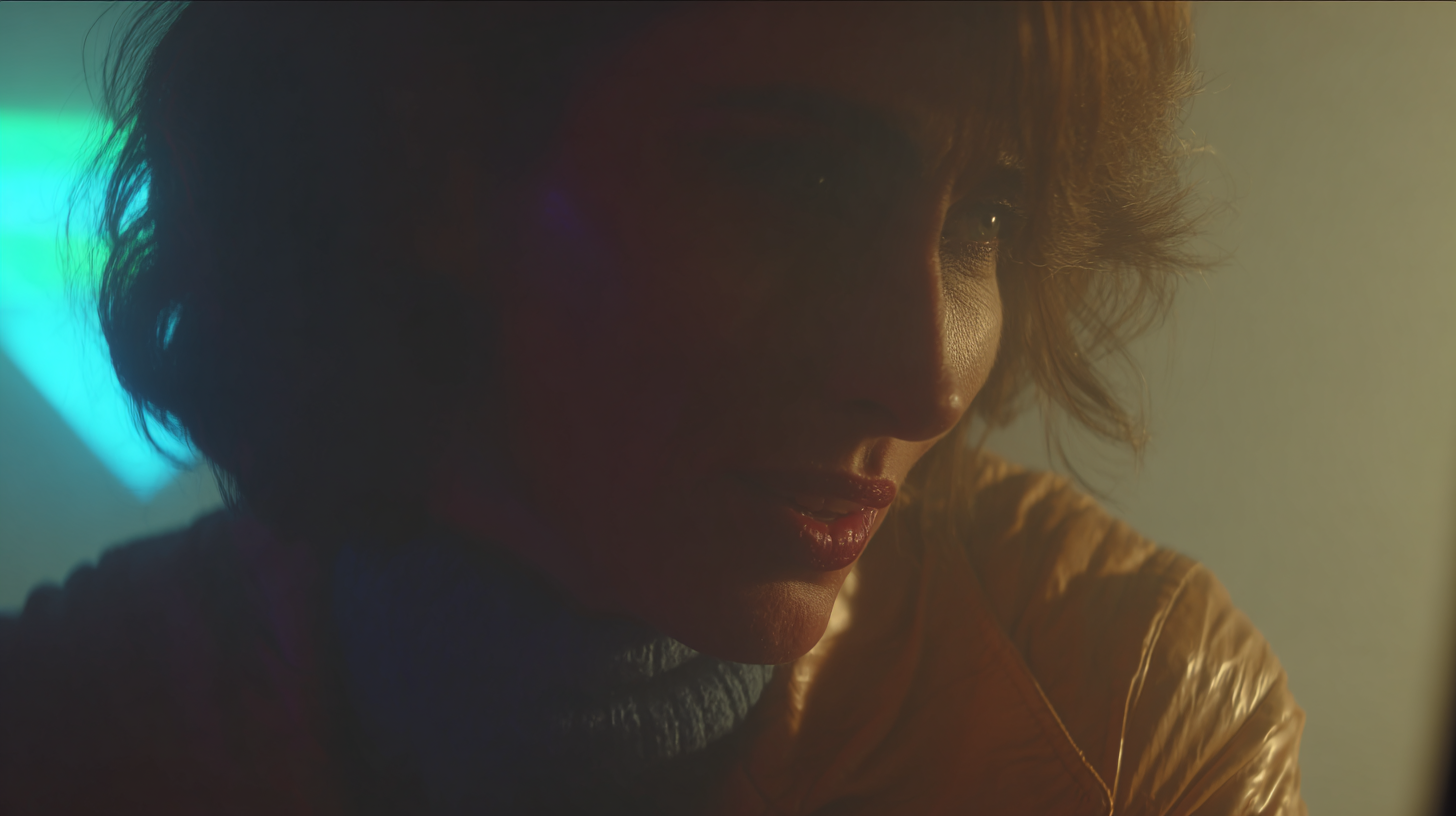
Proxemics is the study of personal space - the invisible architecture we carry around us that encodes our sense of safety, status, and belonging. Anthropologist Edward T. Hall coined the term in his 1966 work The Hidden Dimension, identifying four zones: intimate (0-45cm), personal (45cm-1.2m), social (1.2-3.6m), and public (beyond 3.6m).
Manipulators use space instrumentally. They collapse zones without permission to assert ownership. They withdraw from zones strategically to trigger pursuit. They claim shared space to reduce yours. The body knows when space is being used against it. The mind often overrides that knowledge with social courtesy.
Uninvited advance
The step inside your personal zone that wasn't invited - particularly powerful when you are seated and they are standing, an arrangement that compounds the physical disparity with vertical dominance. Most people respond by adjusting: leaning back, angling the body, accommodating the intrusion. Hall's research demonstrated that entry into personal space by a non-intimate is almost universally experienced as intrusive, even when individuals cannot articulate why. Each accommodation normalises the next.
 Matt Hussey
Strategic touch
The hand on the arm. The brief touch at the small of the back. The shoulder grip that lasts a beat too long. Touch used strategically does several things simultaneously: it creates a physical sense of debt, it signals ownership to observers, and it triggers the brain's bonding mechanisms.
Research published in eLife confirmed that social touch influences oxytocin release and shapes subsequent neural responses - meaning a calculated touch at the right moment can prime you neurochemically for trust you haven't yet decided to extend.
Spatial withdrawal as punishment
The cold shoulder made physical. A sudden and pointed increase in distance - from their usual position to the far end of the room, from their customary proximity to studied avoidance. In relationships with an established intimacy baseline, withdrawal reads as threat: something has changed; warmth must be earned back. This is exactly the response the manipulator is cueing.
Territory claiming
Objects spread across shared surfaces. The expansive posture that occupies both armrests. The position chosen that places them between you and the exit. Proxemic research consistently identifies territory-marking behaviour as a dominance signal that compresses the psychological space available to others - often without a word being spoken.
Cluster 04 - Hands & Arms

The hands are the most expressive part of the body after the face - and considerably harder to control under pressure. They are where composure tends to leak first.
Steepling
Fingertips pressed together, palms apart - the arch of someone entirely confident in their position. Body language researcher Ray Birdwhistell noted that those who view themselves as elite or authoritative tend toward this "restricted steeple" as a marker of confident superiority.
When deployed while listening, it is a superiority signal: I am processing what you are saying, but I have already assessed its value. It is not always manipulative - but in combination with other signals, in someone whose warmth and gesture do not match, it communicates something worth noting.
Concealed palms
Open palms are so strongly associated with honesty and non-threat that their sustained absence registers subconsciously as a discrepancy. Joe Navarro, former FBI nonverbal specialist, documented how hands kept consistently tucked, palm-down, or pocketed throughout conversation create a low-grade unease most people attribute to something else. In conjunction with other signals, it is worth attending to.
 Matt Hussey
Self-soothing tells
Wrist-rubbing. Repetitive hair-touching. The fingertips at the collar. These are regulatory behaviours - the nervous system settling itself under load. When they appear on a face-body split - a composed, confident expression paired with hands that cannot keep still - you are watching two systems in conflict. The face is performing. The hands are telling you the cost of the performance.
The false open arms
Wide, sweeping arm gestures deployed with specific timing - during statements where the speaker wants to signal total transparency, during denials, during the moment they most need you to believe them. The irony is that genuinely open people do not typically announce their openness. The arms that spread widest at the most convenient moment are worth scrutinising most carefully.
Cluster 05 - Posture
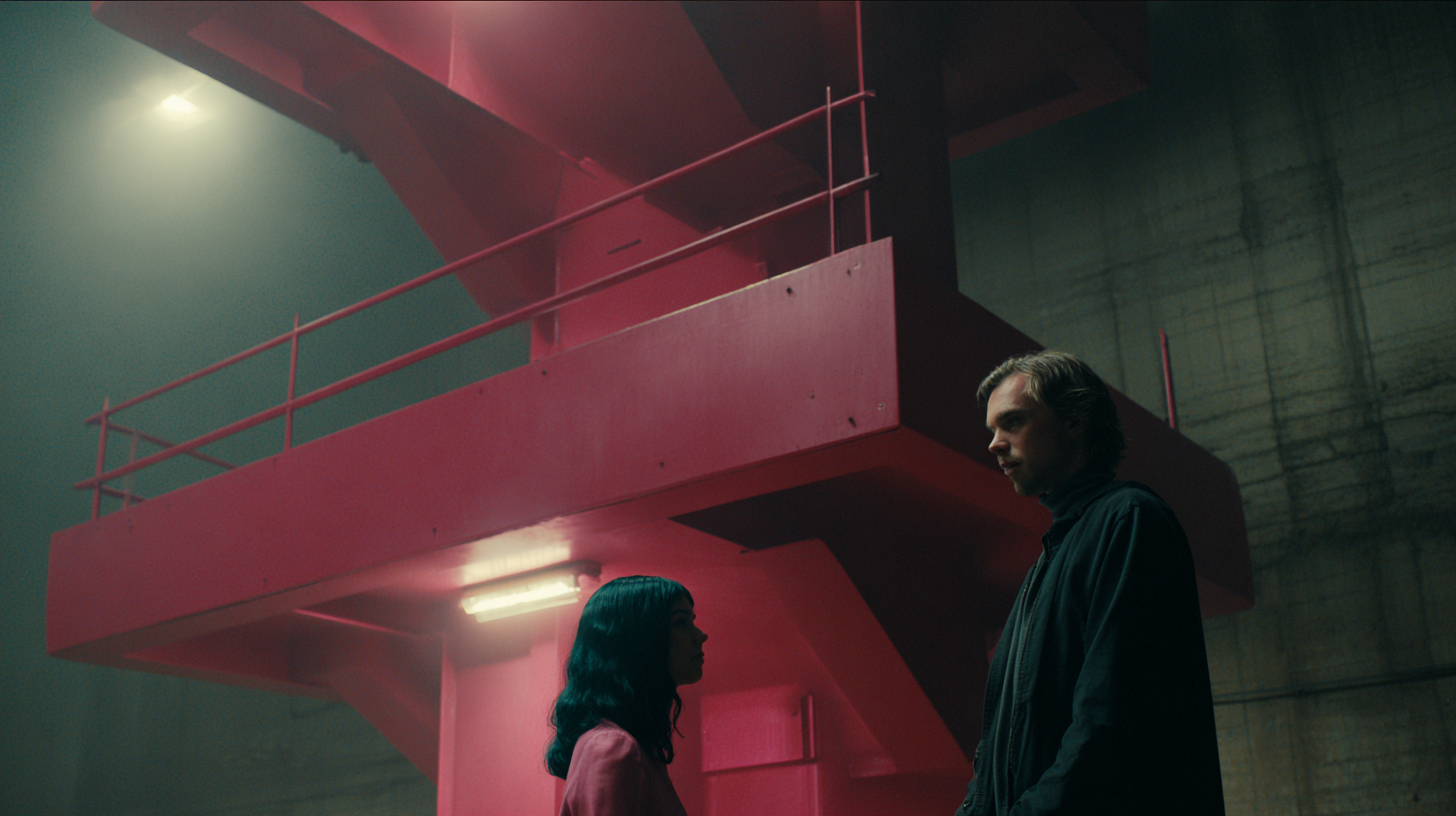
The torso, researchers consistently find, is the most honest part of the body. It is large, difficult to consciously control, and oriented by deep-brain systems that predate our capacity for social performance. While the face is running its programme, the torso is usually telling a different story.
The torso turn-away
The face says warmth. The body faces the door. This body-word mismatch is one of the most reliable tells in the nonverbal vocabulary - not because people are always deceiving when it occurs, but because it reliably signals that the person's orientation is somewhere other than where their words are pointing. In an intimate or professional relationship, it is worth asking: what is the body moving toward? What is it moving away from?
Postural expansion
Arms spread across the back of a chair. Legs occupying the maximum available space. The deliberate puff of physical enlargement used to compress the psychological space available to the person opposite.
Research into dominant body language shows this pattern of deliberate expansion mirrors territorial displays documented across species - and lands in the human nervous system as dominance signal, even when the intellectual mind is busy rationalising it as confidence.
 Matt Hussey
Deliberate mirroring
Mirroring - matching the posture, gesture, and speech rhythm of another person - occurs naturally in genuine rapport and is a sign of attunement. Chartrand and Bargh's landmark 1999 study established the "chameleon effect": people naturally and unconsciously mirror those they feel connected to, and being mirrored increases liking.
Manipulators can learn to do this deliberately and well. The distinguishing feature is its breadth and speed: natural mirroring involves a few elements and lags slightly behind the other person. Deliberate mirroring matches too many elements too quickly, and it can feel, at close range, unnervingly comfortable - the social equivalent of a replica so good it's slightly wrong.
Sudden collapse
The transition, mid-conflict, from expansive to small. Shoulders drop. The voice softens. The physical presence diminishes. It is designed to trigger your protective instincts - the mammalian response to something that has made itself vulnerable.
It dissolves the challenge, redirects the emotional register from confrontation to care, and frequently results in the challenger apologising for the challenge. Watch whether the collapse is followed by genuine change, or whether the expansion returns the moment the heat has passed.
Cluster 06 - Rhythm & Timing

This is the cluster most guides miss. Nonverbal communication is not just about gesture and expression - it is about time. The tempo of exchange. The placement of silence. The pace at which emotion arrives. Skilled manipulators understand timing intuitively, and they use it to regulate the emotional state of the people around them.
Rehearsed lag
There is a quality to emotional responses that have been prepared rather than felt: a microsecond of processing before the expression arrives, a slight mechanical quality in the transition from neutral to feeling.
Ekman's microexpression research established that genuine emotions are involuntary and appear before conscious processing. When that sequence is reversed - when the emotion arrives after the beat - you are watching something constructed, not felt. You cannot always prove it. You can always sense it.
Strategic interruption
Cutting across a sentence at the precise moment the argument is gaining momentum. Not the interruption of enthusiasm or impatience - the interruption of suppression. If you find that you consistently lose the thread of your own thinking in conversations with a specific person, and that the loss happens at specific moments rather than randomly, you are likely watching a deliberate tactic.
 Matt Hussey
Weaponised silence
A pause that is allowed to stretch well beyond the natural rhythm of exchange. Ten seconds of silence after a reasonable question. The absence of response to a legitimate concern. The body fills silence instinctively - with qualification, with apology, with concession. The manipulator knows this. The silence is not emptiness. It is pressure, applied in the direction of compliance.
Tempo control
The accelerated delivery that overloads your ability to evaluate claims in real time. The artificially slowed, grave cadence used to confer false weight on assertions that wouldn't survive scrutiny at normal pace.
Research on nonverbal dominancedocuments how control of conversational pace - speeding up, slowing down, holding silence - is one of the primary mechanisms through which interpersonal power is exercised. If you notice that you feel confused after fast exchanges and strangely certain after slow ones, ask what was actually said - and whether the confidence was earned or installed.
One signal means nothing. Clusters across time mean everything. The pattern is the point.
The Resistance Protocol
Recognising manipulative body language is only the beginning. The next move is yours - and it doesn't require confrontation, accusation, or drama. It requires something the manipulator is less equipped to counter: clarity.
- Name it silently. When you spot a cluster, label it internally. "That was a contempt flash. That was spatial withdrawal." Naming activates your analytical brain and disrupts the emotional pull the behaviour is designed to trigger.
- Buy time. "Let me think about that" is not weakness. In the context of manipulative communication, it is the most powerful thing you can say. It breaks the tempo, removes you from real-time processing pressure, and gives your pattern-recognition system the space to work.
- Check alignment. When words and body diverge, trust the body. Not because bodies never lie - they can, and some people are extraordinarily skilled - but because a sustained mismatch over multiple encounters is almost never accidental.
- Track the pattern, not the moment. Every cluster has an innocent explanation in isolation. The manipulator will supply it readily. What they cannot explain away is a consistent pattern, across multiple contexts, that always resolves in their favour and at your expense. Document it. Sit with it. Trust what you find.
How to deal with a manipulator - the truth

Most of us have been taught to override what our bodies know. To extend the benefit of the doubt, to seek innocent explanations, to trust people's words over our instincts. These are, in general, civilising impulses. In the presence of a skilled manipulator, they are liabilities.
The nonverbal layer doesn't ask for trust. It doesn't require you to believe it. It only asks for attention. The contaminated touch. The smile that comes half a second too late. The silence that is allowed to stretch exactly long enough to make you apologise.
Once you know what to look for, you cannot unknow it. That's not a warning. That's the point. The most dangerous thing you can do to a manipulator is learn to read them clearly and say nothing. Let them wonder what you've seen.