"It's Just a Prank, Bro": How Online Prank Culture Normalises Cruelty and Emotional Manipulation
Online prank culture is reshaping empathy: from YouTube to TikTok, cruelty is now entertainment. This deep dive exposes the psychology behind viral harm.
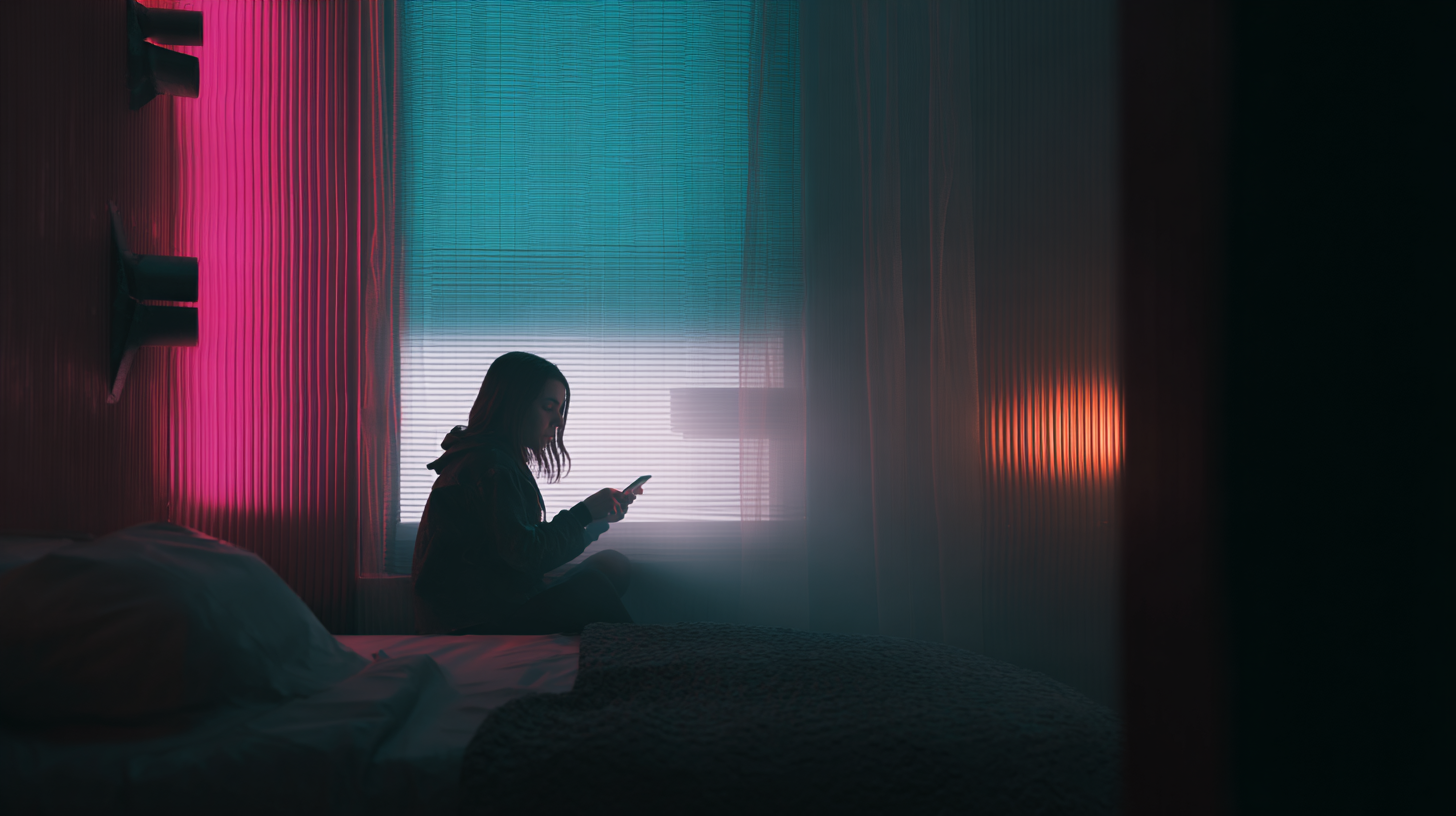
The camera is already rolling when the boy walks into the room. He's maybe thirteen. His friends jump out from behind a door wearing ski masks. One holds what looks like a real knife. The boy screams, stumbles, and bursts into tears before anyone says the magic words: "Relax, it's just a prank." The video earns millions of views.
Look at the comments and you'll see the algorithm's preferred chorus: laughing emojis, applause, "LMAO he's so dramatic." The child's fear becomes a punchline. The humiliation becomes a commodity.
 Matt Hussey
This is the new logic of online cruelty: if it's entertaining, it's acceptable. If it goes viral, it must be fine. And if someone's visibly distressed? That's just a bonus.
Behind the laughter is a darker truth - the internet has turned other people's emotional pain into an ambient soundtrack. What used to be a moral line is now a content category.
And the most chilling part? We barely notice.
The Rise of Prank Culture: From Jackass to Gen Z
The internet didn't invent pranks - but it industrialised them.
Prank culture used to be analogue and self-contained: a camcorder, a skateboard ramp, a group of friends daring each other to do something stupid. Jackass set the template in the early 2000s: danger was the joke, and the punchline landed on the person who volunteered for the stunt.
But the ecosystem changed. YouTube arrived. Then TikTok compressed the format into 15 seconds of weaponised chaos. And somewhere along the way, the prank stopped targeting the willing and shifted toward the unsuspecting.
The early YouTube era made pranks a low-budget, high-yield growth hack. Channels like VitalyzdTV and RomanAtwood built empires on staged robberies, fake bomb threats, pregnancy scares, and emotional ambushes - often blurring the line between performance and harassment. That line has only thinned with time.
 Matt Hussey
On TikTok, the incentives are even sharper: shorter videos, higher virality, and an algorithm that favours anything that produces a "strong reaction." The bar isn't creativity - it's escalation. More shock, more humiliation, more emotional jeopardy.
Today's prank culture is less Jackass and more Stanley Milgram with a ring light. The subject rarely consents. The stakes are emotional, not physical. The cruelty is the content.
And the platforms? They don't intervene. They amplify.
The Dark Psychology Engine Behind It
Strip away the jump cuts, the trending audio, the fake shock faces, and what you're left with is a psychological machine built to blunt empathy and reward manipulation.
Prank culture thrives because it sits on four powerful forces: desensitisation, social contagion, online disinhibition, andvalidation-as-moral-permission. Together, they create an environment where cruelty doesn't just happen - it scales.
Let me explain what each one is and how it works.
1. Desensitisation: When repetition kills feeling
Watch enough videos of people being terrified, humiliated, or emotionally blindsided, and something quietly shifts. The nervous system adapts. What once felt shocking becomes mundane.
Scroll long enough and someone else's distress becomes background texture - content to pass the time.
2. Social Contagion: Cruelty spreads like yawns
Behaviour online is mimetic. What does that mean? Let me give you an example. One creator pushes a boundary; another takes it further. A prank format mutates across hundreds of accounts, each iteration dialling up the stakes.
It's not that people wake up wanting to humiliate each other - they wake up wanting views. And cruelty, as it turns out, is highly contagious.
 Matt Hussey
3. The Online Disinhibition Effect: Screens remove brakes
Behind a camera, you don't feel the full weight of another person's fear. Behind a screen, the audience feels even less.
John Suler's classic work explains why: anonymity, invisibility, lack of authority, and the flattening of social cues. Online, empathy gets diluted, consequences feel abstract, and people cross lines they'd never approach offline.
4. Validation as Justification: Numbers become morality
If a prank gets 3 million likes, is it still wrong? At scale, metrics become moral anaesthetic. Distributed responsibility kicks in - if everyone else is laughing, you feel permitted to laugh too.
Platforms don't show you harm; they show you engagement. And engagement feels like approval. This is the dark engine humming beneath the surface. Pranks aren't just content - they're psychological conditioning.
The Humiliation Economy: Why Platforms Reward Harm
If you want to understand why online cruelty keeps escalating, don't look at the creators. Look at the architecture.
Social platforms run on a simple fuel: engagement spikes. Anything that triggers a sharp emotional response - shock, fear, outrage, second-hand embarrassment - is algorithmic jet fuel. And "prank" content is a near-perfect delivery system.
Humiliation plays well because it's reactive. Someone gets scared, startled, tricked, or emotionally ambushed, and the audience feels something in return. It's a fast, clean hit. For platforms, that makes humiliation a resource. For creators, it becomes a growth strategy.
 Matt Hussey
This is how prank culture quietly shifts into a marketplace where emotions are mined and monetised. The more visceral the reaction, the more the algorithm surfaces it. And the more the algorithm surfaces it, the more creators escalate to compete.
You don't need a mastermind behind the curtain - you just need a system optimised to reward the content most likely to cause a spike in human physiology.
The result is a humiliation economy: a loop where someone's discomfort is converted into metrics, metrics into reach, reach into income. Harm becomes a business model. And once cruelty pays, it spreads.
The Psychological Fallout for Viewers and Participants
The damage doesn't show up in the comments section. It shows up later - in how people learn to feel, or not feel, inside a culture where emotional harm has been flattened into entertainment.
1. Erosion of Empathy
When you consume a steady drip of videos showing fear, humiliation, or distress played for laughs, your emotional system adapts. Psychologists call this emotional desensitisation: the more you see others in pain, the less sharply you feel it.
Prank content becomes a training ground for emotional numbness.
2. Humiliation as a Social Script
If you grow up watching these interactions, you don't just watch pranks - you absorb them. You internalise the idea that deception and boundary-crossing are normal ways of relating. Being startled, tricked, or emotionally blindsided becomes "part of the culture," something you're expected to tolerate with a smile.
3. Distorted Boundaries
The line between play and violation gets blurry. When creators stage betrayals and ambushes for views, it teaches the audience that emotional harm is negotiable - that the reaction is the joke, not a sign something real happened. This corrodes trust in everyday relationships.
 Matt Hussey
4. Performative Toughness
The "victim" in a prank is expected to laugh it off. To show you were hurt is to "not get the joke." Gen Z talk about this constantly: the pressure to perform resilience even when they're shaken. It's a subtle form of emotional suppression - a quiet schooling in not taking your own feelings seriously.
Underneath all of this is a simple equation: If harm becomes entertainment, you learn to stop recognising it as harm.
Case Studies: The Anatomy of Harm
To see how prank culture crosses the line from "light-hearted" to psychologically injurious, look at the moments where the façade slips - where harm becomes undeniable.
Below are four real cases. Each exposes a different psychological mechanism: escalation, deception, humiliation, and the punishment of emotional honesty.
Fake Robbery Prank Leads to a Shooting
In 2021, 20-year-old Timothy Wilks was shot and killed in Nashville during a YouTube "prank" where he and a friend approached strangers with butcher knives as part of a fake robbery bit. The target of the prank believed he was being attacked and fired in self-defence.
The stunt was designed for views; it instead exposed how desensitisation to harm distorts risk perception-not just for viewers, but creators themselves.
"Kidnapping Pranks" on Children Go Viral
Multiple YouTube channels have staged "kidnapping pranks" on their own children, filming their panic as a joke. One particularly harrowing example involved the Stokes Twins, who orchestrated kidnapping-style pranks that caused bystanders to call police. In other cases, parents filmed their children crying while pretending to abandon them or scare them with fake threats.
The emotional distress is real. The comments are filled with laughing emojis.
 Matt Hussey
The "skull-breaker" TikTok Trend Causes Concussions
The "skull-breaker" trend, where two people kick the legs from under a third, spread on TikTok in 2020. Schools reported injuries across the US and UK, including head trauma and concussions. Videos often showed teens hitting the ground hard, with their pain used as the joke.
This is behavioural contagion in action: a prank format mutates into widespread imitation without creators or audiences recognising the real risk.
The Target Becomes the Villain
When a TikTok creator staged a "breakup prank" on her boyfriend - pretending to end their relationship while secretly filming his reaction - the video went viral. The boyfriend was visibly devastated. But instead of empathising, commenters mocked him for crying and accused him of being "weak." Others told him to "man up" and "stop being dramatic."
The emotional pain wasn't just ignored - it was reframed as comedic failure.
This case captures a common dynamic: the person harmed becomes the punchline, and the social penalty falls on the one who shows real emotion.
Why This Matters: The Cultural Shift Beneath the Laughter
Prank culture isn't just a content trend - it's a temperature check on what we're becoming.
When cruelty becomes casual, it signals a deeper shift: we are learning to treat other people's distress as ambient noise. Not because we're inherently unkind, but because the systems we live inside keep rewarding the wrong things.
Three cultural forces collide here.
1. Platforms Are Training Emotional Reflexes
When humiliation is algorithmically amplified, it doesn't just entertain - it educates. You learn, quietly but repeatedly, that shock and embarrassment are socially valuable. That emotional harm is a valid attention strategy. That other people's fear is a resource.
This is what scholars have warned about in the broader attention economy: the system rewards intensity, not integrity.
2. Cruelty Is Becoming a Public Performance Norm
The more we see people startled, betrayed, or humiliated for laughs, the more these behaviours become part of everyday scripts - especially among young people navigating identity in front of an audience.
This is classic social learning: behaviour repeated in your environment becomes behaviour you view as normal.
 Matt Hussey
3. Empathy Is Being Crowded Out
Humans aren't wired to feel full-spectrum empathy for an endless feed of strangers - and platforms exploit that. As viewers adapt to high-frequency exposure to shock and distress, emotional sensitivity dulls. Over time, pain stops registering as pain; it becomes just another beat in the scroll.
That erosion doesn't stay online. It shows up in how we relate offline - a subtle narrowing of our emotional bandwidth.
How to Reclaim Empathy in a Disinhibited World
There's no rewinding the algorithm, but there are ways to loosen its grip.
One pathway is language. Media literacy research shows that when people can name emotional manipulation or boundary-crossing in content, its normalising power weakens. Teaching young viewers to recognise staged distress or non-consensual "humour" makes the joke land differently - often not at all.
Another lever is context. Platforms already label misinformation and graphic content; they could just as easily flag staged pranks, fabricated scenarios, or trends linked to real-world harm. Transparency isn't censorship - it's a brake on passive consumption.
 Matt Hussey
Norms matter too. Social psychology has shown repeatedly that when groups signal that a behaviour is unacceptable, the behaviour declines - whether it's bullying in schools or cruelty online. Consent shouldn't be a niche value; it should be the baseline for anything framed as "comedy."
And then there's the creators themselves. The accounts that endure aren't the ones escalating harm; they're the ones building trust. Parasocial research shows audiences bond more deeply with warmth, authenticity, and connection than with spectacle. Cruelty is fast; connection is durable.
Small recalibrations. Not moralising, not panic. Just finding our way back to a culture where laughter isn't built on someone else's fear.