How Your Data Is Used to Nudge Your Behaviour-Without You Noticing
How companies use personal data, psychology, and emotional nudging to influence Gen Z's choices-often without awareness or consent.

We like to believe the internet expanded our freedom. Infinite options. Infinite voices. Infinite choice. But behavioural science has spent the last half-century demonstrating something far less flattering: when choices multiply, autonomy shrinks. Under cognitive load, humans do not carefully evaluate options-we default, shortcut, imitate, and comply.
Digital platforms didn't invent this weakness. They industrialised it. Today's platforms do not wait for you to decide. They reorganise the environment before you do-filtering what appears, when it appears, and how it feels to encounter it. Your sense of agency survives, but mostly as theatre.
You scroll. You click. You "choose." But the decision has already been shaped upstream.
Every interaction feeds a surveillance loop: how fast you scroll, what you linger on, what you ignore, what you hesitate over. These micro-signals don't just reveal preference; they reveal susceptibility. Are you impulsive or cautious? Anxious or novelty-seeking? Comforted by familiarity or provoked by threat?
Once that pattern stabilises, platforms stop predicting what you like and start predicting what you'll do. This is where the illusion hardens.
 Matt Hussey
Behavioural economists have long shown that humans rarely optimise. We satisfice-we choose what's "good enough" given limited time, attention, and energy. In digital environments engineered for speed and overload, that limitation becomes a vulnerability.
Defaults matter more than arguments. Framing matters more than facts. Order matters more than intention. What looks like personal freedom is often just a highly personalised corridor.
And crucially, this form of influence doesn't feel coercive. There's no command. No pressure. No visible force. Just an environment quietly arranged so that one option feels easier, safer, more obvious than the rest.
This is why modern influence rarely announces itself. Power no longer needs to shout when it can simply structure the menu. You're not being told what to choose. You're being shown what's available.
This essay explores how this system works, why it was built, and how to break from it.
From Personalisation to Psychological Profiling

Personalisation sounds benign-helpful, even. Who wouldn't want content, products, and messages "tailored to you"? But there's a quiet sleight of hand buried in the term.
Personalisation is not primarily about you. It's about reducing uncertainty. At scale, platforms are less interested in your tastes than in your predictability. What matters is not what you explicitly say, but what your behaviour quietly reveals under repetition.
Every click, pause, scroll, and hesitation becomes a psychological data point. Over time, these signals are aggregated into something far more intimate than a shopping profile: a probabilistic model of your inner life.
This is where personalisation crosses into profiling. Modern platforms infer traits users never knowingly disclose-impulsivity, emotional volatility, sensation-seeking, loneliness, political malleability. These aren't guesses. They're statistically derived correlations drawn from millions of comparable behavioural patterns.
You don't need to say you're anxious. Your scrolling already has. Psychometric research has shown that digital exhaust-likes, follows, dwell time-can predict personality traits as accurately as close friends, and in some cases more accurately than partners. The self becomes legible not through confession, but through habit.
 Matt Hussey
Once inferred, these traits don't just describe you. They shape how you're approached. An impulsive user sees urgency cues. An anxious user sees reassurance. A high-reactance user sees defiance framed as autonomy.
The system doesn't persuade everyone the same way. It matches influence to psychological contour. This is not mass manipulation. It's bespoke behavioural steering.
And crucially, none of this requires explicit consent or conscious awareness. Profiling happens beneath the threshold of introspection. You feel seen, understood, even comforted-without realising you've been categorised.
This is why the ethical line is so difficult to name. Nothing has been taken. Nothing has been demanded. And yet something essential has shifted.
Your inner tendencies-once private, fluid, contextual-are now stabilised into commercial and political assets. Who you might become is quietly priced into how the system treats you next.
The danger isn't that platforms know us. It's that they know which version of us is easiest to move.
Pre-Suasion: The Decision Before the Decision
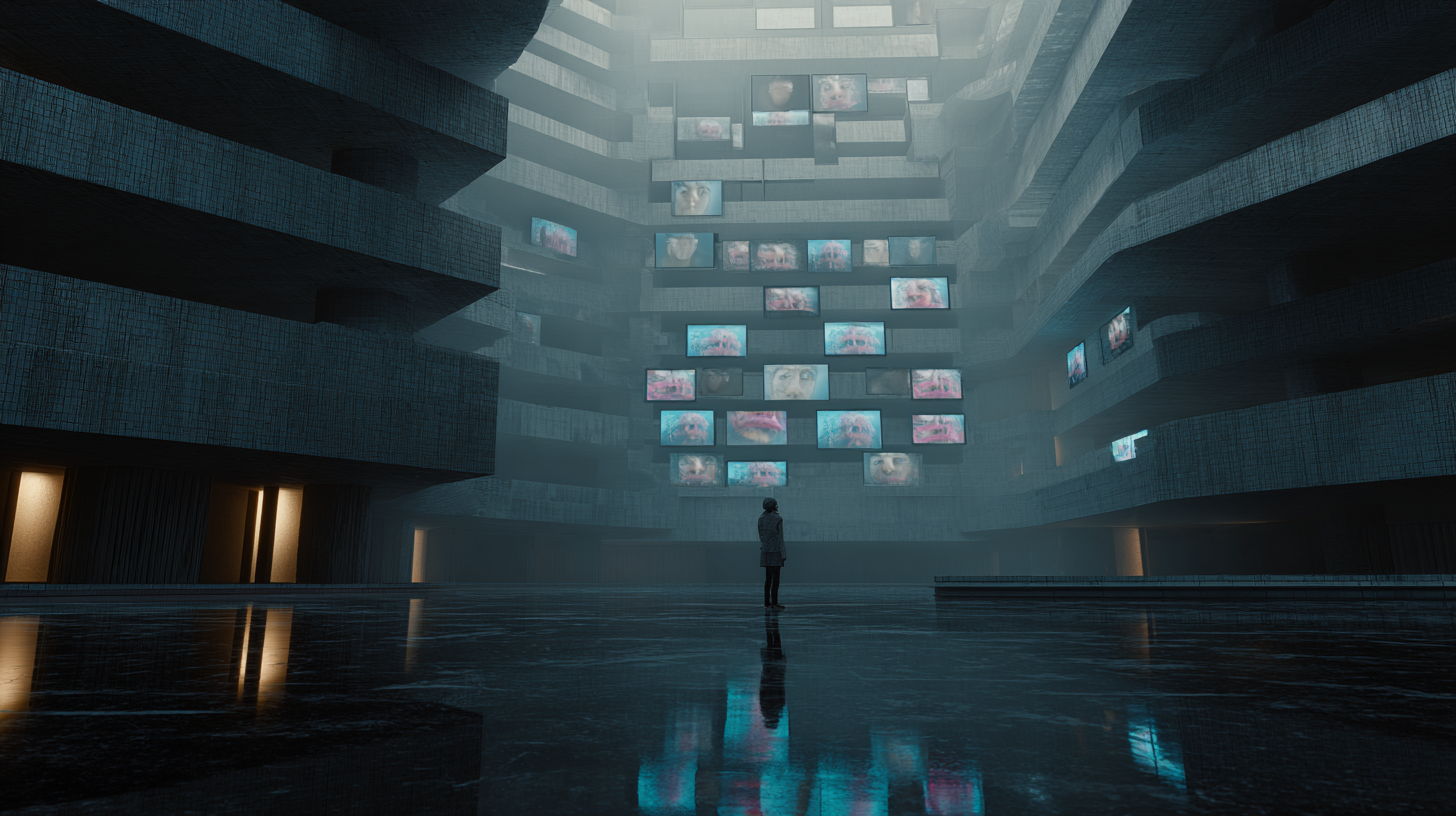
Most influence doesn't happen at the moment you choose. It happens earlier-quietly, invisibly-by shaping what feels relevant, safe, threatening, or desirable before a decision ever appears.
This is pre-suasion: the art of arranging attention and emotion in advance so that when the choice arrives, it feels obvious.
Digital platforms are exceptionally good at this because they don't just deliver messages. They control context-what surrounds the message, what mood you're in when you encounter it, and what identity is activated at that moment.
Before you see an ad, your feed has already done some work:
- It has elevated certain emotions (outrage, longing, insecurity, belonging).
- It has primed a version of you-consumer, citizen, victim, rebel.
- It has narrowed the field of possible interpretations.
By the time the "choice" shows up, you are already leaning. This is why persuasion today rarely looks like argument. Facts are inefficient. Debates are noisy. What works better is orientation: directing attention toward certain cues while making others fade into the background.
 Matt Hussey
Algorithms learn which emotional states make users most pliable-not in a cartoonishly evil way, but in a brutally pragmatic one. Calm users scroll less. Content users log off. But users who feel unsettled, affirmed, indignant, or incomplete stay.
So platforms learn to prepare those states. A user who hesitates is shown social proof. A user who feels excluded is shown belonging. A user who feels morally charged is shown certainty.
The message doesn't need to convince. It just needs to arrive at the right psychological moment. What makes pre-suasion especially potent is that it feels self-generated. You don't experience it as pressure. You experience it as alignment-this feels right, this speaks to me, this is what I was already thinking.
But that sense of resonance is often manufactured. The environment has been tuned so that certain thoughts arise more easily than others. Alternatives aren't banned; they're simply harder to access, slower to feel, less emotionally available.
This is not mind control. It's something more unsettling. A system that doesn't tell you what to think- but makes some thoughts far easier to think than others.
Emotional Regulation as a Platform Service

For most of human history, emotional regulation was social.
We learned how to calm down, cheer up, feel seen, or feel steadied through other people-faces, voices, touch, shared time. Regulation happened between nervous systems, not inside machines. Platforms have quietly stepped into that role.
Not by offering care in any meaningful sense, but by learning which emotional states keep users engaged-and then optimising for them. This is the crucial shift: platforms don't just reflect how you feel. They learn how to modulate it.
Through constant feedback, algorithms discover which emotions extend session length, deepen immersion, and increase responsiveness. Again and again, the same pattern emerges: emotionally settled users disengage. Dysregulated users stay.
So feeds are tuned not for wellbeing, but for emotional yield. Outrage sharpens attention. Insecurity drives comparison. Longing sustains hope without resolution.
Content is sequenced to push users toward these states, then partially relieve them-just enough to keep the loop alive. The result is a rhythm of disturbance and soothing, agitation and reassurance.
 Matt Hussey
This is classic intermittent reinforcement: the same mechanism used in gambling, variable reward schedules, and addiction design. You don't know which post will comfort you, provoke you, validate you, or unsettle you-but you know one of them might.
So you keep scrolling. Over time, platforms become informal mood managers. They're not experienced as tools, but as emotional environments-places people go when they're bored, lonely, anxious, or numb.
This is especially consequential for Gen Z, whose emotional lives have developed alongside these systems. Feelings that once might have passed through friends, families, or solitude are now routed through feeds. And here's the darker turn: once a platform becomes part of how you regulate yourself, it gains leverage.
A system that helps calm you can also unsettle you. A system that comforts you can also withdraw comfort. A system that learns your rhythms can gently destabilise them. None of this requires malice. It only requires optimisation.
The algorithm does not need to "want" anything. It simply learns what works. And what works is rarely emotional stability.
Gen Z and the Myth of Digital Native Immunity

There's a comforting story adults like to tell themselves about Gen Z. They grew up online. They understand the platforms. They know it's all fake. Therefore, the logic goes, they must be immune. The evidence suggests the opposite.
Digital fluency does not confer psychological protection. In many cases, it increases exposure. Gen Z doesn't just use platforms: they formed their identities inside them.
Identity formation is a fragile developmental task. It requires experimentation, contradiction, privacy, and repair. Historically, it happened in relatively bounded social worlds-schools, families, neighbourhoods-where mistakes could fade.
Platforms changed the conditions. Now identity is built under continuous observation, algorithmic feedback, and quantification. Who you are is not just discovered; it is measured, ranked, and reinforced.
What gets attention gets repeated. What gets ignored quietly disappears. Over time, this creates a feedback loop where selfhood becomes performative-not in the shallow sense of "fake," but in the deeper sense of being shaped in anticipation of response. Expression bends toward what the system rewards.
 Matt Hussey
And systems reward what is legible. Strong emotions travel further than nuanced ones. Certainty outperforms ambivalence. Extremes outperform complexity. So young people learn-often unconsciously-which versions of themselves receive recognition and which are algorithmically invisible.
This doesn't just shape content. It shapes identity stability. Psychological research shows that adolescence and early adulthood are periods of heightened sensitivity to social evaluation. Platforms intensify that sensitivity, making feedback constant, ambiguous, and inescapable.
The result isn't just anxiety or comparison. It's a quieter erosion: a difficulty knowing who you are when no one is watching. Gen Z isn't naïve about manipulation. They joke about it. Meme it. Name it. But naming a force doesn't neutralise it.
When the environment itself is shaping mood, attention, and identity, awareness becomes necessary-but insufficient. You can know the algorithm exists and still have your nervous system respond to it.
Immunity would require distance. Gen Z has proximity. And proximity, over time, changes people.
What Resistance Actually Looks Like (And What It Doesn't)

The most comforting fantasy about digital manipulation is that it can be solved with better habits.
- Turn off notifications.
- Delete the apps.
- Be more mindful.
This framing is not just wrong-it's convenient. It shifts responsibility onto individuals while leaving the underlying power structures intact. Most people are not failing to resist because they're weak. They're failing because the system is asymmetrical. Let me explain.
Platforms operate with population-level data, real-time experimentation, and behavioural science teams. Users operate with tired nervous systems, social pressure, and fragmented attention. Pretending these forces are equal is itself a form of misdirection.
So what does resistance actually look like? First, it means slowing down decisions-not content consumption, but response. Pre-suasion collapses when timing breaks. The longer a gap between stimulus and action, the less predictive your behaviour becomes. Hesitation is not a flaw; it's a defence.
Second, it means emotional literacy-not positivity, not resilience, but the ability to name internal states accurately. Algorithms feed on ambiguity. When you can distinguish boredom from loneliness, anger from fear, desire from comparison, your behaviour becomes harder to steer.
 Matt Hussey
Third-and this is the part individualised advice avoids-it means structural intervention. The most effective counterforce to behavioural manipulation has never been self-control. It's constraint. Regulation that limits data extraction, restricts dark patterns, and enforces transparency changes the terrain for everyone at once.
This is why focusing only on "digital wellbeing" tools misses the point. You cannot out-mindfulness an incentive structure designed to monetise dysregulation.
Do you know what definitely doesn't work here? Moralising users. Shaming people for being "addicted," "manipulated," or "too online" reproduces the same power blindness. It mistakes exposure for complicity.
And what definitely doesn't work is telling people to opt out of social life entirely. Platforms didn't just colonise attention; they colonised connection. Leaving isn't always possible-and it shouldn't be the price of psychological safety.
Real resistance is quieter, less heroic, and far more collective than we like to admit. It looks like slowing systems down. Making influence legible. And refusing the lie that this is just about personal discipline. Because when manipulation is built into the environment, resistance has to be built there too.
Influence Without Villains

There's a temptation, when writing about manipulation, to look for villains. A shadowy cabal. A malicious algorithm. A handful of bad actors pulling strings behind the screen. That story is comforting because it's simple. But the reality is more unsettling.
What we're living inside isn't a conspiracy-it's an economic logic. A system that learned, step by step, that predicting people is more profitable than understanding them, and that shaping behaviour is more valuable than persuading minds.
No one had to decide to exploit Gen Z's emotions. The system just discovered that doing so worked. Personal data became raw material. Psychology became infrastructure. And influence slipped out of the realm of debate and into the realm of design.
That's the real dark art here. Not that platforms know us. But that they quietly reorganise the conditions under which we become ourselves-what we notice, how we feel, which versions of us are rewarded, and which slowly disappear.
This is why the question isn't "Are we being manipulated?" That's already been answered. The harder question is whether we're willing to admit that autonomy, in the digital age, is no longer a default state-but something that has to be actively defended, structurally protected, and collectively reimagined.
 Matt Hussey
Because when influence is ambient: built into feeds, defaults, and emotional rhythms, freedom doesn't vanish dramatically. It erodes politely. It tells you this is just how things are now. And the most dangerous lie of all is the quiet one:
That because no one is forcing you, nothing is being done to you. If this piece does its job, it doesn't leave readers paranoid. It leaves them clear-eyed. Clear-eyed about where influence now lives. Clear-eyed about why individual willpower isn't enough. And clear-eyed about the fact that the future of autonomy won't be decided by better habits alone-but by whether we're willing to challenge systems that profit from keeping us just malleable enough.
That's not a tech problem. It's a psychological one.
FAQ - Frequently Asked Questions
What is behavioural nudging?
Behavioral nudging is the use of design, framing, and contextual cues to influence decisions without direct coercion.
Is personalisation a form of manipulation?
Personalisation becomes manipulative when it exploits psychological vulnerabilities or emotional states without informed consent.
How do algorithms influence emotions?
Algorithms optimise content delivery based on emotional responses that increase engagement, often amplifying dysregulation.