
Jeffrey Epstein, Honeytraps, and Power: Why Sexual Blackmail Still Works on Powerful Men
Jeffrey Epstein didn't invent the honeytrap-he exposed how it still works. A psychological and historical look at sexual blackmail, power, shame, and why elite men keep falling into the oldest intelligence tactic in history.

For all our technological sophistication-for satellites, surveillance states, quantum computing, and artificial intelligence-the most effective way to compromise powerful people remains stubbornly low-tech. It requires no malware, no zero-day exploits, no sophisticated code. Just sex, secrecy, and time.
The honeytrap is among the oldest tools of power. It predates modern intelligence agencies, modern states, even modern ideas of privacy. And it keeps working. Not because the people who fall into it are uniquely foolish, but because the conditions that make it effective-desire, shame, entitlement, and secrecy-are baked into how power operates.
Which is why, when the story of Jeffrey Epstein refuses to stay buried, it shouldn't be read as an aberration or a freak scandal. It should be read as a systems failure hiding in plain sight.
 Matt Hussey
According to widely reported investigations and allegations, Epstein didn't merely traffic girls or cultivate access to elites; he allegedly operated something closer to a private kompromat factory-collecting sexual leverage over powerful men, storing it, and weaponizing it through silence.
Reporting has explored possible links to foreign intelligence interests, including Russia, though many aspects remain contested, unproven, or opaque. What matters here is not a single verdict, but the mechanism itself: how sex becomes leverage, how secrecy becomes currency, and how power reliably misjudges its own exposure.
This isn't new. During the Cold War, intelligence agencies-including the KGB-formalised honeytraps into doctrine, training operatives to identify, seduce, document, and quietly control targets whose public authority depended on private discretion. But even that was an industrial upgrade of something ancient. Courts, empires, and ruling classes have long understood that intimacy grants access, and access generates influence.
 Matt Hussey
What is new is scale. Epstein's operation-allegedly spanning private jets, islands, mansions, and social networks-suggests what happens when an old tactic meets modern wealth, deregulation, and a culture that treats powerful men as functionally untouchable. The honeytrap didn't evolve. The infrastructure around it did.
This essay is not about sex, titillation, or moral panic. It's about why this tactic works so reliably, why its targets are so often men in positions of power, and what its persistence reveals about human psychology-especially the dangerous intersection of desire and exceptionalism.
Because the honeytrap doesn't just expose individual weakness. It exposes what systems quietly depend on people never being caught.
What Is a Honeytrap, Actually?
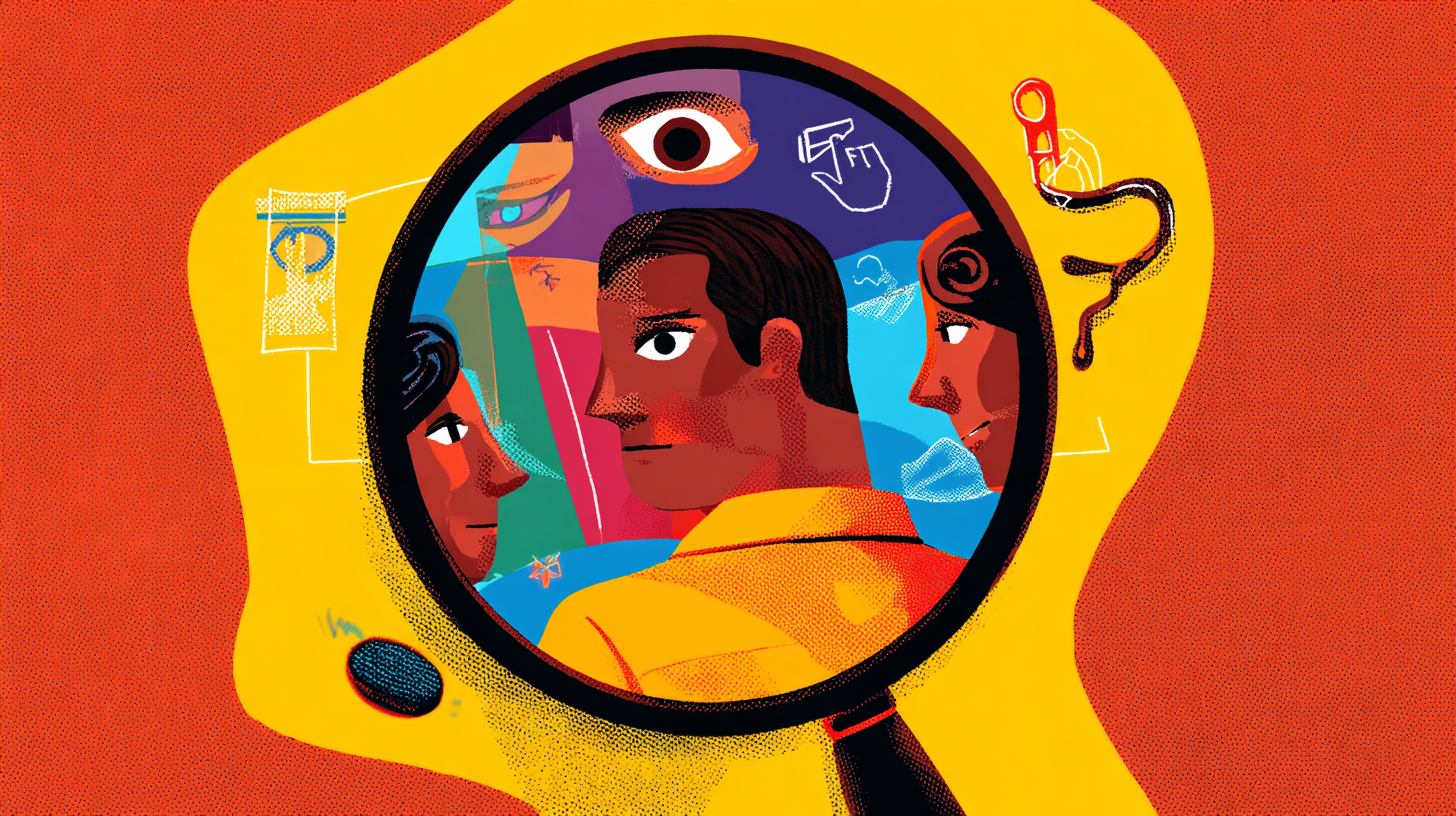
A honeytrap - sometimes called a honey pot - is a method of leverage that uses intimacy to gain control. At its most basic, it involves a sexual or romantic encounter engineered not for pleasure, but for information, influence, or compliance. The sex is not the point. The aftermath is.
Historically, honeytraps have taken many forms. Sometimes they're about extracting secrets: documents, conversations, access to inner circles. Sometimes they're about shaping behavior: nudging a decision, softening resistance, ensuring silence. Often, they're about creating future obedience without ever having to ask again.
The mechanism is simple and brutal. First comes the encounter. Then comes the documentation-photographs, recordings, witnesses, paper trails. Then comes the quiet understanding: this can be revealed. At that point, the trap closes. The leverage doesn't need to be exercised to be effective; its existence is usually enough.
During the Cold War, intelligence agencies gave this tactic bureaucratic polish. The KGB, among others, formalized sexual entrapment into training manuals and operational doctrine, identifying targets whose careers or marriages could not survive exposure. The goal wasn't always blackmail in the cinematic sense. Often it was something subtler: shaping loyalties, creating hesitation, turning a confident official into a careful one.
 Matt Hussey
But to treat the honeytrap as a Cold War invention is to misunderstand it. States did not invent sexual leverage; they merely professionalized it. Long before modern intelligence agencies, courts and empires understood that intimacy was access, and access was power. Courtesans, mistresses, and lovers have functioned as informal intelligence networks for centuries-not because sex is inherently corrupting, but because secrecy is.
What makes the honeytrap distinct from a consensual affair or ordinary hypocrisy is intent. A honeytrap is engineered asymmetry. One party believes they are indulging a private desire; the other is collecting leverage. One assumes discretion; the other is building a file.
And crucially, the trap only works in cultures where sex is simultaneously ubiquitous and shame-laden-where it is marketed relentlessly, pursued competitively, and punished selectively. The honeytrap feeds on that contradiction. It relies on the gap between public respectability and private behavior, and on the fear that crossing that gap will result not just in embarrassment, but annihilation.
This is why sex remains such a powerful tool of coercion even as norms loosen. The consequences of exposure have not disappeared; they have merely become more unevenly applied. For people with power, prestige, or carefully managed reputations, the cost of being seen clearly can still be catastrophic.
 Matt Hussey
Take the Bill Gates example in the Epstein files (allegedly). In a series of emails, Epstein's knowledge of his extramarital affairs was used to exert pressure on the Microsoft founder.
Which raises the real question-not what a honeytrap is, but why it keeps working. Not just on individuals, but on systems that repeatedly place their most influential figures in precisely the conditions that make entrapment inevitable.
Next up, we'll step back and trace how this tactic moved from courts and empires into modern intelligence-and why it survived every technological revolution meant to replace it.
Seduction as Statecraft: A Very Brief History

Long before intelligence agencies had acronyms, seduction was already doing diplomatic work.
Power has always clustered in private spaces-courts, chambers, banquets, bedrooms-and wherever decisions are made behind closed doors, intimacy becomes a form of access. In ancient and early modern societies, this wasn't even especially scandalous.
Royal courts across Europe and Asia openly relied on mistresses, concubines, and courtiers whose proximity to rulers doubled as informal intelligence networks. Information flowed through affection, jealousy, and trust long before it flowed through cables.
What changed over time wasn't the tactic, but the degree of organization. By the late nineteenth and early twentieth centuries, as modern nation-states professionalized espionage, sexual leverage began to harden into a recognizable method.
 Matt Hussey
The most famous early symbol of this shift is Mata Hari-a dancer turned alleged spy whose mythology far outgrew the evidence against her. Her legacy matters less for what she actually did and more for what she represented: the formal recognition that desire could be operationalized, and that sexuality itself could be framed as a national security threat.
The Cold War then turned honeytraps into infrastructure. Intelligence agencies on both sides of the Iron Curtain recognized a consistent truth: secrets are easier to extract from people who are already hiding something.
The KGB became particularly associated with the tactic, developing systematic approaches to identifying targets-often diplomats, military officers, or politicians-whose careers or marriages could not withstand exposure. Operatives were trained not just to seduce, but to observe, document, and disappear, leaving behind a permanent imbalance of knowledge.
What's often missed in pop culture retellings is that blackmail was not always the end goal. In many cases, leverage was never explicitly invoked. The mere possibility of exposure was enough to induce caution, compliance, or selective blindness. The most effective honeytraps didn't produce dramatic confrontations; they produced subtle shifts in behaviour.
By the end of the twentieth century, the tactic had begun to migrate again-this time out of the exclusive domain of states. As wealth globalised and regulation thinned, private actors gained access to the same tools once reserved for intelligence agencies: surveillance equipment, private aircraft, offshore properties, legal opacity. The honeytrap was no longer just a geopolitical instrument; it became a privately deployable one.
 Matt Hussey
Which brings us to the present moment. Today's honeytraps don't rely on trench coats or coded cables. They rely on NDAs, private islands, encrypted storage, and the quiet assumption that powerful people are insulated from consequences. The logic, however, remains unchanged from ancient courts to Cold War safe houses: intimacy creates vulnerability, and vulnerability can be owned.
The real innovation of modern honeytraps isn't seduction. It's scale-and the systems that allow it to operate unchecked.
Next, we'll turn inward, to the psychology that makes this tactic so durable-especially among those most convinced it could never work on them.
Why It Works: The Psychology of the Trap

If honeytraps were merely about sex, they wouldn't be nearly as effective-or as enduring. Desire opens the door, but psychology keeps people inside.
At the center of every successful honeytrap is a predictable miscalculation: the belief that this situation is under control. Targets rarely think of themselves as targets. They experience the encounter as flattering, accidental, or deserved. The trap works precisely because it doesn't feel like one.
One of the strongest forces at play is overconfidence bias. People in positions of power tend to overestimate their ability to read others, manage risk, and exit situations cleanly. Years of winning-politically, financially, socially-create an internal narrative of competence and exemption. The logic is rarely explicit, but it's potent: I've navigated worse than this.
Power also distorts feedback. The more influential someone becomes, the less often they're contradicted, denied, or meaningfully challenged. This creates a dangerous internal environment where desire is interpreted as affirmation rather than signal. Attention feels earned. Interest feels organic. Warnings-when they appear at all-are dismissed as paranoia or jealousy.
 Matt Hussey
Then there's entitlement, which is often misunderstood as arrogance but is better described as narrative drift. Many targets of honeytraps have spent years absorbing the idea that normal rules do not apply to them. Discretion is assumed. Consequences are abstract. The world has, so far, bent around their behavior.
This is where sex becomes particularly effective as leverage. Sexual encounters carry an illusion of privacy-this is between us-even when everything else in the target's life is public, strategic, and transactional. The encounter feels like a temporary suspension of scrutiny. In reality, it's the moment scrutiny begins.
But the most powerful psychological lever isn't desire or entitlement. It's shame. Shame is uniquely immobilizing. Unlike guilt, which says I did something wrong, shame says something is wrong with me. Once shame enters the picture, behavior changes. People don't seek help. They don't reality-check. They don't tell the truth. They manage impressions, avoid exposure, and make decisions aimed not at ethics or outcomes, but at containment.
This is why honeytraps don't require constant enforcement. Once shame is activated, the target becomes self-policing. Silence becomes self-protection. Compliance becomes rational. The trap doesn't need to snap shut-it tightens gradually, as the cost of disclosure grows heavier with time.
Importantly, none of this requires the target to be particularly immoral. It only requires them to be human in a system that punishes vulnerability unevenly. Honeytraps exploit the gap between public identity and private behavior, and that gap exists in almost everyone. Power just widens it.
 Matt Hussey
Which leads to the uncomfortable realization at the heart of this tactic: honeytraps don't succeed because people are uniquely weak. They succeed because modern systems reward image management over integrity-and because shame remains more frightening than corruption.
But if this is a universal experience, why does it tend to be men that are the targets of honeytraps?
Why Mostly Men?
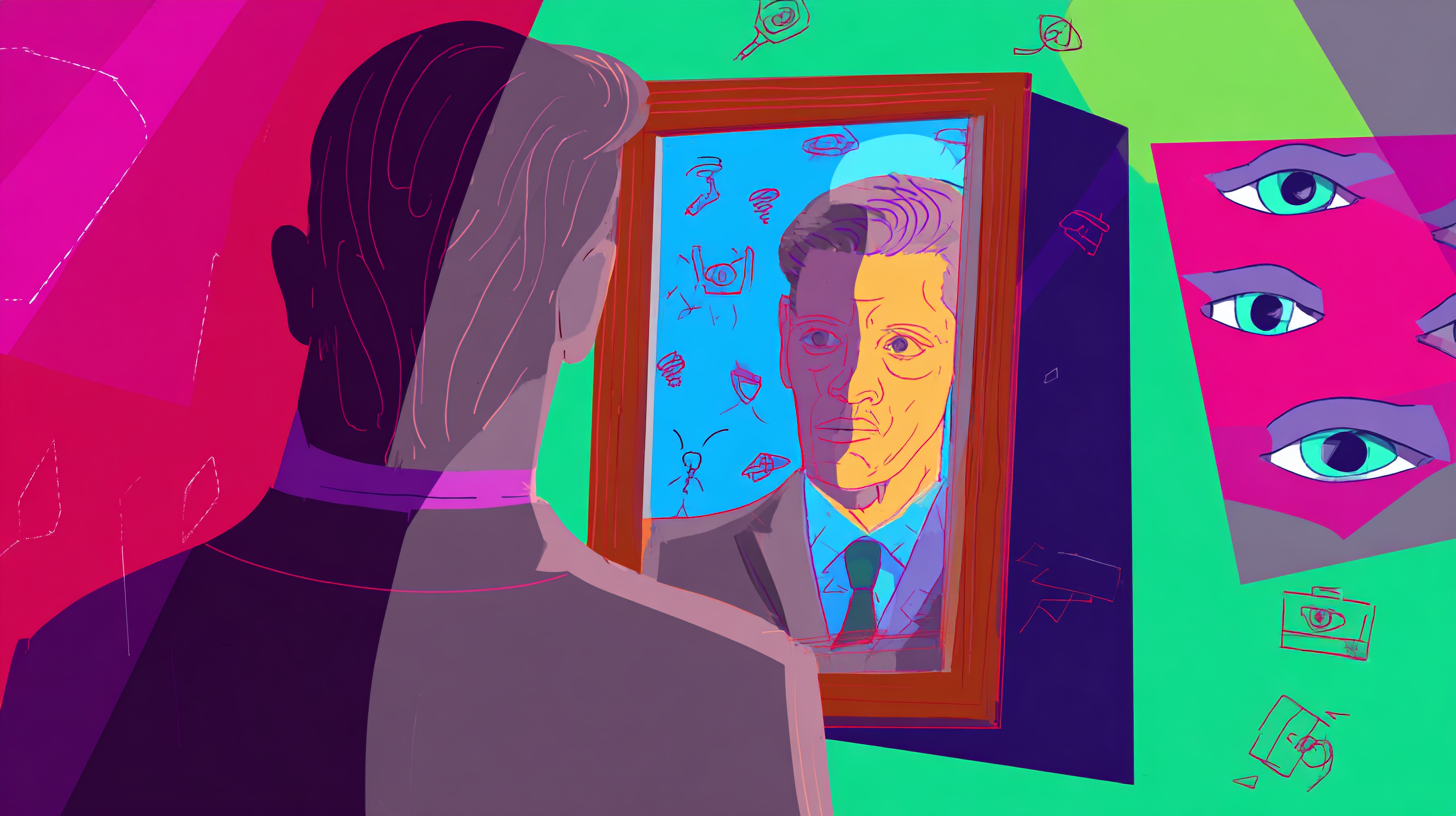
It's tempting to answer this question with a shrug or a sneer. Men fall into honeytraps because men are reckless, because men think with their libido, because men overestimate their own cleverness. Those explanations are emotionally satisfying-and analytically shallow. The real answer is structural.
Honeytraps disproportionately succeed with men because men still disproportionately occupy positions of power worth trapping. Political authority, financial control, military command, and institutional prestige remain overwhelmingly male. The honeytrap follows power, not gender. Where influence clusters, so does leverage.
But socialization matters too. Men are often raised with a version of masculinity that treats desire as separate from vulnerability. Sex is framed as conquest, reward, or stress relief-not as a site of emotional exposure. This makes it easier to underestimate risk and harder to recognize when intimacy is being instrumentalized. When something goes wrong, many men have few practiced ways to talk about it without experiencing humiliation.
 Matt Hussey
Shame operates differently here. For men, particularly powerful ones, sexual exposure is often experienced not just as embarrassment, but as status collapse. The threat isn't merely moral judgment; it's loss of authority. That makes secrecy feel essential and disclosure feel existentially dangerous.
This is compounded by the fact that many powerful men are surrounded by systems designed to absorb and normalize their excesses. Aides manage logistics. Lawyers manage fallout. Institutions quietly protect "valuable" people. Over time, this insulation erodes threat detection. What would register as danger for others begins to feel routine.
None of this means women are immune. Women are also targeted, compromised, and entrapped-sometimes sexually, sometimes emotionally, sometimes financially. Perhaps the most famous example is East Germany's Romeo Spies. But women are more often positioned as instruments of honeytraps than beneficiaries of the power they ensnare. When women fall, they are less likely to be protected by the same scaffolding of silence and repair.
 Matt Hussey
The pattern, then, isn't about male weakness so much as male positioning. Honeytraps exploit a particular configuration: concentrated power, underdeveloped vulnerability skills, and catastrophic shame around exposure. That configuration remains more common among men-not because of biology, but because of history.
The deeper implication is uncomfortable. As long as power remains unequally distributed, and as long as masculinity discourages honest reckoning with vulnerability, honeytraps will continue to work-not despite modernity, but because of it.
Which brings us back to the present. Because if the honeytrap is ancient, its most recent large-scale expression shows what happens when these dynamics collide with unprecedented wealth, access, and impunity.
Epstein as System, Not Aberration

The temptation with Jeffrey Epstein is to treat him as a monster-singular, deviant, and therefore containable. Monsters allow us to close the book. Systems do not.
What investigative reporting has made clear is that Epstein's power did not come from charisma or money alone, but from infrastructure. Private aircraft. Secluded properties. An entourage trained to facilitate access and enforce silence. A social position that allowed him to move fluidly between political, financial, academic, and royal worlds. This was not accidental. It was design.
According to widely reported allegations, Epstein's operation functioned less like a series of crimes and more like a mechanism: sexual access was offered, encounters were normalized, and secrecy was assumed. The value lay not just in what happened, but in who was present-and who could never admit they were.
Reporting has explored claims that Epstein maintained kompromat and may have intersected with foreign intelligence interests, including Russia. Many of these claims remain contested or unresolved. But again, the significance lies in the logic, not the conclusion.
 Matt Hussey
Epstein did not invent the honeytrap. He demonstrated how far it could scale when combined with modern wealth and weak oversight.
In earlier eras, honeytraps were constrained by geography and institutional friction. Operatives needed proximity. States needed plausible deniability. Documentation was physical and risky to move. Epstein's world had none of those limitations.
Digital storage made evidence permanent. Private jets erased borders. Non-disclosure agreements added a legal veneer to coercion. And elite networks provided reputational shielding so robust that rumors could circulate for years without consequence.
What's most revealing is not that powerful men were ensnared, but that so many people around them appeared to understand-at least partially-what was happening and still participated. This is the telltale sign of a functioning system. When the cost of speaking is higher than the cost of silence, silence becomes rational.
Epstein's case also exposes a crucial asymmetry at the heart of honeytraps: the targets often believe they are the ones consuming something illicit, when in fact they are being consumed. The illusion of control persists right up until it vanishes. By the time leverage is visible, it is already embedded.
Seen this way, Epstein is less an outlier than a stress test. He revealed how old tactics behave under new conditions-how sexual leverage adapts to an era of extreme inequality, celebrity insulation, and institutional cowardice. The question is not how someone like Epstein existed, but how many similar dynamics operate at smaller scales, unnoticed because they lack his infamy.
 Matt Hussey
Which leaves us with an uncomfortable pivot. If honeytraps persist not because of individual pathology but because of collective tolerance, then the real subject isn't Epstein at all. It's the values we enforce selectively-and the kinds of secrets we've decided matter more than harm.