
Nomophobia: What It Is, Why It Affects 94% of People, and Why No One Is Treating It
Nomophobia - the fear of being without your phone - affects 94% of people according to a major meta-analysis. It has no DSM category and no treatment pathway. Here's why that's a problem.
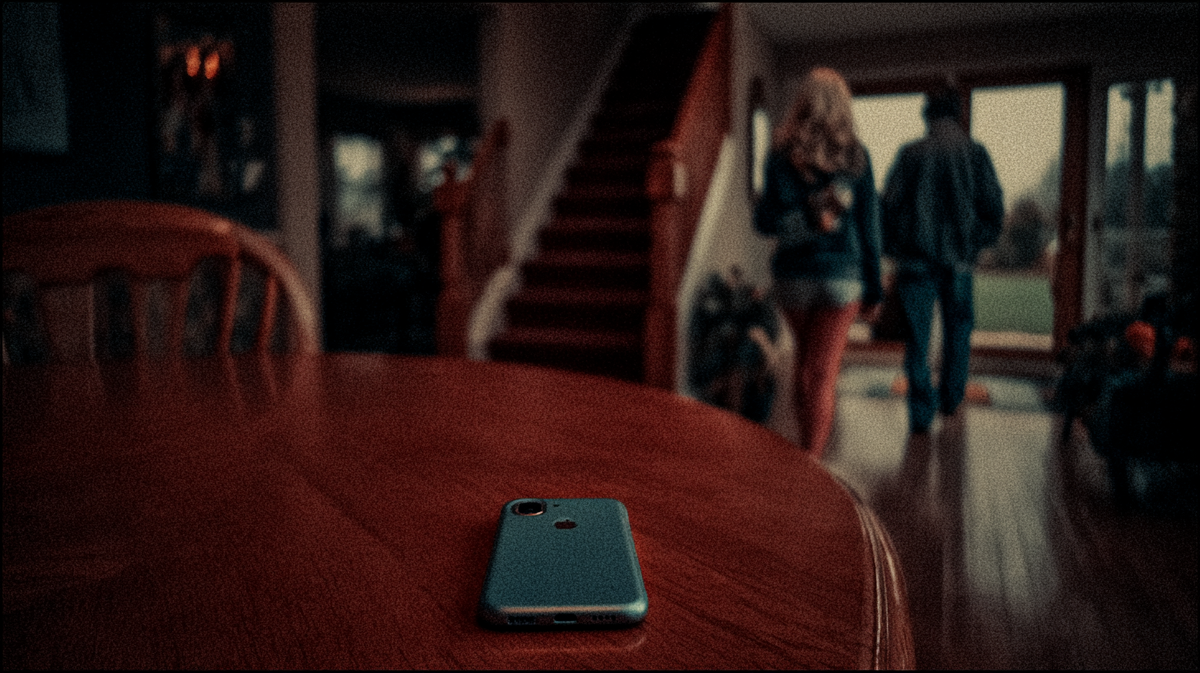
Notice what happens when your battery drops to 4%. Not the mild inconvenience of needing to find a charger. Something sharper - a low-grade urgency that moves through the body before you've thought about it consciously.
Now imagine the phone is gone entirely. Left at home. Out of signal. Switched off for 24 hours. For a significant proportion of people, that scenario doesn't produce mild discomfort. It produces something that looks, physiologically, indistinguishable from fear. That's nomophobia.
What is nomophobia?
Coined in 2008 by the UK Post Office in a study examining mobile phone anxiety, nomophobia is a compression of "no mobile phone phobia" - and it describes the fear, anxiety, and discomfort experienced when individuals are unable to use or access their mobile phones.
Not a casual preference for having the phone nearby. A measurable, physiological fear response: elevated heart rate, shortness of breath, trembling, sweating, disorientation - and in severe cases, full panic attacks.
Despite that symptom profile, nomophobia does not appear in the DSM-5 or the ICD-11. It has no official diagnostic classification, no agreed treatment pathway, and no dedicated clinical guidance from any major professional body - not NICE, not BACP, not the APA. It is simultaneously one of the most documented psychological phenomena of the digital age and one of the most institutionally invisible.
How common is nomophobia - and who does it affect?
A meta-analysis of 43 studies involving 36,656 participants across 18 countries found the pooled prevalence of nomophobia to be 94%. A separate large-scale review of 52 studies and 47,399 participants confirmed a prevalence of 93.9%, with approximately one in five people showing severe symptoms. The breakdown matters: 26% mild, 51% moderate, 21% severe. One in five people experiencing something clinically severe, with no clinical framework to receive them.
University students show the highest rates - up to 97% - though nomophobia is not a student problem. It tracks with smartphone ownership, and smartphone ownership is now near-universal. Women and younger adults tend to be most affected, but the condition spans demographics.
 Matt Hussey
What the data shows, plainly, is not a niche phenomenon. It is the psychological baseline of a connected society, quietly generating clinical-grade distress in the majority of people who will never be identified as patients.
What nomophobia is really about
The name is misleading. Nomophobia is not about phones. Phones are the object - the thing whose absence triggers the response. But research consistently points to what the phone holds as the real source of the fear: social belonging, identity confirmation, economic access, information, and the means by which many people regulate their own emotional states.
Attachment theory frames nomophobia as separation anxiety - the phone functioning as an attachment object, a digital surrogate for the felt sense of security that comes from connection to others.
 Matt Hussey
Studies find that anxious attachment styles significantly predict nomophobia levels, and that loneliness and fear of missing out interact with nomophobia in a self-reinforcing loop - each feeding the others. The phone resolves the loneliness temporarily. Its absence restores it immediately. The cycle is not about technology. It is about what we have quietly transferred onto it.
Think about what actually lives on your phone: your work, your relationships, your money, your memory, your evidence of being seen. Going without it doesn't feel like losing a device. For many people, it feels like losing a version of themselves.
The cost no one in mental health is measuring
Research links nomophobia to depression, anxiety, stress, loneliness, insomnia, and impaired academic and professional performance. A 2025 study found that adolescents with high nomophobia scores reported elevated stress and social loneliness at levels that should, by any reasonable clinical measure, trigger intervention.
They don't, because there is no referral pathway that names this experience. There is no ICD code. There is no NICE care pathway. A young person presenting with panic symptoms triggered by phone separation would most likely be assessed for generalised anxiety disorder - and the specific mechanism generating the distress would remain entirely unnamed.
 Matt Hussey
This is the gap. Not that nomophobia exists - it clearly does, at scale - but that the clinical systems designed to identify and treat psychological distress have no agreed language for it. The condition sits in a diagnostic void: too prevalent to be a niche concern, too new to have accumulated the institutional weight needed to force its way into the manuals.
Why the clinical silence is a system-level failure
There have been calls to include nomophobia in the DSM since at least 2014. The arguments are not fringe. The symptom overlap with specific phobia, separation anxiety disorder, and panic disorder is well-documented.
The scale of the problem is extraordinary. And yet it remains outside the diagnostic framework - which means it remains outside the commissioning framework, the training curriculum, and the clinical conversation.
This matters because the absence of a name is not neutral. When a condition has no clinical identity, people experiencing it have no language to use with a GP, no way to self-refer with confidence, and no expectation of being taken seriously.
 Matt Hussey
The distress becomes privatised - managed individually, often through the very behaviour generating it: more phone use, more checking, more charge-monitoring, more low-grade vigilance running in the background of daily life.
Meanwhile, the environment generating nomophobia is not standing still. The economic and social architecture of contemporary life is being built onto smartphones - banking, healthcare appointments, work communications, social relationships, civic participation.
The cost of disconnection rises every year. The fear of disconnection rises with it. And the systems responsible for mental health care are watching from the outside, with no agreed name for what they're seeing.
 Matt Hussey
You already know this feeling. The particular quality of unease when the battery icon turns red. The mental calculation about whether you can risk leaving the house without a charger. The slight wrongness of a pocket that should have weight and doesn't. That feeling has a name.
It has a clinical profile, a body of research, and a prevalence rate that dwarfs almost every condition that does have a treatment pathway. What it doesn't yet have is a seat at the clinical table. That gap - between scale and institutional response - is where the real story lives.