
Soft Failing: The Emotional Condition of the Algorithmic Age
Outwardly thriving, inwardly dimmed - welcome to the emotional twilight of the algorithmic age.
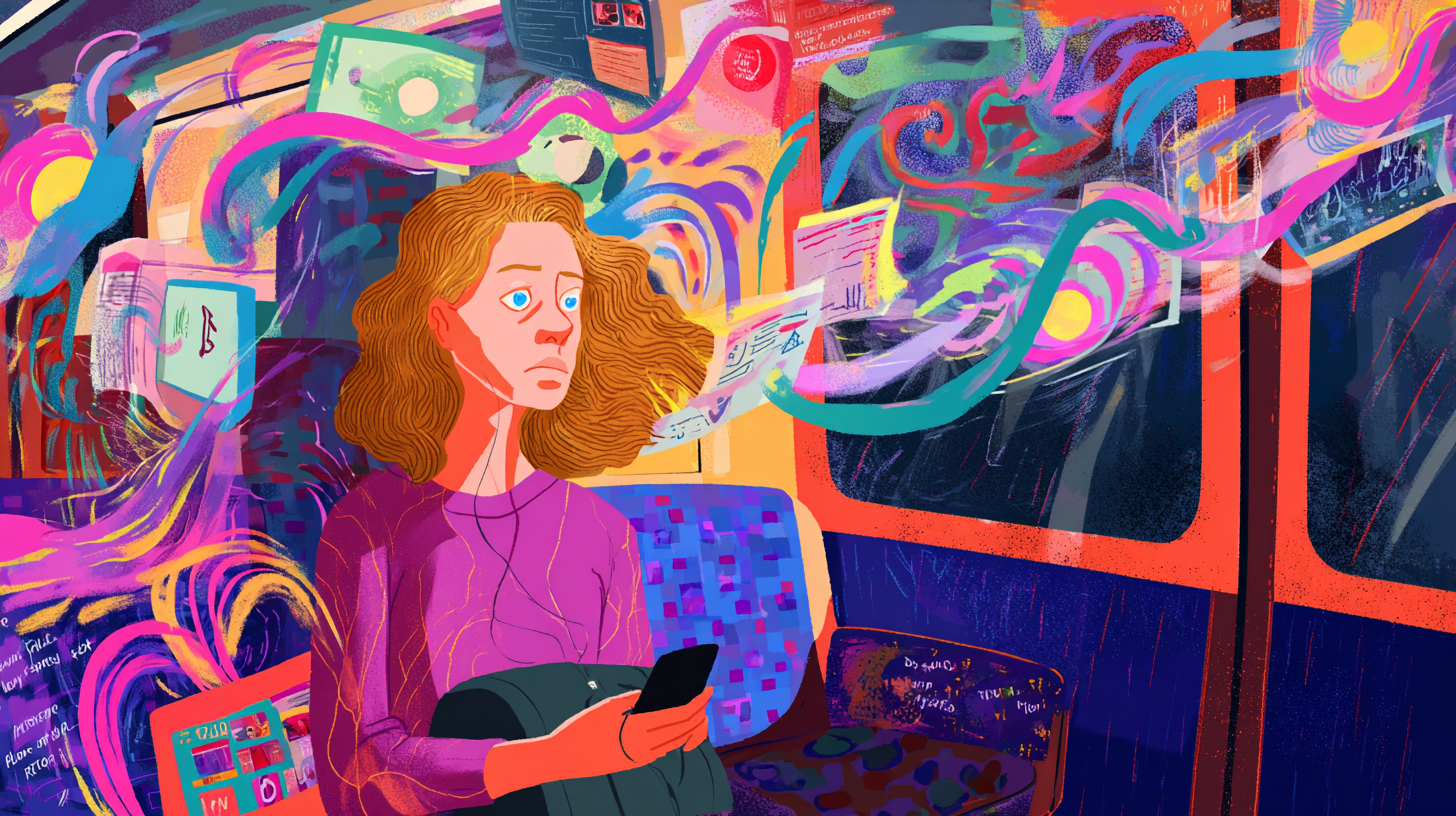
What do you call a life that works on paper but falters in spirit? Let me explain.
It starts without ceremony. You hit "send" on the last email of the day. You close the 65 tabs on your browser. You exit Zoom, you minimise Slack, and you peel your eyes away from the shared drive. The workday is over, right? Technically.
But in the dim blue hush of your home, it doesn't feel like you've finished. Instead you feel suspended: you're not at rest, but you're not quite alert either. So you pick up your phone. You scroll. You toggle between apps like you've been doing it your whole life. You open a food delivery app, more out of habit than hunger. All the while, your body isn't sounding any alarms. But your mind feels... somewhere else. Fogged. Faintly gone.
You're not in crisis. You've eaten. You've slept. You got everything done. On paper, you're functioning. Anyone checking in would call you "fine." But if you tuned in just a bit deeper - if someone asked the right kind of question - you'd have to admit: something is leaking out of you. A slow, invisible drain.
This isn't burnout - not exactly. Burnout has an edge, a rupture, a breaking point. This isn't depression, either. There's no deep spiral, no dark heaviness you can name. Instead, it's something quieter. Slower. A kind of passive erosion. A glitch in the emotional code that no one flags because it looks so much like stability. I'm there a lot of the time. And I'm giving it a name: soft failing.
 Matt Hussey
It's an idea I've been exploring for a while: a term for the lived experience of being technically operational but spiritually dimmed. You are keeping up with everything, and yet falling behind in some way that can't be measured in metrics or milestones. It's not a crisis. It's not collapse. But it's not nothing, either. You explain it to friends, and they agree, you explain it to family and they seem a bit less sure. It's hard to pin down.
That's why this week I'm making the case for soft failing. It's a real, felt experience that touches so many of us. It's not a poetic abstraction or vague millennial angst. I think it's something larger: a culturally produced psychological state with identifiable markers and systemic causes. I'm going to define it, examine its roots in the systems we live under, and offer ways to recognize its signals - and maybe, eventually, resist its pull.
What Is Soft Failing? A Clear Definition
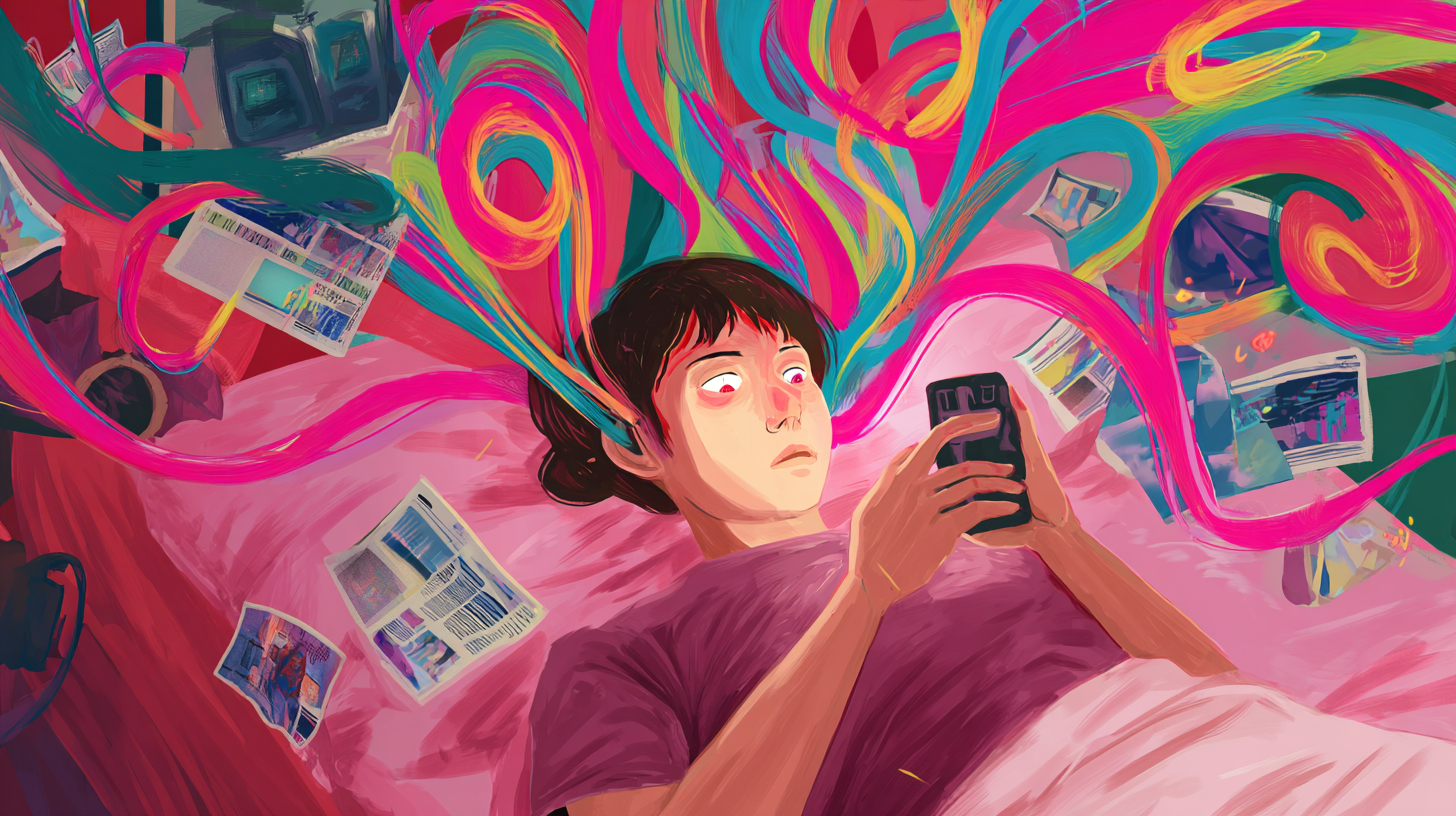
Before I go on, a few house keeping bits: soft failing is not a clinical condition. It won't turn up in the DSM, but if you've been following my work in this space, you'll know that there's a growing rift between lived experience and formal diagnosis.
Last week I wrote about how derealisation, a felt experience by a growing number of TikTok users. There are now thousands of threads, comments and discussions exploring how people's sense of reality flattens as a direct result of prolonged smart phone usage. But research on the link between algorithmic content and dissociative symptoms is still in its infancy. This is the area I'm going to be exploring in this essay: the fringes of our understand of mental health today. Right, let's get into a definition.
Soft failing is the quiet unraveling that occurs when outward life continues to function, but inward vitality wears thin. It is a state in which individuals meet the external demands of work, relationships, and routine - while experiencing a steady internal erosion of energy, attention, and emotional engagement.
 Matt Hussey
It does not arrive like illness. It doesn't demand a day off or a diagnosis. Instead, it settles in the margins: a fog in the mind, a flattening of desire, a background hum of depletion that never becomes loud enough to interrupt the show of competence.
It's not the result of one clear trauma, nor does it show up neatly on a screening test - because quite simply, there are none. Rather, it's the emotional residue of our culture: one defined by algorithmic stimuli, economic precarity, and the collapsing distinction between rest and productivity.
Soft failing is not a disorder. It's a sociocultural condition - a mood of the moment shaped not by individual pathology, but by systemic design. This idea doesn't exist in isolation. It has foundations in a number of more-established ideas and frameworks, which I'll explore next.
The shoulders Soft Failing stands on
The most direct conceptual ancestor of soft failing is languishing - the term popularised by sociologist Corey L. M. Keyes in his landmark 2002 paper on the Mental Health Continuum. Keyes argued that mental health is not simply the absence of illness, but the presence of emotional, psychological, and social well-being. At one end is flourishing; at the other, languishing - a state marked by emptiness, stagnation, and the sense of just getting by.
Keyes' later work expanded this into the Two-Continua Model, which further clarified that mental illness and mental health exist on separate axes. A person can have no diagnosable disorder and still not be well.
Soft failing builds on this insight. But where languishing describes the what - the feeling of stasis - soft failing digs into the why: why this feeling has become so pervasive, and how our technological and cultural infrastructures quietly sustain it.
Burnout - and Its Limits
The overlap with burnout is unavoidable. First recognised by the WHO as an occupational phenomenon, burnout is defined by emotional exhaustion, cynicism, and reduced efficacy - but crucially, only in the context of work.
Soft failing, by contrast, is broader and more ambient. It includes the drain of digital consumption, the erosion of attention across every sphere of life, and the always-on hum of performative existence. It is not limited to work stress. It is life stress, refracted through an attention economy.
 Matt Hussey
Doomscrolling and the Digital Mood Machine
One of the most direct contributors to soft failing is the now-ubiquitous behaviuor of doomscrolling: compulsively consuming negative news or distressing content online. Originally coined as a darkly comic way to describe late-night Twitter binges, the term has since been formalised in psychological research.
The 2022 development of the Doomscrolling Scale found clear links between this behaviour and psychological distress, anxiety, and decreased well-being. Follow-up studies, such as Sharma et al. (2023), reinforced these findings, noting that doomscrolling correlates with depressive symptoms and lower life satisfaction.
Soft failing does not require doomscrolling, but the pattern feels familiar: attention, once hijacked by an algorithmically optimised feed, can become a vector for depletion. And because this depletion feels passive - not a choice, not a breakdown - we often don't recognize it as harm.
The Erosion of Attention as Structural Harm
Attention, once treated as a neutral cognitive resource, is now a site of struggle. In a digital economy driven by clicks, scrolls, and dwell time, platforms are engineered to maximise engagement - not well-being. And increasingly, research is showing how these design choices shape more than behaviour. They shape cognition itself.
A 2022 study by Epstein et al. quantified how attention on social media can "dissociate" - users may linger (high dwell time) without conscious engagement. This passive attention, caught between intention and inertia, mirrors the feeling of soft failing: mentally present, emotionally absent.
Meanwhile, scholars like Docherty and Biega argue for a more politicized view of digital well-being. In their 2022 paper on digital harm, they call for reframing attention loss not as a user problem, but as a structural one - a product of systems designed to extract engagement at all costs.
 Matt Hussey
Why a New Name Was Needed
So if there is already loads of research on the area, why bother coming up with something new at all? Because I don't think the above quite captures the shape of it. Let me explain:
- Burnout is too narrow, too occupational. It doesn't account for the diffuse, ambient stress of simply living online - where every scroll, ping, and notification asks for a piece of your psyche.
- Languishing names the feeling, but not the infrastructure. It captures the emptiness, but not the systemic design of that emptiness - the platforms, the pressures, the psychic fatigue of algorithmic life, paired with the need to peform as a worker, an individual, a partner, a friend etc.
- Depression and anxiety are too clinical. While these diagnoses are real and important, they don't apply to everyone - nor should they. Using them to describe what is fundamentally a structural, environmental malaise risks pathologizing a logical response to illogical systems.
Soft failing, I think, offers a more accurate container. It names the grey zone. The emotional static. The performative normalcy that masks a deeper drift. It is a way of saying: you are not broken. You are reacting, appropriately, to an era that runs on depletion but rewards display.
What Causes Soft Failing?

Soft failing is not a personal failing. It's not a temporary slump or a motivational dip. It's the slow-burn emotional condition of living inside systems not built for human flourishing - systems that trade in attention, blur work-life boundaries, and reward the performance of success while eroding its substance.
To understand soft failing is to recognize it not as a flaw in the individual, but as a feature of the environment. Over the past 15-20 years, a convergence of technological and cultural shifts has made this state not only possible, but common.
The Attention Economy and Algorithmic Design
In the early 2000s, the internet was still largely informational. Today, it is extractive. The rise of social media, infinite scroll interfaces, algorithmic curation, and engagement-driven design has transformed attention from a passive experience into a profit stream.
And in this economy, your attention isn't just captured - it's cultivated, measured, optimized. Platforms don't ask what makes you feel whole or human. They ask only: how long can we keep you here?
 Matt Hussey
A 2022 study by Epstein et al. laid bare the mechanics: attention on social media often dissociates. Users may dwell without truly engaging, stuck in liminal loops of passive consumption. This design - not accidental, but engineered - fragments focus, disrupts cognitive cohesion, and rewards the kind of compulsive scrolling that feels more like drifting than choosing.
The result is not just time lost but mental bandwidth eroded. Soft failing thrives in this space: when our energy is continually spent on fragmented micro-decisions, ambient updates, and algorithmically surfaced content that blurs the line between relevance and harm.
In such an ecosystem, attention becomes both currency and casualty.
The Always-On Work Culture

As our tools became smarter, our boundaries became thinner. Modern work rarely respects its edges. Slack messages don't clock out. Emails ping at sunrise. Calendars, once bound by office hours, now bleed across time zones and time blocks. There is no off switch - only a changing context.
This is not just "being busy." It is a structural condition with a name: technostress - the psychological strain caused by digital overload. Technostress arises when digital systems demand more from individuals than they can sustainably give: cognitively, emotionally, and temporally.
And this isn't just about the volume of work. It's about the way we work: in fragmented bursts, across multiple platforms, with constant interruptions and shifting expectations. As the Harvard Business Review noted, the pandemic helped normalise these dynamics, making "always on" culture feel like an inevitability.
The deeper problem isn't just fatigue. It's perpetual partial attention - a condition in which we are always a little bit "on," but never fully in. This shallow state of focus becomes the baseline for both work and life. And over time, it hollows us out.
The Social Performance Imperative
Here's the paradox: most people who are soft failing look fine. They show up. They submit deliverables. They meet deadlines, return texts, post content. The performance is intact. What's crumbling is the internal texture of experience - the emotional depth, the sense of presence, the ability to feel that life is more than a sequence of tasks.
Social systems reinforce this disconnect. Metrics, evaluations, and even social validation reward outputs - not inner states. As long as you're responsive, productive, and visible, you're "doing well."
But what if the internal cost of this output is invisible? What if your capacity to care is quietly rusting beneath the performance? Soft failing lives in that contradiction: outward success, inward numbness. And because epidemiological tools focus on dysfunction - crisis, breakdown, diagnosable symptoms - this condition rarely registers in public health data. It doesn't look like illness. It looks like competence.
 Matt Hussey
And yet, behind the numbers, the erosion is happening. Studies have shown consistent links between social media use and mental health struggles in adolescents, including anxiety and depression. But these correlations extend beyond youth. I know many, many adults who suffer from the same ill effects as young people do. As engagement becomes synonymous with identity - especially online - the pressure to perform an emotionally functional, likeable self grows.
This is where the soft fail hides: behind the filtered image, the polite email, the quick reply. Behind the illusion of having it together a person is flattened, hollowed-out and threadbare.
Signs You May Be Soft Failing
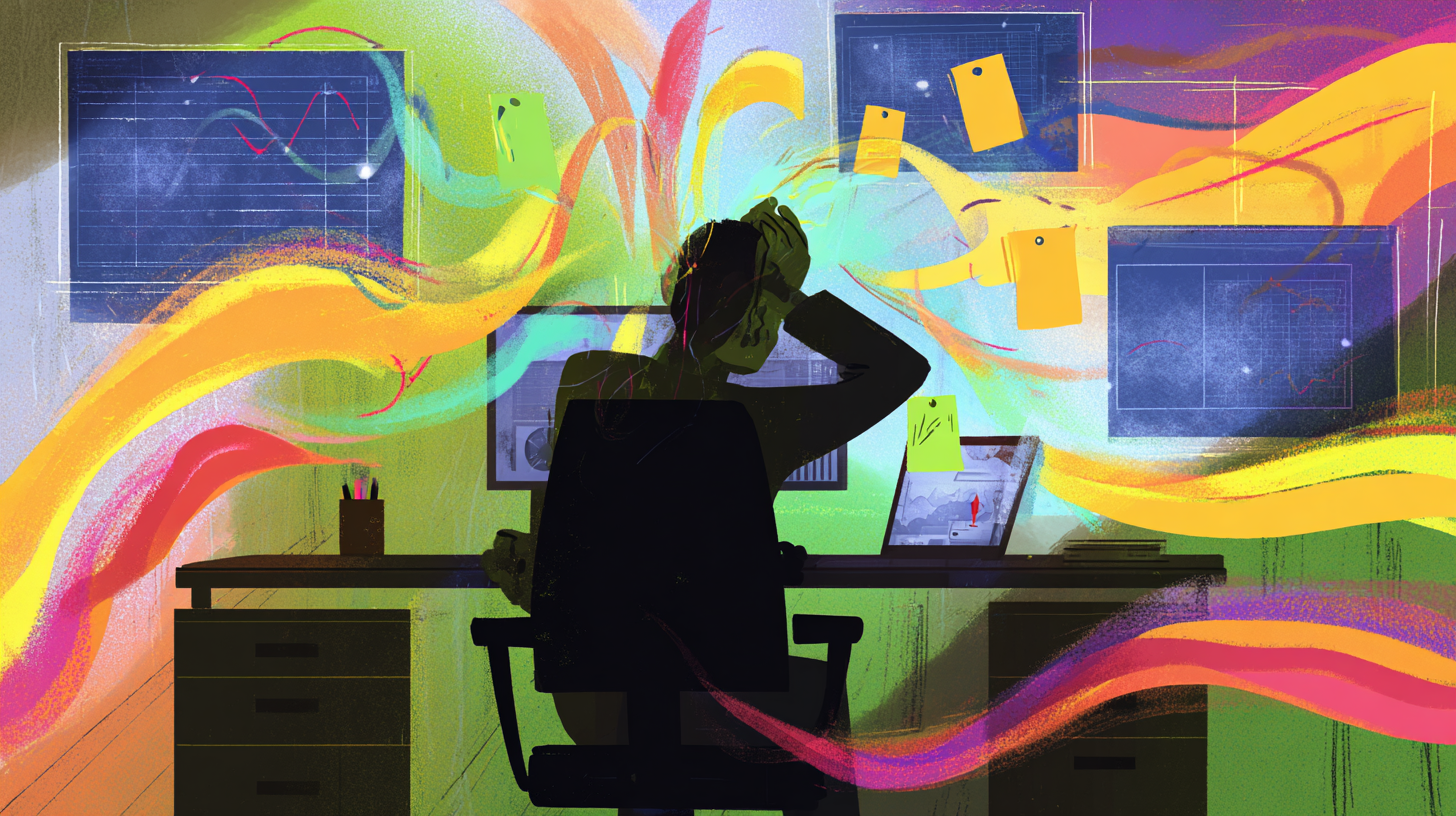
I want to try and encapsulate what exactly is happening when I say soft failing. The best way I can begin this is by saying: it doesn't present like suffering. It doesn't scream. It drifts. It dulls.
To live while soft failing is to move through your life as if underwater: technically present, emotionally muffled. You do things. You reply. You meet your obligations. But the inner thread that connects your actions to your aliveness begins to fray. What gets lost isn't your functionality - it's your sense of being fully here.
So what does soft failing feel like - not as diagnosis, but as phenomenology? I have three core ideas that I think capture this.
Numbness as Adaptation
First comes the flatness. A quiet numbing that doesn't feel like panic or sadness, but more like static. When the mind is flooded with endless input - the next deadline, the next ping, the next headline - while being told to stay productive, something eventually shuts down. You adapt by turning the volume down on yourself.
Studies define emotional numbing as a reduced capacity to feel, often arising from trauma or chronic stress. It's not a flaw. It's a survival strategy.
Soft failing echoes this pattern, not in reaction to acute trauma, but to ambient overload. The body doesn't collapse. The mind doesn't rebel. Instead, it flattens - like putting yourself on mute, just to make it through. It's like flying on a plane sat in the 'brace' position the entire time.
This overlaps with the experience of languishing. As Keyes described in his 2002 study, languishers report lives that feel "empty, stagnant, hollow." But soft failing adds another layer: the perpetual distraction of digital consumption, the erosion of attention, the pressure to maintain the appearance of competence. The dullness becomes not just emotional, but cognitive - a thinning of the self across too many tabs.
 Matt Hussey
Fragmented Attention and the Loss of Internal Life
One of the more unsettling features of soft failing is the collapse of inner continuity. Rather than a clear story of who you are, where you're going, or why any of it matters, time becomes a blur. You get through the day, but not toward anything. You're in motion, but unmoored.
Emerging research in the attention economy points to a possible cause: the way digital platforms train users to flit between inputs, sacrificing depth for immediacy. In a 2022 study, researchers found that online platforms don't just consume attention - they reshape it. The design of social feeds encourages low-effort, high-frequency engagement. Users dwell longer on content not because they're engaged, but because they're stuck.
This kind of fragmented attention makes it difficult to form or sustain a coherent internal narrative. Without deep focus, your mind doesn't consolidate meaning. Instead, you're left with scattered presence: tasks done, days passed, nothing felt. The result is not just disconnection from the world - but from yourself.
Existential Flattening and Media-Driven Anxiety
And then, layered over the numbness and fragmentation, comes the dread.
The daily diet of modern information is high in threat and low in resolution. War, climate collapse, political instability, algorithmic injustice - all served up in real time, with no endpoint. The more you consume, the worse you feel. But stopping feels irresponsible. What if you miss something important?
This is the emotional trap of doomscrolling. Researchers found that compulsive exposure to negative news is directly linked to anxiety, lower life satisfaction, and reduced well-being.
Over time, this chronic exposure produces anxiety first, but evolves into existential flattening. What does that mean? The world starts to feel broken beyond repair. Your place in it feels irrelevant. Even caring begins to feel futile.
Soft failing sets in when these psychological states - numbing, fragmentation, dread - stop being disruptions and become normal. You stop expecting clarity. You stop seeking joy. You're not unhappy, exactly. But you're not alive, either.
How Soft Failing Impacts Life and Society
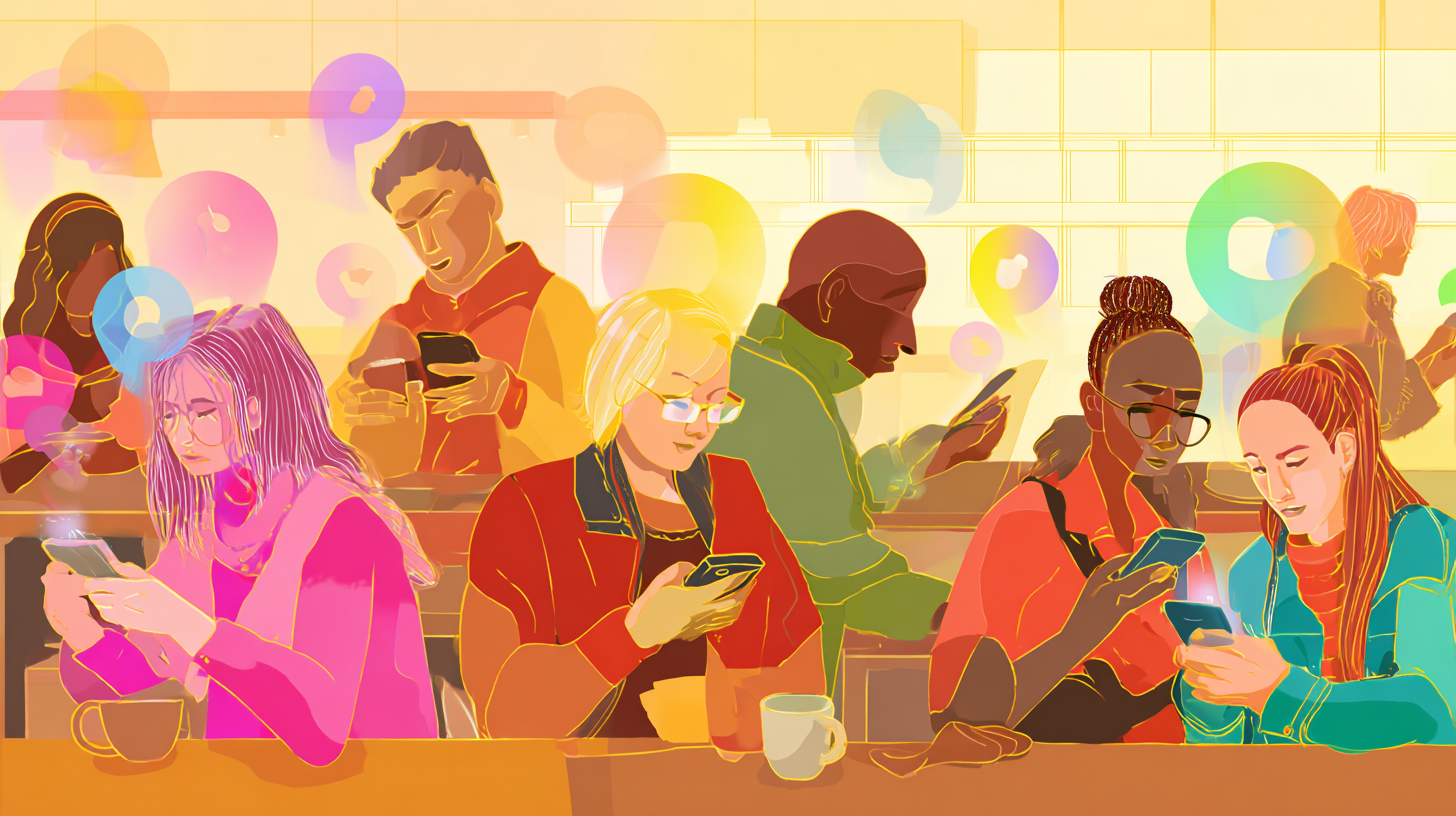
I wanted to zoom out a second and explore what happens when an entire population begins to function in public while quietly failing in private?
Soft failing doesn't erupt. It spreads. It doesn't scream for attention - which is exactly the danger. Because when an emotional condition is subtle, chronic, and socially invisible, it can grow unchallenged, rewiring what we consider "normal." If soft failing continues unchecked, the cost won't just be personal. It will be cultural, civic, even political.
Personal Consequences
At the individual level, the most immediate cost of soft failing is a slow unraveling of interior life. People don't necessarily collapse - they fade. Happiness worldwide, especially in countries where these ideas are in abundance has been in decline for a decade.
Joy feels muted. Selfhood feels paper-thin. Time slides by without anchoring. Tasks are completed, but meaning is lost in the process. This isn't dysfunction, strictly speaking. But it is erosion - of focus, of creativity, of presence.
The emotional toll is real. As attention fragments and the emotional palette dulls, relationships suffer. People begin to withdraw - not dramatically, but subtly. A friend takes longer to reply. A partner feels distant. A conversation feels hollow. What's left is a sense of functioning with no soul inside.
This isn't theoretical. Sleep quality - a key measure of emotional well-being, is in decline worldwide. The reason? Increased stress, technology (blue light), irregular schedules, poor diet, and stimulants. People are getting sicker.
 Matt Hussey
Social and Relational Consequences
Soft failing is not just a private feeling - it's a relational condition. When enough people begin to numb out, withdraw, or disengage, intimacy suffers. We know this already. The loneliness epidemic, paired with an intimacy famine feel cruelly ironic in an age where we've never been more connected.
What does look like in everyday life? Cafes full of individuals sat alone. Conversations that never go deep. Relationships that feel performative. Families or communities that gather, but don't connect. Everyone is there, technically. But no one is really with each other.
At scale, this means the collapse of co-regulation - the shared emotional anchoring that relationships once provided. Vulnerability becomes risky. Emotional openness feels like work. The result is a culture of isolation that doesn't look like loneliness, but acts like it.
Ongoing exposure to distressing media correlates with emotional exhaustion and feelings of helplessness. If everyone is running on low emotional bandwidth, mutual support starts to feel like another demand rather than a source of relief.
Cultural and Political Consequences
Here's the larger risk: soft failing becomes the emotional infrastructure of a society that looks operational, but is running on fumes.
A workforce may appear productive, but the energy driving it is brittle. Creativity suffers. Vision narrows. People keep the machine running but lose the ability to imagine alternatives.
This is not a new concern. Scholars and analysts have long warned that sustained attention is necessary not just for personal success, but for civic life. While hard causal evidence is still emerging, the concern is not unfounded: what happens to democracy when most of its participants are too depleted to participate fully?
 Matt Hussey
Soft failing, in this sense, isn't apathy. It's a kind of involuntary disengagement - the inability to stay emotionally present with issues that require sustained attention, complexity, and care.
In such a context, even activism becomes difficult. The will to resist requires emotional coherence. But a population conditioned to scroll through crisis after crisis, with no time to grieve or rest, will struggle to mobilize. Outrage becomes ambient. Hope feels abstract. Politics starts to feel like theatre for someone else's audience.
This isn't collapse. It's something quieter. A kind of slow civic anemia - a loss of emotional oxygen at scale.
Soft failing may not make headlines. But that's precisely why it's so dangerous. It isn't the catastrophe we see coming. It's the emotional entropy we never thought to measure. Here's what I think we can do about it.
Evidence-Based Ways to Reduce Soft Failing

If soft failing is not a disease but a cultural-emotional condition - one created by structural forces, algorithmic design, and the ambient weight of digital life - then the solutions must be broader than therapy. This isn't about "fixing" individuals. It's about creating space - personally, socially, systemically - to live otherwise.
Still, within this landscape, there are things we can do. Not cures, but countermeasures. Not perfect fixes, but practices of refusal, repair, and rehumanization.
Digital Hygiene and Reducing Doomscrolling
I know it's obvious but it needs saying. One of the most immediate ways to interrupt soft failing is to reclaim attention from its algorithmic captors. That means setting boundaries - not just with time, but with intention.
Reducing compulsive social media or news consumption can meaningfully improve emotional well-being. A 2018 study found that limiting social media use to 30 minutes per day significantly reduced loneliness and depression in young adults. The dose mattered. Less input meant more clarity, more presence.
 Matt Hussey
Other approaches include:
- Digital sabbaths: Designated, tech-free periods that allow the nervous system to downshift.
- Deep work: Structuring time for focused, single-task attention, as a practice of repair.
- Attention restoration: Re-engaging with nature, art, or physical movement to re-anchor cognitive rhythms.
This isn't about digital detox for its own sake. It's about restoring the mind's ability to be in one place at a time - something algorithmic environments actively erode.
Meaningful Social and Emotional Connection
Soft failing isolates. It convinces us that everyone else is doing fine, that our internal fading is private shame. Breaking that illusion requires relational courage - and spaces for emotional honesty.
The protective power of social connection is well-established. In their foundational 1985 study, Cohen and Wills showed that perceived social support significantly buffers the effects of stress. There's an important word in that sentenced: perceived. The belief that we are supported is enough to have an impact. You don't have to be a social butterfly to feel its effects. But it's not just any connection that heals - it's meaningful, emotionally present connection.
 Matt Hussey
This means:
- Prioritizing relationships that allow for co-regulation - mutual attunement, not just emotional downloads.
- Creating spaces (online or IRL) where it's okay to say: "I'm tired, but I don't know why."
- De-emphasizing performance - in friendships, family life, and community - in favor of presence.
Relational restoration is both intervention and resistance: a refusal to let digital overstimulation become the baseline for how we relate to each other.
Structural and Institutional Interventions
Personal strategies matter - but they are limited if the systems we live in still reward depletion. That's why the next layer of intervention must be collective.
- Workplace reform: Cultures that incentivize 24/7 responsiveness must be re-evaluated. "Always-on" is not a flex - it's a dumb health risk.
- Public awareness: The harms of attention-maximizing platforms must be acknowledged, not just by users but by policymakers. We already regulate food, water, and medicine for public safety. Why not algorithms?
- Education: Teaching digital literacy should include more than how to use tools - it must address how those tools use us. Attentional resilience, emotional regulation, and media discernment are 21st-century survival skills.
None of this is simple. But complexity is not a reason to do nothing. It's a call to begin - incrementally, imperfectly, together.
 Matt Hussey
Reclaiming Inner Life Over Productivity Logic
Perhaps the most radical intervention is not about behavior, but belief. Soft failing thrives in cultures that equate value with output. That reward appearance over depth. That teach us to optimize ourselves until there is nothing left to optimize.
What might it mean to reframe success? To define it not by the number of things accomplished, but by the quality of our presence while doing them? To see rest, reflection, slowness - not as indulgent, but as essential?
There is growing evidence that contemplative practices like mindfulness can restore cognitive function and emotional balance. A 2013 study found that mindfulness training not only improved working memory, but enhanced academic performance and reduced mind-wandering.
But beyond the science, this is about story. Who do we become when we center being over doing? To resist soft failing is not simply to fight fatigue. It is to remember that aliveness is not the byproduct of efficiency - it is the point.
Naming the Fade
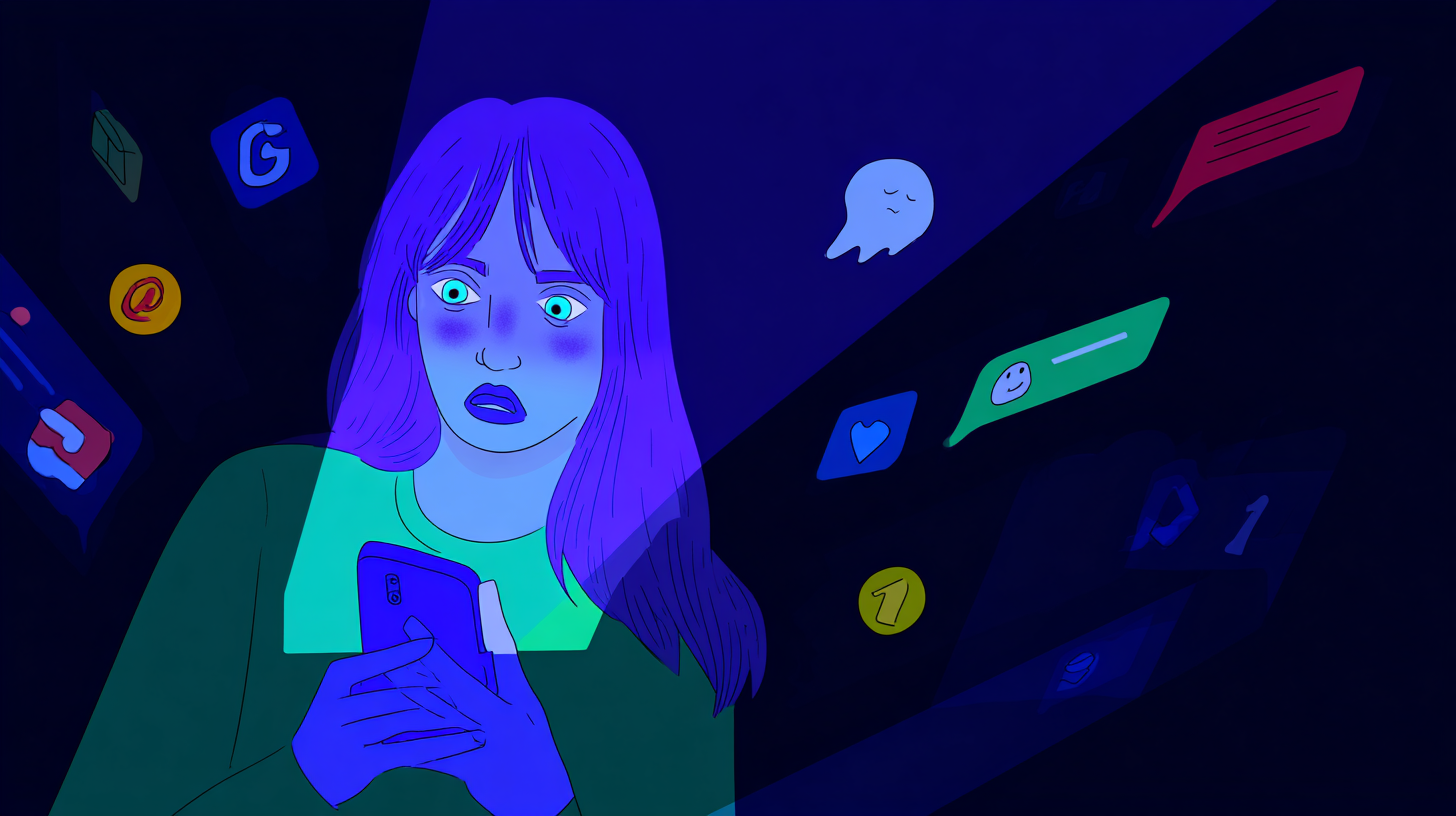
We are living through a quiet revolution - not of governments, but of attention. Not of war, but of feeling. The algorithmic age hasn't just changed how we consume news or message our friends. It has rewritten the coordinates of interior life. It has redrawn the map of what it means to be present, connected, alive.
Soft failing is not a flaw in your psyche. It is a condition born of context - a slow-motion depletion made invisible by functionality. It's the ability to keep going, long after the inner spark has dimmed. It's the strange emotional afterlife of living in a world that rewards display, devours attention, and calls the hollow performance of okayness "normal."
 Matt Hussey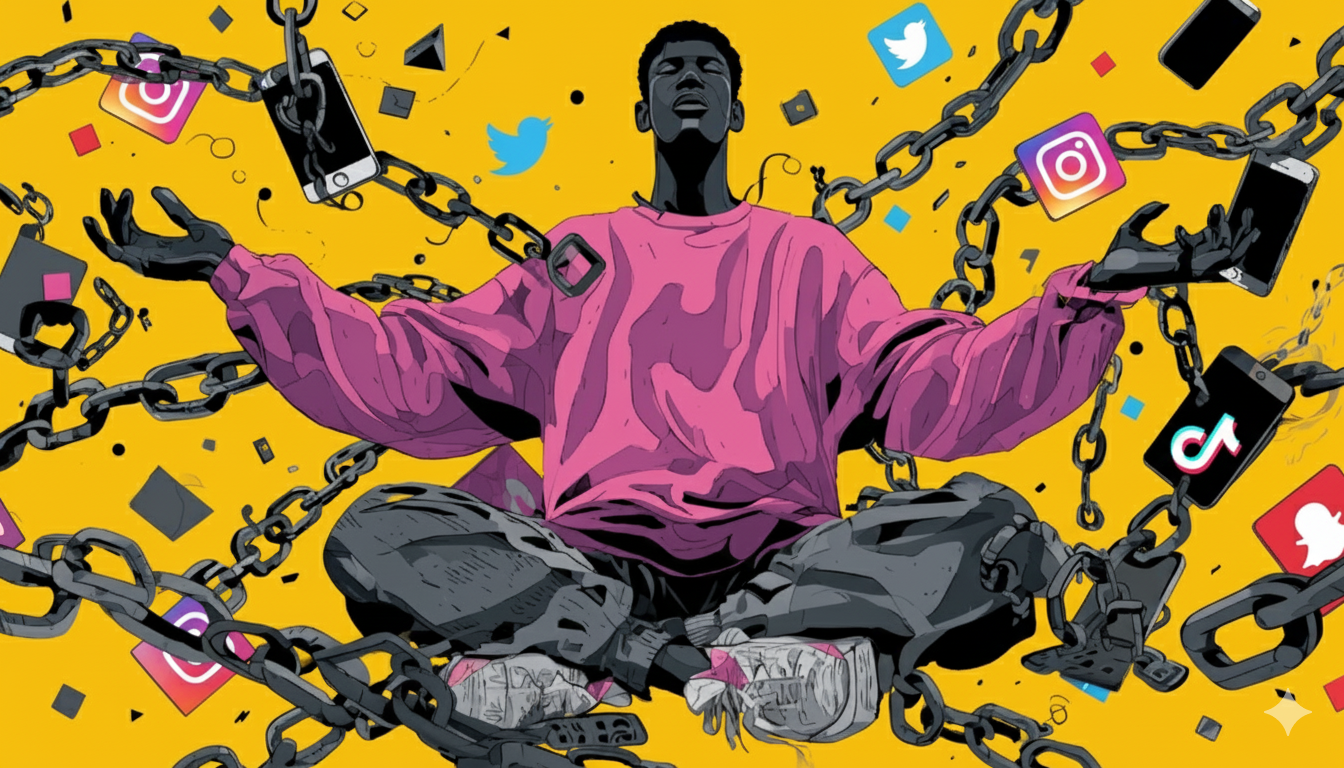
This is not illness. It is erosion. And like all erosion, it's easy to miss - until too much has worn away. But here is why I've taken more than 4,000 words to explain this to you:
- If we don't name it, we can't fight it.
- If we don't track it, we can't see who it's taking.
- If we don't resist it, we risk adapting to it - mistaking numbness for peace, and depletion for adulthood.
Soft failing is the silent crisis of the 2020s. Naming it is not just a diagnostic act - it's a moral one. A refusal to pretend that living half-alive is good enough.
Call it what it is. Then choose otherwise.
FAQ Section
Q1: What is soft failing?
Soft failing is a subclinical state where a person functions outwardly but experiences internal depletion of vitality, attention, and emotional engagement. It draws on research into languishing, technostress, and doomscrolling.
Q2: Is soft failing a mental health diagnosis?
No. It is a cultural and psychological concept that describes a widespread emotional state. It is not part of the DSM or ICD diagnostic systems.
Q3: How is soft failing different from burnout?
Burnout is work-specific and classified as an occupational phenomenon. Soft failing encompasses work, digital life, and emotional processing, without requiring acute exhaustion.
Q4: What causes soft failing?
Key drivers include digital overload, chronic doomscrolling, fragmented attention, performance pressure, and emotional numbing from sustained low-grade stress.
Q5: How can I tell if I'm soft failing?
Common signs include numbness, reduced focus, compulsive scrolling, emotional flatness, detachment, and maintaining external performance while feeling internally drained.
Q6: Can soft failing be measured?
Yes - the Soft Failing Index (SFI) is a proposed research tool that measures vitality, attention erosion, algorithmic habits, and masked functionality.
Q7: How do you recover from soft failing?
Research points toward reducing digital overload, restoring attention, strengthening social connection, and rebuilding a sense of meaning.