The Algorithmic Adolescence: How Social Media Is Rewiring Gen Z's Emotions, Identity, and Mental Health
Why Gen Z's "blank stare" isn't apathy but adaptation. An investigation into algorithmic identity lock-in, self-diagnosis culture, dopamine burnout, and how digital platforms are reshaping emotional development.
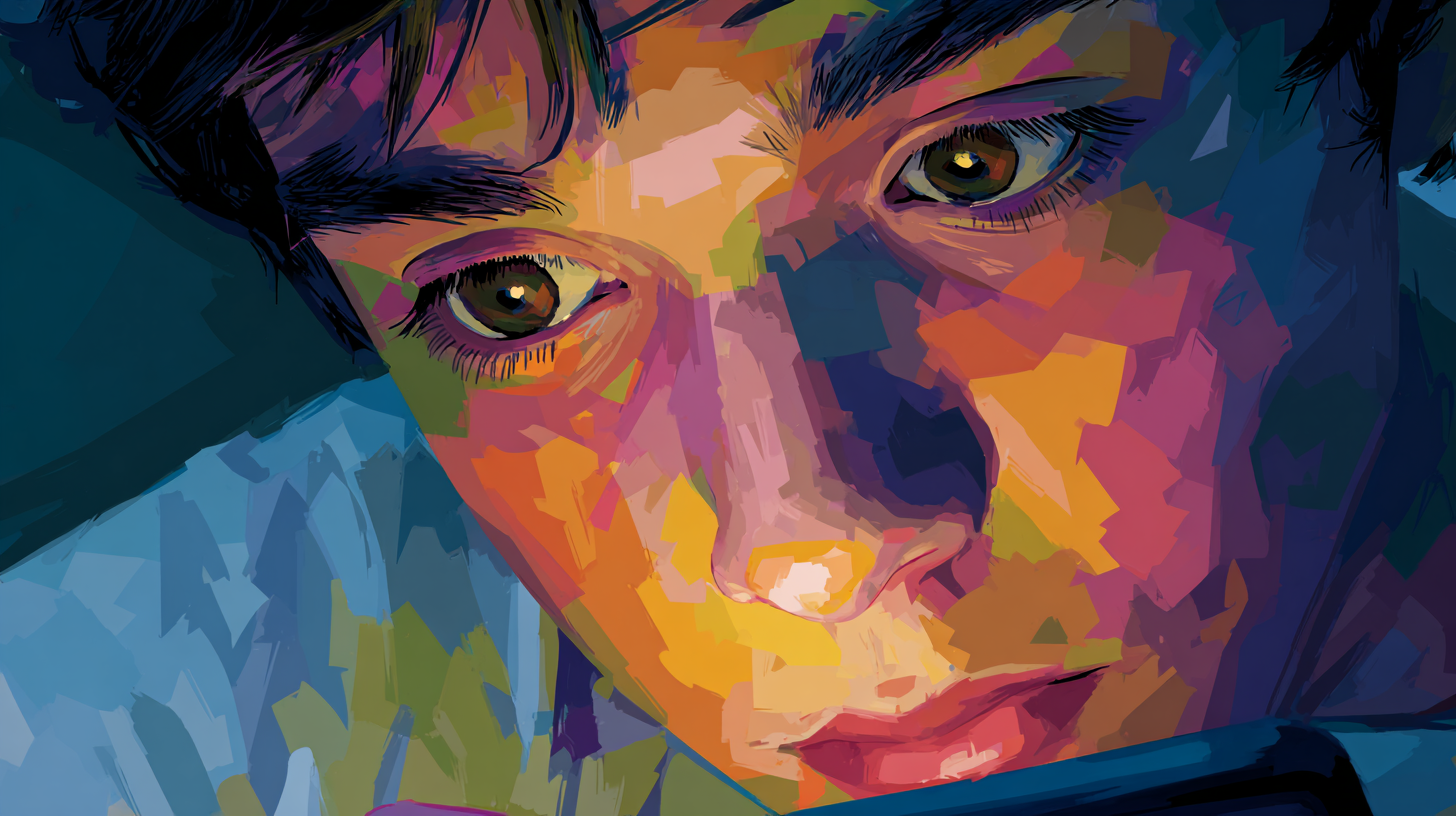
It began, as these things often do, with a look.
A flat, unmoving stare. No smile. No frown. Eyes open but somehow absent. On TikTok and X, it's been called the "Gen Z stare," sometimes "lobotomy chic," sometimes framed as rudeness, sometimes as nihilism. For older generations, the expression reads as boredom at best, hostility at worst.
But for the generation wearing it, the stare is not an attitude. It's armor.
This is a cohort that came of age inside catastrophe-pandemic, climate collapse, political instability-while being raised by platforms that promised connection and delivered classification.

They learned how to perform before they learned how to process. They learned how to label feelings before they learned how to feel them. And so the stare emerged not as rebellion, but as regulation: a nervous system going offline in a world that never stops pinging.
What looks like emotional vacancy is, in many cases, emotional overload. Over the last few years, something subtle but profound has shifted in youth culture.
Dissociation-once a clinical term reserved for trauma textbooks-has become casual shorthand. "Bed rotting," "doomscrolling," "NPC mode," "brain fog." These aren't diagnoses so much as vibes. And yet they point to a shared internal experience: a sense of unreality, flattening, numbness. A feeling of being slightly removed from one's own life.
 Matt Hussey
In 2024, Oxford Dictionary named "brain rot" its Word of the Year. The phrase wasn't deployed as an insult. It was offered as a confession. A collective acknowledgment that something about our digital diet is quietly corroding attention, memory, and motivation. When a generation names its own cognitive decay-and does so with humor-that isn't apathy. It's awareness.
The deeper problem isn't that young people are online too much. It's that we have outsourced emotional development to algorithms. It's what I'm calling algorithmic adolescence.
This is an idea that young people's emotional, social, and identity formation is significantly shaped by recommendation algorithms that interpret transient feelings as stable traits, reinforce those interpretations through feedback loops, and reward performative self-understanding over experiential self-discovery.
Teenagers in the UK are growing up inside infinite feedback loops that don't just observe behaviour-they interpret it. A passing sadness becomes content preference. A moment of anxiety becomes a suggested identity. Before there is space for confusion, exploration, or contradiction, there is a label. Before there is language for feeling, there is a category to inhabit.
This piece is part of an ongoing emotional weather report-an attempt to track not just what people say they feel, but the deeper conditions shaping how life is actually being lived in the UK today. If earlier instalments focused on shame, disconnection, and quiet exhaustion, this one turns to a group we talk about constantly, yet struggle to understand: young people.
UK Youth Under Siege
It would be comforting to believe this is a Silicon Valley problem. An American export. A cultural pathology that crossed the Atlantic via TikTok and stayed mostly intact on the other side.
But the data doesn't support that.
In the UK, the symptoms of algorithmic adolescence appear with local accents and familiar institutions-but the underlying mechanisms are strikingly similar.
According to Ofcom, UK teenagers now spend over three hours a day on social media on average, with TikTok, Instagram, and YouTube dominating attention. For many, these platforms are not supplements to social life-they are the primary arena where identity is rehearsed, validated, and stabilized.
At the same time, the UK has seen a sharp rise in youth mental health concerns that map neatly onto the dynamics of algorithmic identity lock-in. NHS data shows sustained increases in anxiety, emotional disorders, and referrals for adolescent mental health services since the pandemic-particularly among 16-24-year-olds. Waiting lists stretch for months. Sometimes years.
Into that vacuum steps the feed. When access to clinicians is limited - or as I've discussed before, when trust in them is in decline - platforms become proxies for explanation. TikTok doesn't replace the NHS because it's better-it replaces it because it's immediate. A diagnosis delivered in 30 seconds performs better than an assessment delivered after a 12-month wait.
 Matt Hussey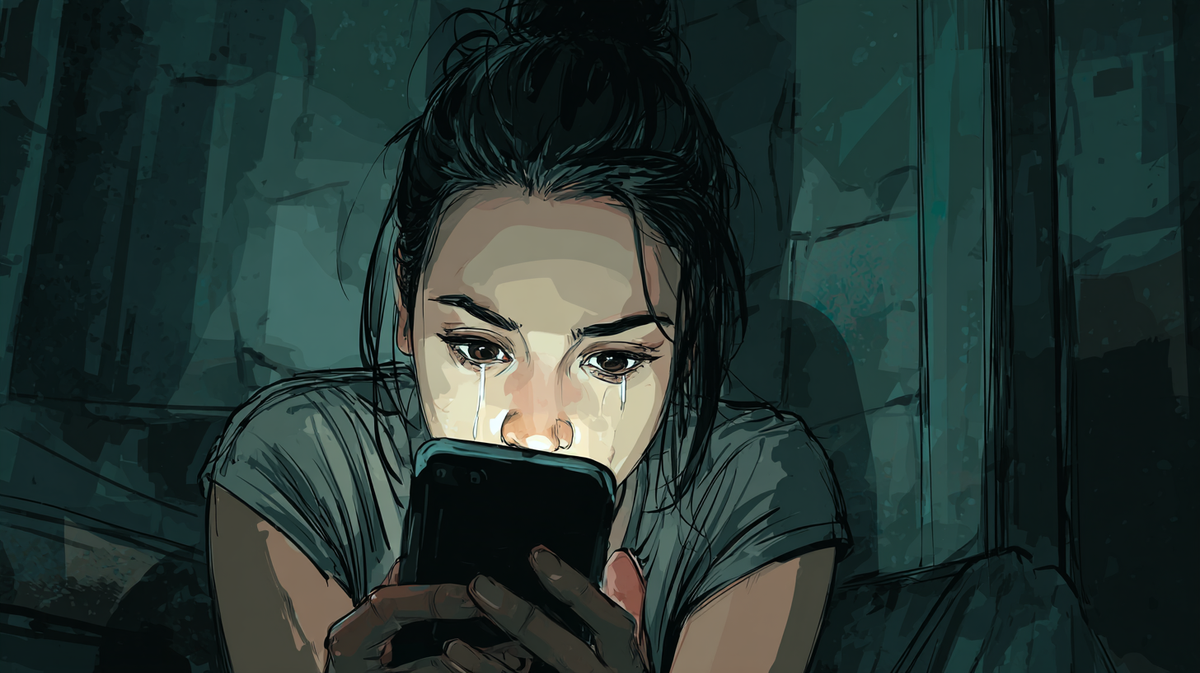
This is one reason the language of self-diagnosis has spread so quickly in the UK. Terms like "ADHD," "autistic burnout," "dissociation," and "trauma response" are no longer confined to clinics or academic journals. They circulate freely on British TikTok, often stripped of context but heavy with recognition. They offer coherence in a system where formal support feels unreachable.
The 40-Minute Diagnosis: How Algorithms Define Us
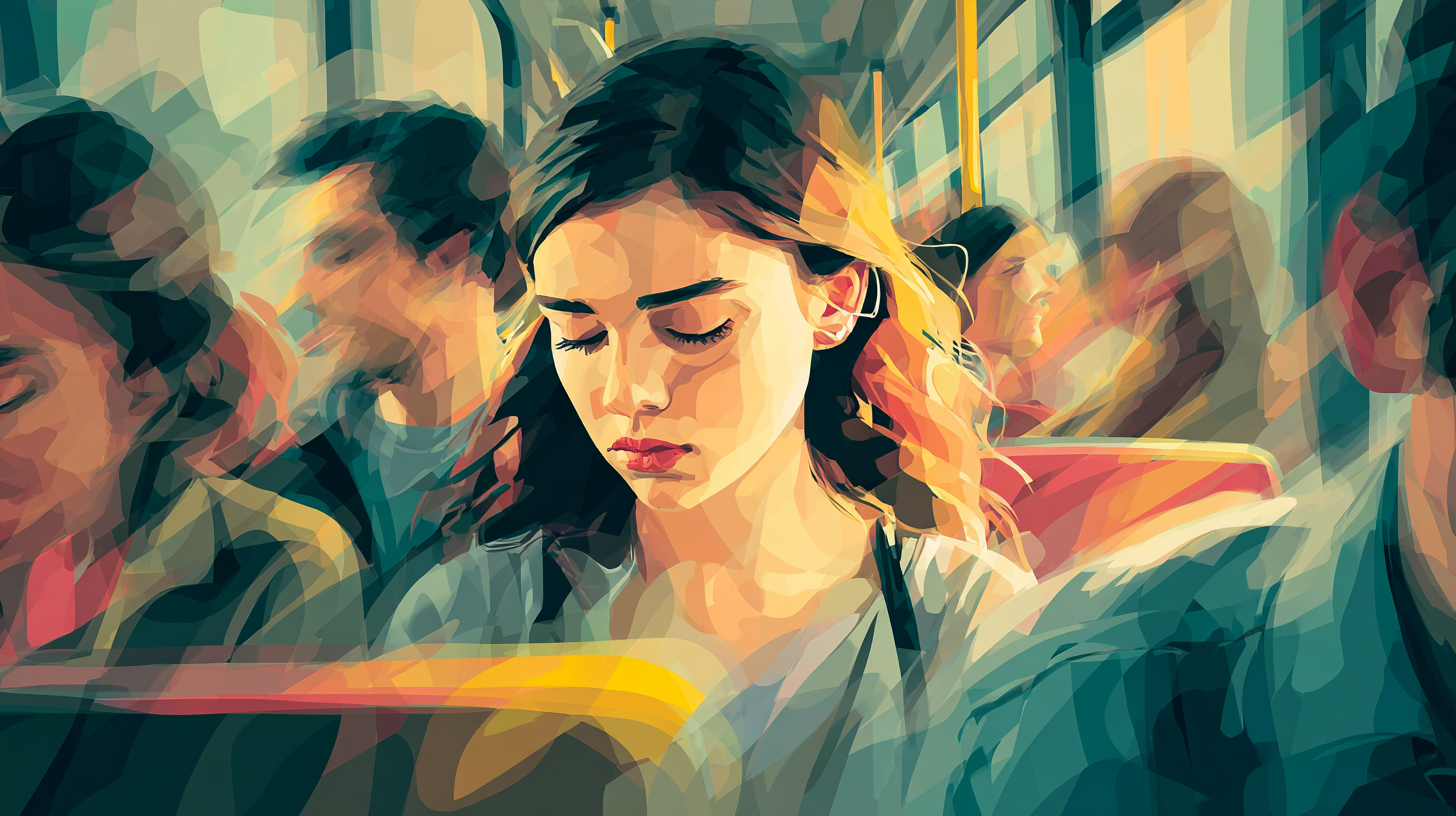
If we want to understand the forces being exerted upon the young today, we have to go looking at the machines watching over them.
According to a 2024 investigation by Mozilla, it takes as little as 40 minutes for TikTok's algorithm to identify a user's emotional vulnerabilities and begin steering their feed accordingly. Not their interests-their susceptibilities. Sadness. Anxiety. Loneliness. Body image concerns. Neurodivergence. Grief. The platform doesn't need a diagnosis. It only needs behavior.
Watch one video about feeling empty, and your "For You" page subtly tilts. Watch a second, and it pivots. A third, and you're no longer being shown content-you're being sorted. The feed becomes increasingly specific, increasingly affirming, increasingly narrow. What began as a fleeting emotional state is reflected back as a pattern. Then as a community. Then as an identity. This is not accidental. It is the business model. This is machine behind algorithmic adolescence.
Recommendation algorithms are designed to maximize engagement, and nothing keeps attention like emotional resonance. Content that mirrors internal states-especially distress-performs extraordinarily well. The result is what the Mozilla report describes as "identity lock-in": once a user is slotted into a particular emotional niche, the system continuously reinforces it, making deviation increasingly unlikely.
In other words, the algorithm doesn't just respond to who you are. It trains you to remain who you've been.
 Matt Hussey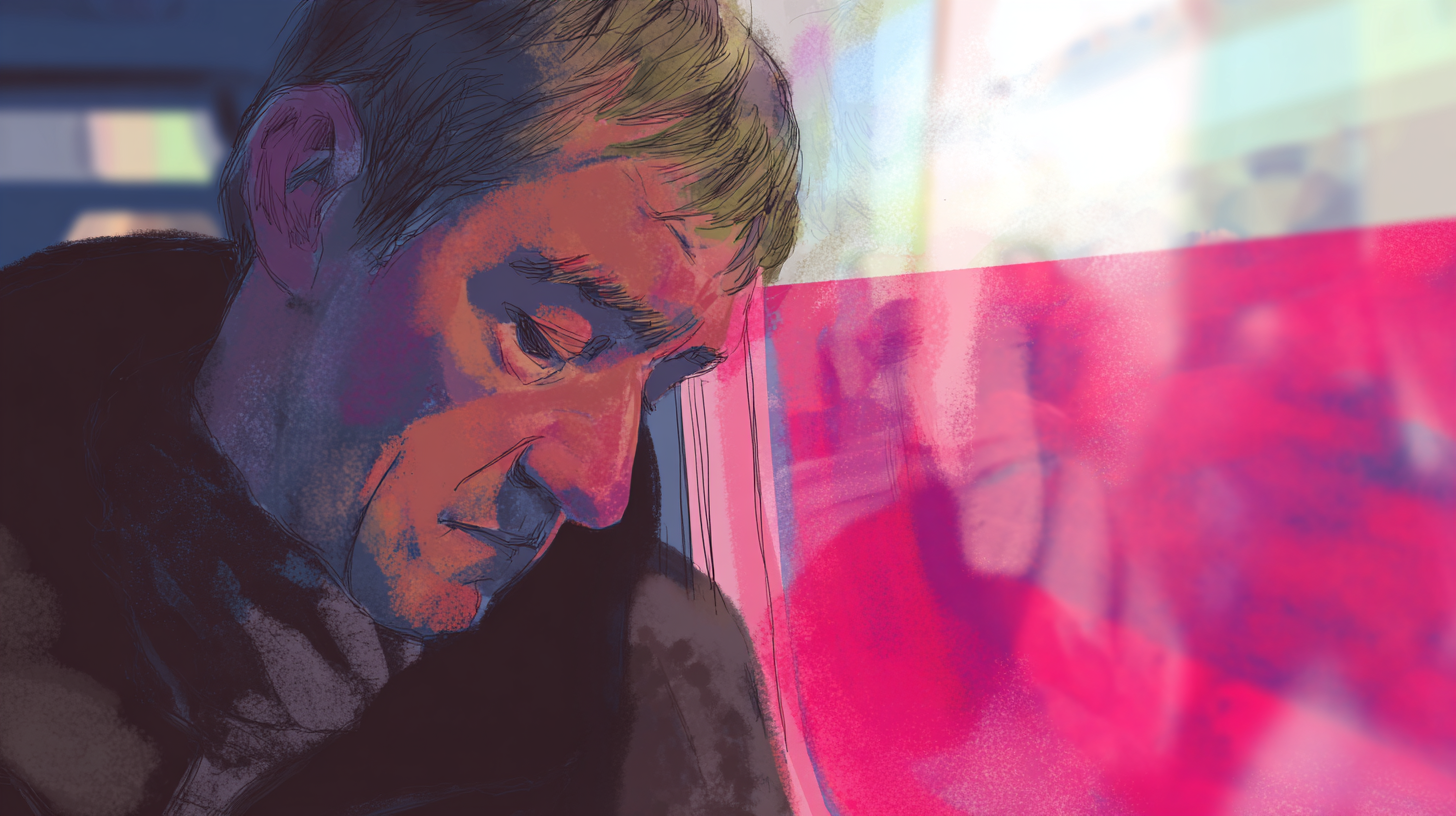
For adolescents-whose identities are, by definition, unfinished-this has profound consequences. Teenagers have always experimented with moods, aesthetics, and selves. What's different now is that experimentation is being interpreted by machines as preference data. Temporary feelings are treated as stable traits. Exploration is mistaken for essence.
And once the system decides who you are, it rarely lets you forget it. It's an idea already being discussed in some circles: that sub-Reddits are less safe spaces and more traps to hold you in.
This dynamic echoes a concept introduced long before TikTok existed. In the 1990s, philosopher Ian Hacking described what he called "looping effects." The idea is simple but destabilising: when people are categorised, they change their behaviour in response to that category-and in doing so, they begin to more closely resemble it.
Label someone as anxious, and they start monitoring their anxiety. Label someone as disordered, and they begin organizing their life around that disorder. The category doesn't just describe the person. It shapes them. Digital platforms have operationalized this phenomenon at scale.
The loop often looks like this:
A teenager feels unfocused → TikTok serves ADHD content → the teen recognises themselves in the descriptions → they adopt the language, behaviours, and expectations of the label → the algorithm rewards this alignment with more content, more community, more validation.
At no point does anyone pause to ask whether the initial feeling was situational, developmental, or fleeting. The loop has no incentive to slow down. Certainty performs better than ambiguity. Diagnosis performs better than doubt.
This matters because much of the mental health content driving these loops is unreliable. A 2025 analysis reported by Psychology Today found that approximately 83% of mental health advice on TikTok is misleading or inaccurate. Yet Gen Z is significantly more likely to encounter psychological frameworks through social media than through clinicians, educators, or even books.
What platforms offer is not care, but coherence. A narrative that explains discomfort quickly and completely. "This is why you feel like this." "This is who you are." "Here is the community that proves it."
 Matt Hussey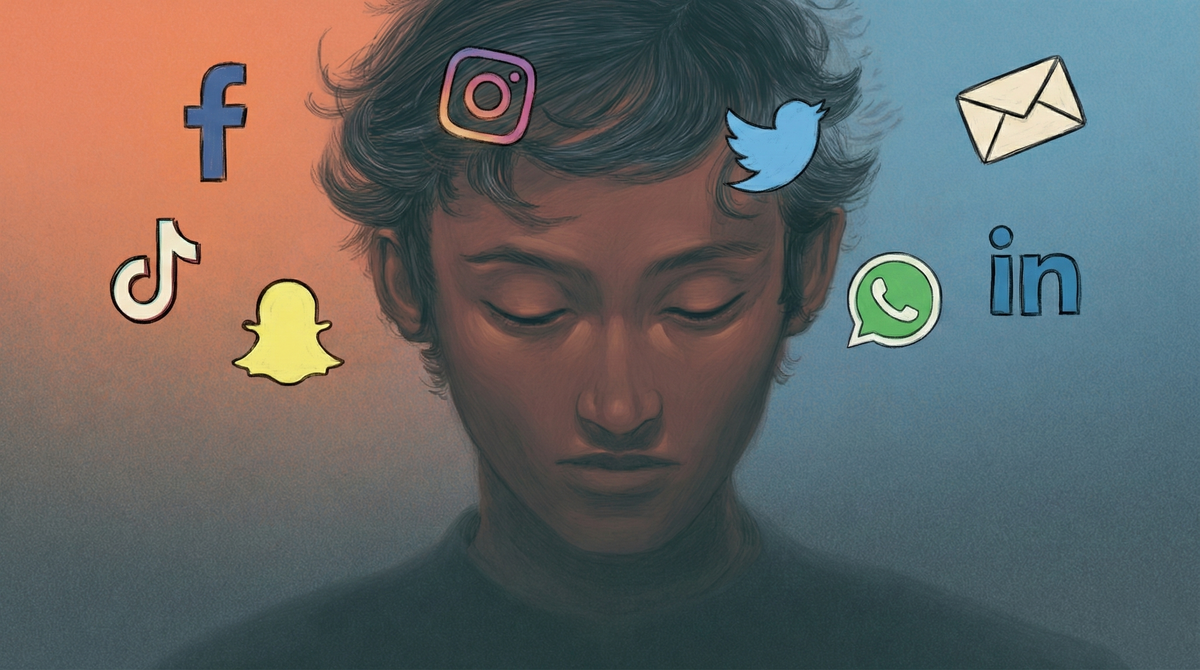
For a generation raised in uncertainty-economic, ecological, political-that clarity can feel like relief. But there is a cost to having your inner life defined by a machine trained on engagement metrics. When every feeling is immediately contextualized, labeled, and optimized for retention, there is no space left for confusion. No room for contradiction. No permission to feel something without becoming it.
The algorithm does not ask, How are you feeling today? It asks, Which version of you keeps watching? And for many young people, the answer arrives long before they've had a chance to decide for themselves.
From "Bed Rotting" to "Lobotomy Chic"
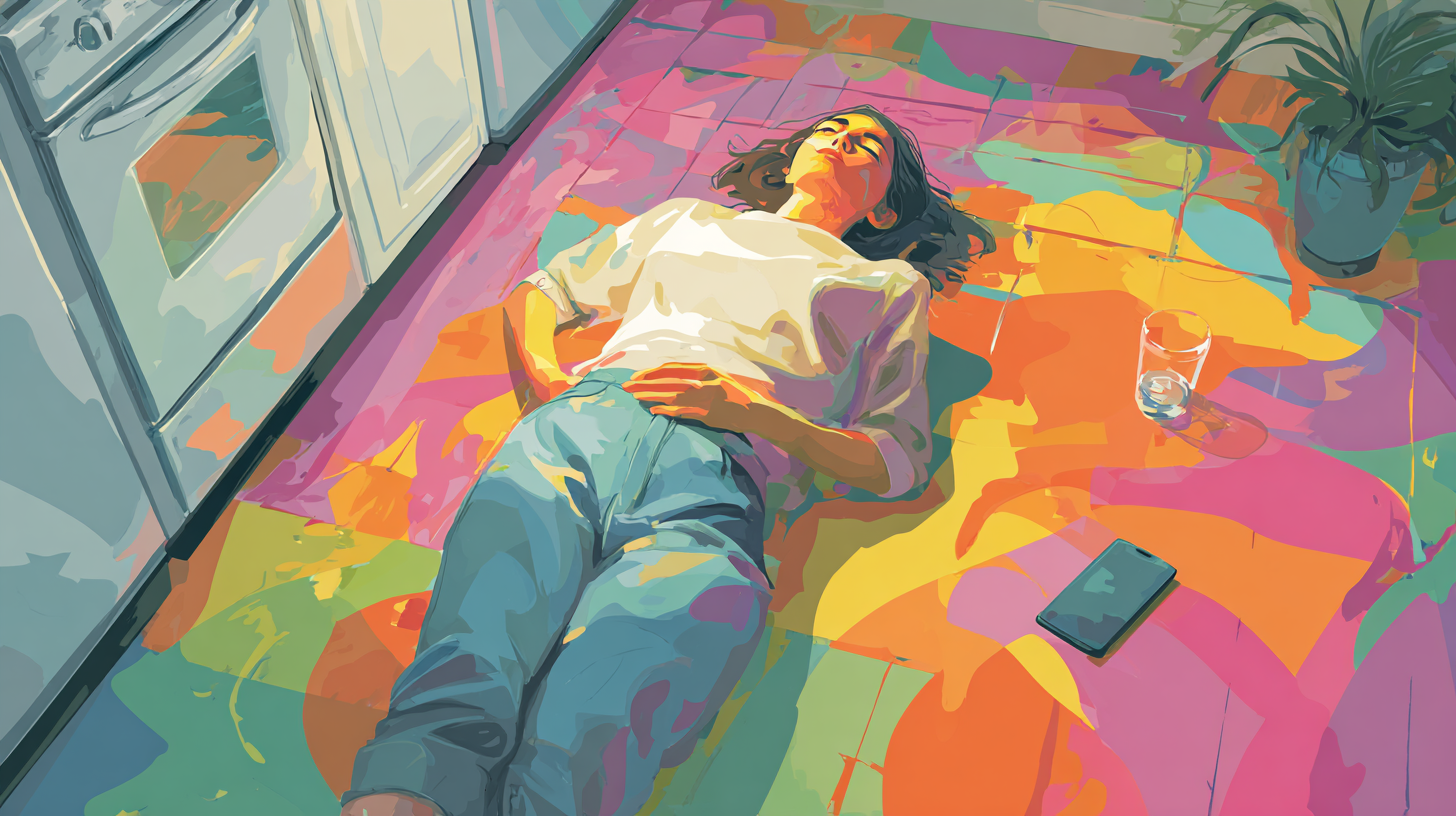
If algorithms reward emotional flatness then numbness doesn't just become common. It becomes cool. Aesthetic. Shareable. Something to inhabit deliberately rather than fight.
Over the past few years, a distinct visual language has emerged online. "Bed rotting" videos show young people lying still for hours or days, not sleeping but scrolling, eating, existing horizontally. "Lobotomy chic" makeup trends exaggerate dark circles, washed-out skin, vacant eyes. Fashion editorials and TikTok filters alike lean into the look of sedation: muted colors, slack posture, affectless faces.
This isn't accidental. It's communicative. To an older generation raised on the moral language of productivity-hustle, optimize, girlboss-the embrace of inertia looks like surrender. But to Gen Z, I believe, it reads as refusal. A rejection of the demand to be endlessly expressive, ambitious, and emotionally available in a world that feels increasingly uninhabitable.
If the future is unstable-economically, ecologically, politically-then disengagement begins to look less like pathology and more like pragmatism.
Clinically, there's a name for the sensation being aestheticized: dissociation. More specifically, derealisation: the feeling that the world isn't quite real, that you're watching life rather than participating in it.
 Matt Hussey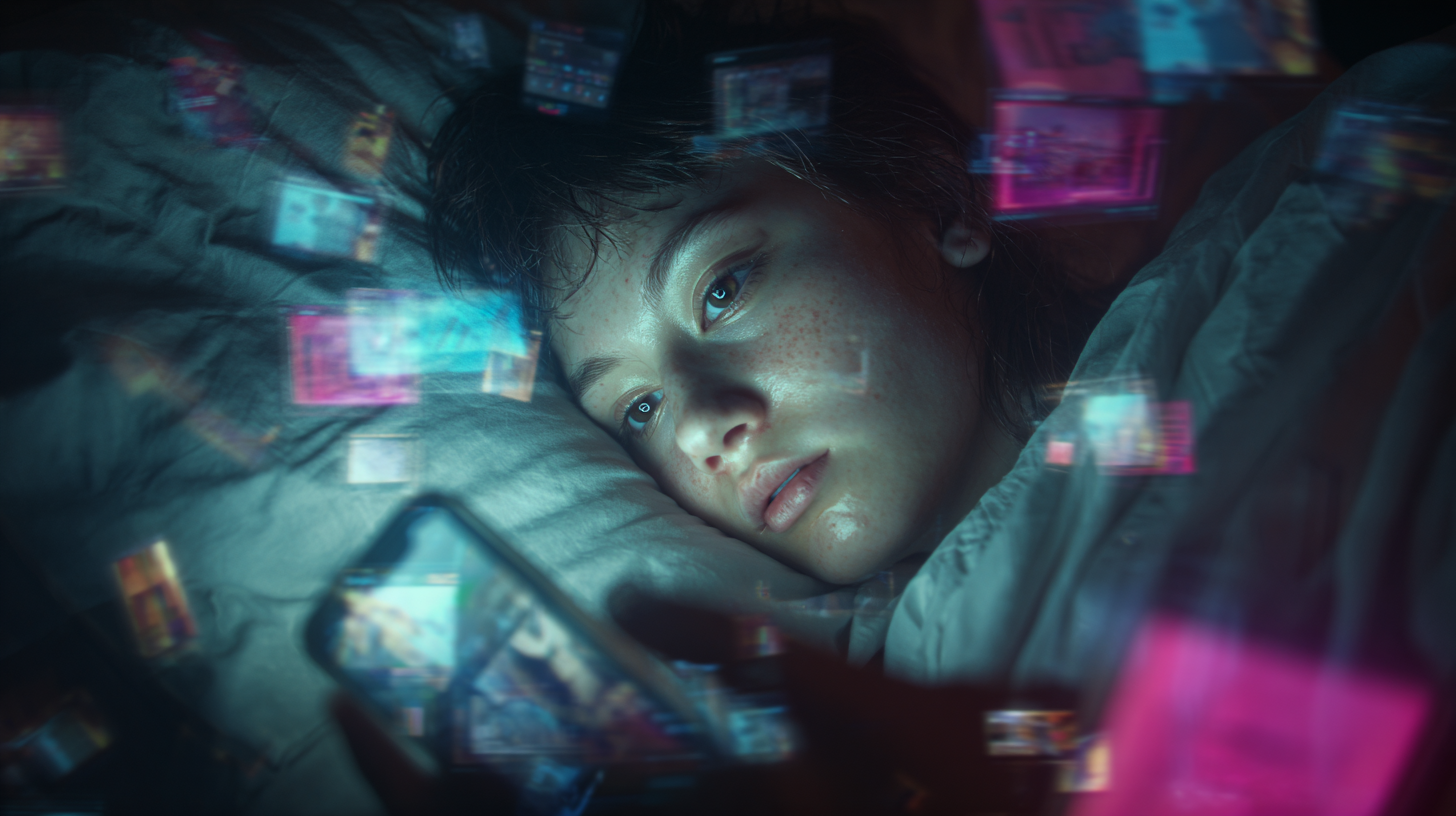
Traditionally, dissociation has been understood as a protective response to overwhelming stress. When the nervous system can't fight or flee, it freezes. It numbs. It distances.
What's new is not the symptom, but its scale-and its visibility.
In November 2025, the University of Birmingham launched a major public resource aimed at helping young people understand dissociation, after clinicians and educators observed a sharp rise in searches for the term among adolescents. Dissociation had crossed from specialist vocabulary into everyday self-description. Young people weren't just experiencing it; they were naming it, sharing it, styling it.
The boundary between "IRL" and online life had blurred so thoroughly that unreality itself became a common state of being.
Social platforms accelerate this process by rewarding legibility. A flat affect is easily readable on screen. A blank stare communicates instantly: I'm overwhelmed. I'm checked out. I'm not playing this game. In a digital environment that constantly demands reaction-likes, takes, opinions-the refusal to react becomes its own signal.
According to analysis from the Rowan Center, the so-called Gen Z stare should not be interpreted as apathy or defiance, but as a nervous system adaptation to chronic overstimulation. When everything is urgent, nothing can be. Emotional flattening becomes a way to survive constant exposure to crisis content, social comparison, and algorithmic judgment.
This helps explain why dissociation has been reframed not as something to heal from, but as something to lean into. If you can't escape the conditions producing the stress-climate anxiety, economic precarity, permanent online presence-then going numb feels like control.
 Matt Hussey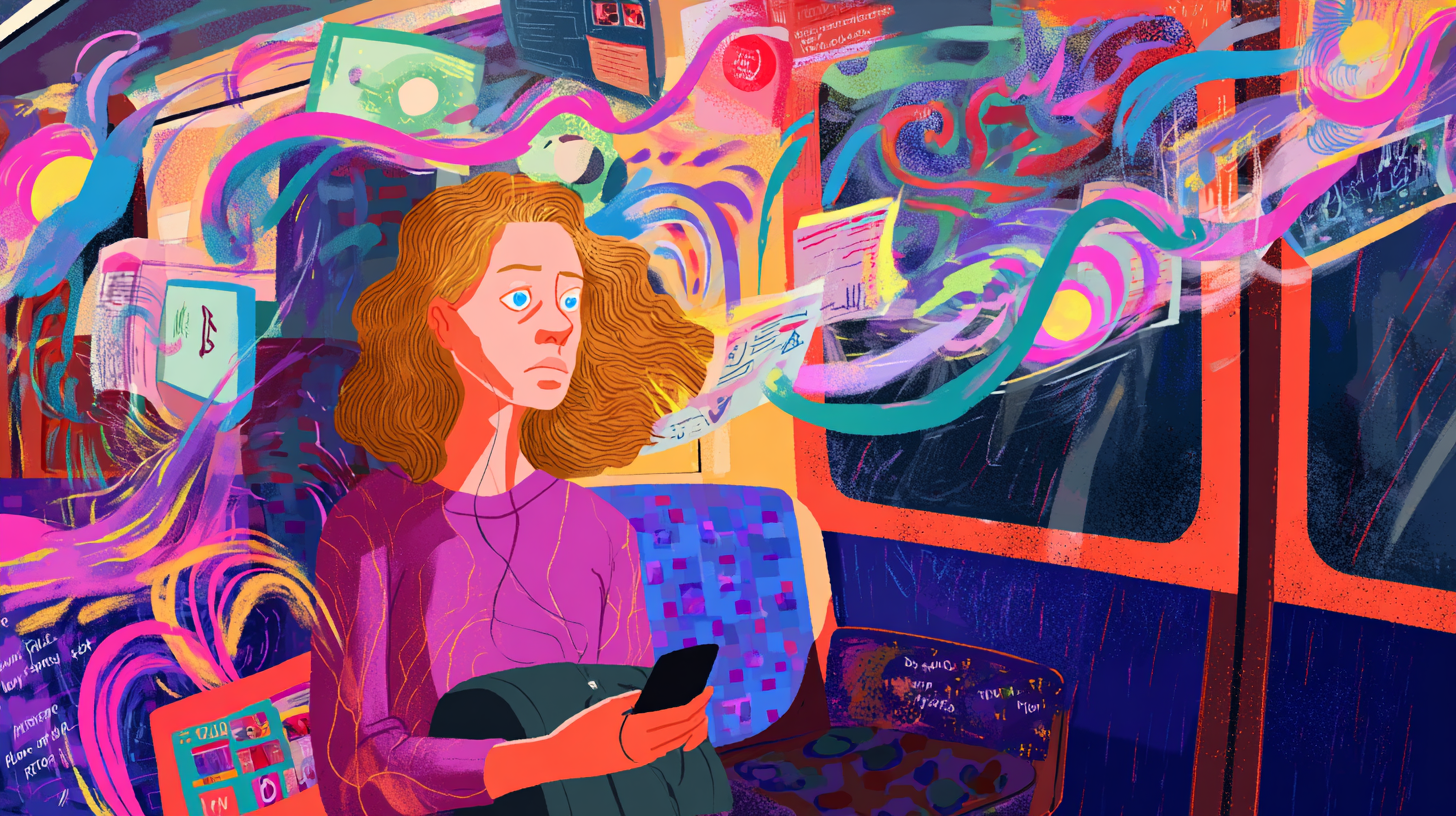
It's also a quiet rebellion against millennial optimism. Where millennials were told to self-actualize through work, branding, and positivity, Gen Z inherited the bill. The promise that passion would pay off collapsed under student debt, housing crises, and burnout economies. In that context, the refusal to strive doesn't signal laziness. It signals disillusionment. Functional freeze, rebranded as taste.
The danger is that when dissociation becomes cultural shorthand, it stops being recognized as a signal. A blank stare that once might have prompted concern is now read as aesthetic competence. Emotional withdrawal is rewarded with views, community, and validation. The nervous system learns that numbness is not just safer-it's socially efficient.
And so the loop tightens again. What began as a protective response to overwhelm becomes a shared posture. A look. A language. A generation learns to perform disconnection so fluently that it risks forgetting what connection feels like.
The stare spreads not because young people don't care-but because caring, in a hyper-visible world, has become too costly.
The Anhedonia Epidemic
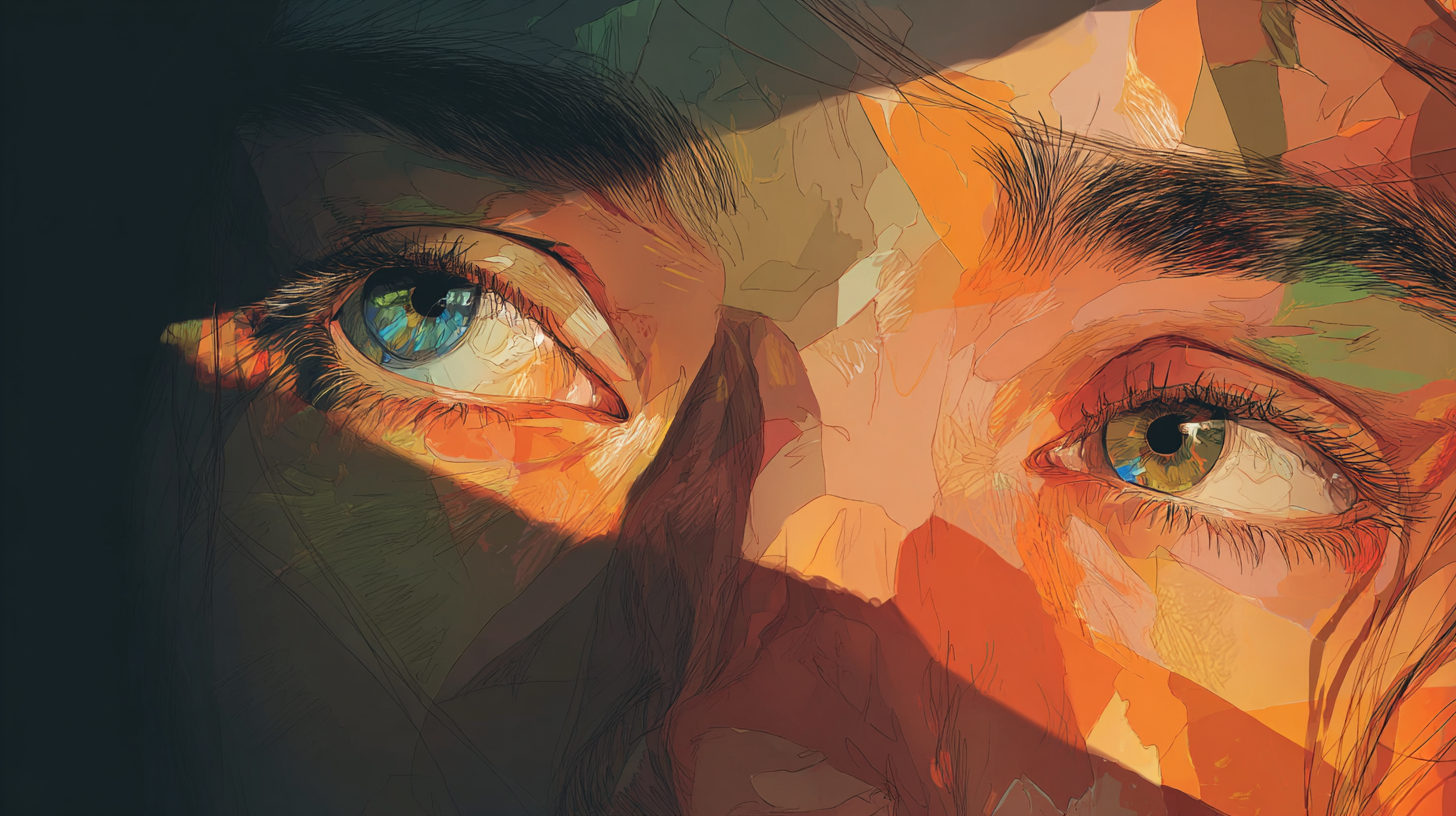
We tend to imagine addiction as excess. Too much pleasure. Too much stimulation. Too much dopamine. But what's emerging in young people in the UK now looks different.
What many young people are experiencing isn't constant excitement-it's anhedonia: the inability to feel pleasure at all. Food tastes flat. Music doesn't hit. Achievements feel meaningless. Even rest feels strangely exhausting. This isn't sadness in the traditional sense. It's absence. A dulling of reward.
The paradox of the digital attention economy is that it doesn't overwhelm the brain with pleasure-it exhausts it.
Dopamine, often misunderstood as the "pleasure chemical," is better described as the molecule of anticipation. It spikes not when we feel good, but when we expect something good to happen. Social platforms exploit this mechanism relentlessly. Infinite scroll. Variable rewards. Intermittent reinforcement. You don't know what's next-but you know something might be. So you keep swiping.
 Matt Hussey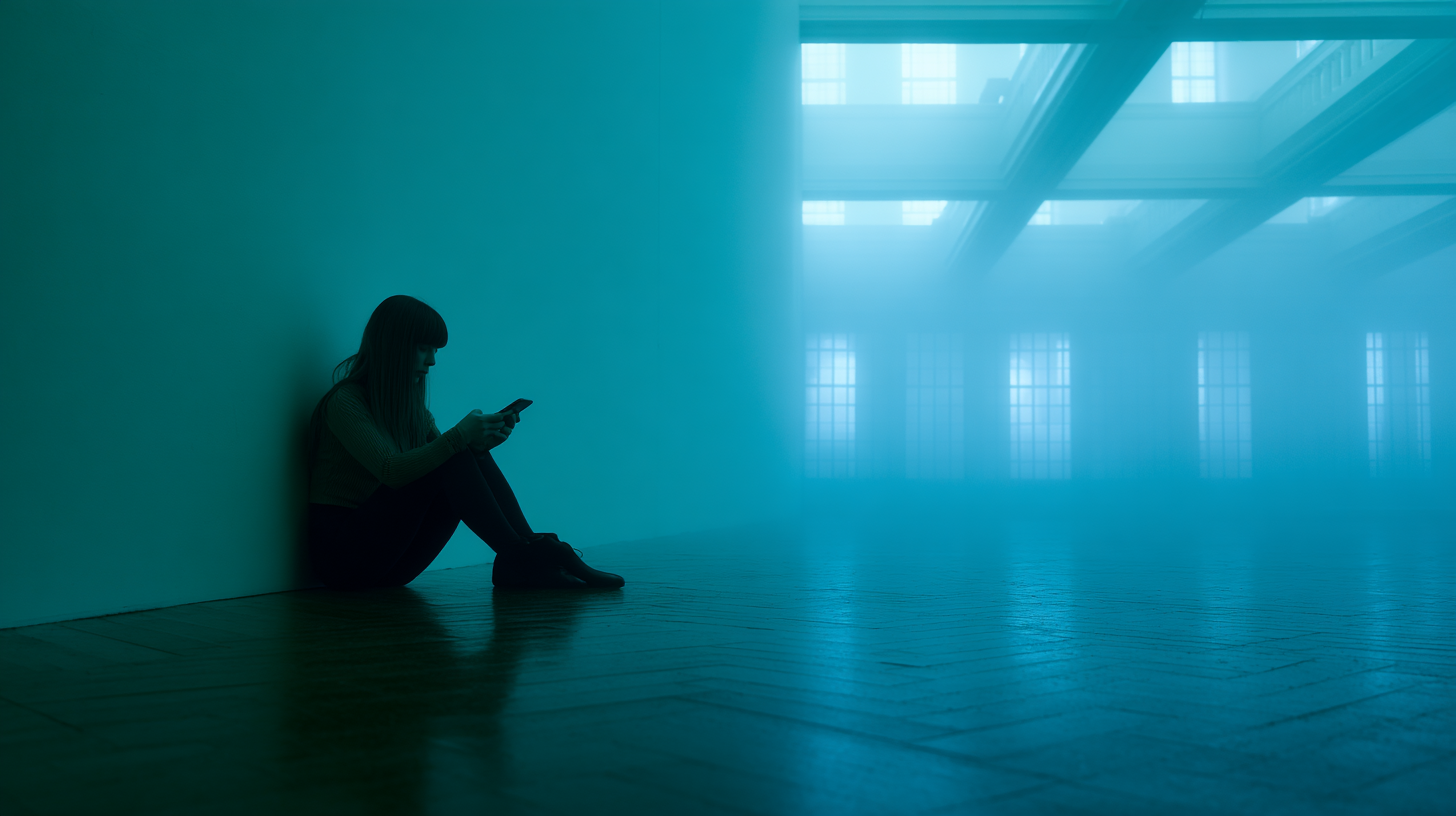
Over time, this constant low-grade stimulation recalibrates the brain's reward system. Fast, cheap hits of novelty-likes, clips, comments-become the baseline. Slower, embodied pleasures begin to feel insufficient by comparison. Reading a book. Walking without headphones. Sitting with another person without distraction. These experiences aren't less meaningful-but they are less immediately stimulating.
And the brain, trained on speed, misinterprets that difference as emptiness. This is what dopamine burnout looks like. Not agitation, but flattening. Not craving, but indifference. The reward system doesn't shut down-it becomes desensitized. More input produces less output. More stimulation yields less feeling.
In that context, numbness isn't a mystery. It's the predictable outcome of an environment optimized for constant engagement. This biological exhaustion helps explain the rise of another curious cultural signal: the "NPC" trend.
NPC-short for Non-Playable Character-originated as gaming shorthand for background figures with no agency or inner life. On livestreams and short-form video platforms, creators began performing as NPCs: repeating scripted phrases, responding mechanically to digital "commands," mimicking artificiality with eerie precision. The performances are hypnotic, lucrative, and deliberately dehumanized.
On the surface, it looks like satire. Or absurdist humor. Or a clever monetization tactic. At a deeper level, it's a surrender.
The NPC trend dramatizes what it feels like to live inside algorithmic systems: reactive rather than reflective, responsive rather than self-directed. You don't choose the narrative-you trigger prewritten responses. You aren't the protagonist of your story; you are content inside someone else's game.
For a generation already feeling drained of motivation and pleasure, the appeal makes sense. If agency feels unavailable, performance becomes easier than presence. If emotional depth feels inaccessible, simulation offers structure. There is relief in becoming predictable. In being told what to do. In opting out of authorship.
Anhedonia doesn't always announce itself as despair. Sometimes it appears as detachment. As irony. As the decision to stop trying to feel deeply in a world that monetizes feeling relentlessly.
What's especially troubling is how quietly this state can persist. Anhedonia doesn't provoke intervention the way visible distress does. A young person who is panicking triggers concern. A young person who feels nothing often doesn't. Flat affect is easily mistaken for stability.
 Matt Hussey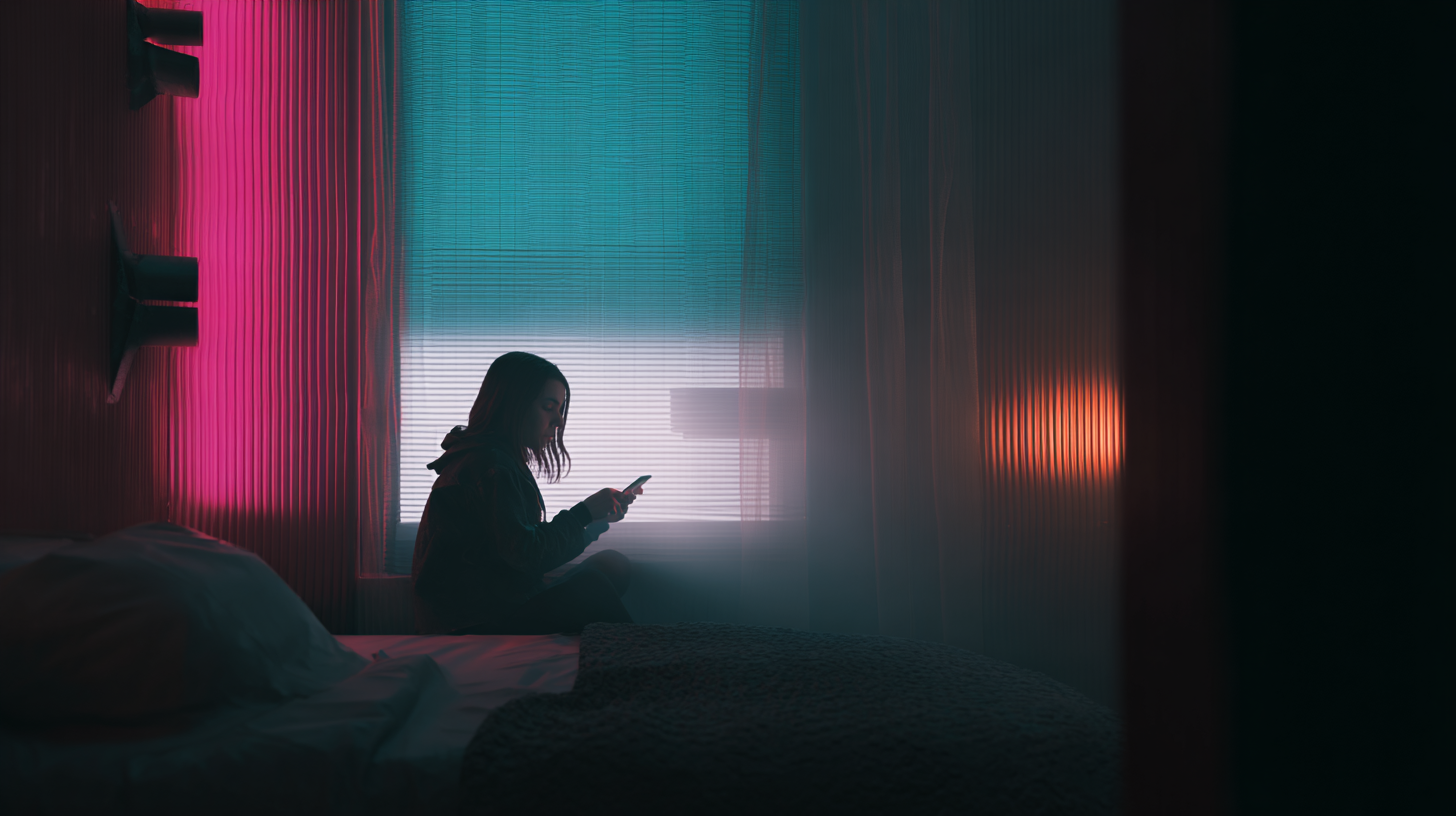
But biologically, numbness is not neutrality. It's depletion. The adolescent brain is still wiring its reward pathways, still learning what effort feels like, what joy costs, what satisfaction requires. When that wiring happens in an environment dominated by frictionless stimulation, the calibration can skew.
The brain learns that reward should be instant, external, and endless-and when reality fails to deliver, it concludes not that the expectation was distorted, but that it is broken. This is the quiet danger at the heart of algorithmic adolescence. Not that young people are overstimulated-but that they are being trained, neurologically and culturally, to expect meaning without effort and pleasure without patience.
And when neither arrives, the safest option becomes withdrawal. The stare deepens. The feelings flatten. The world grows distant. Not because nothing matters-but because everything has been made to matter too quickly, too constantly, and without pause.
Breaking the Loop: How to Feel Real Again
If the problem were simply that young people are online too much, the solution would be easy. Turn off the phone. Log out. Touch grass. But the problem is not access. It's architecture.
The platforms shaping adolescence were not designed to support emotional development. They were designed to capture attention, predict behavior, and reduce uncertainty. Expecting teenagers to outgrow that influence on their own is unrealistic-and unfair. The burden cannot rest solely on individual willpower when the system itself is optimized to override it.
What's required instead is interruption. The first step is a more advanced form of media literacy-what might be called Media Literacy 2.0. We already teach young people how to spot misinformation. What we don't teach them is how to spot emotional manipulation. How to recognize when a platform isn't reflecting how they feel, but shaping how they feel.
 Matt Hussey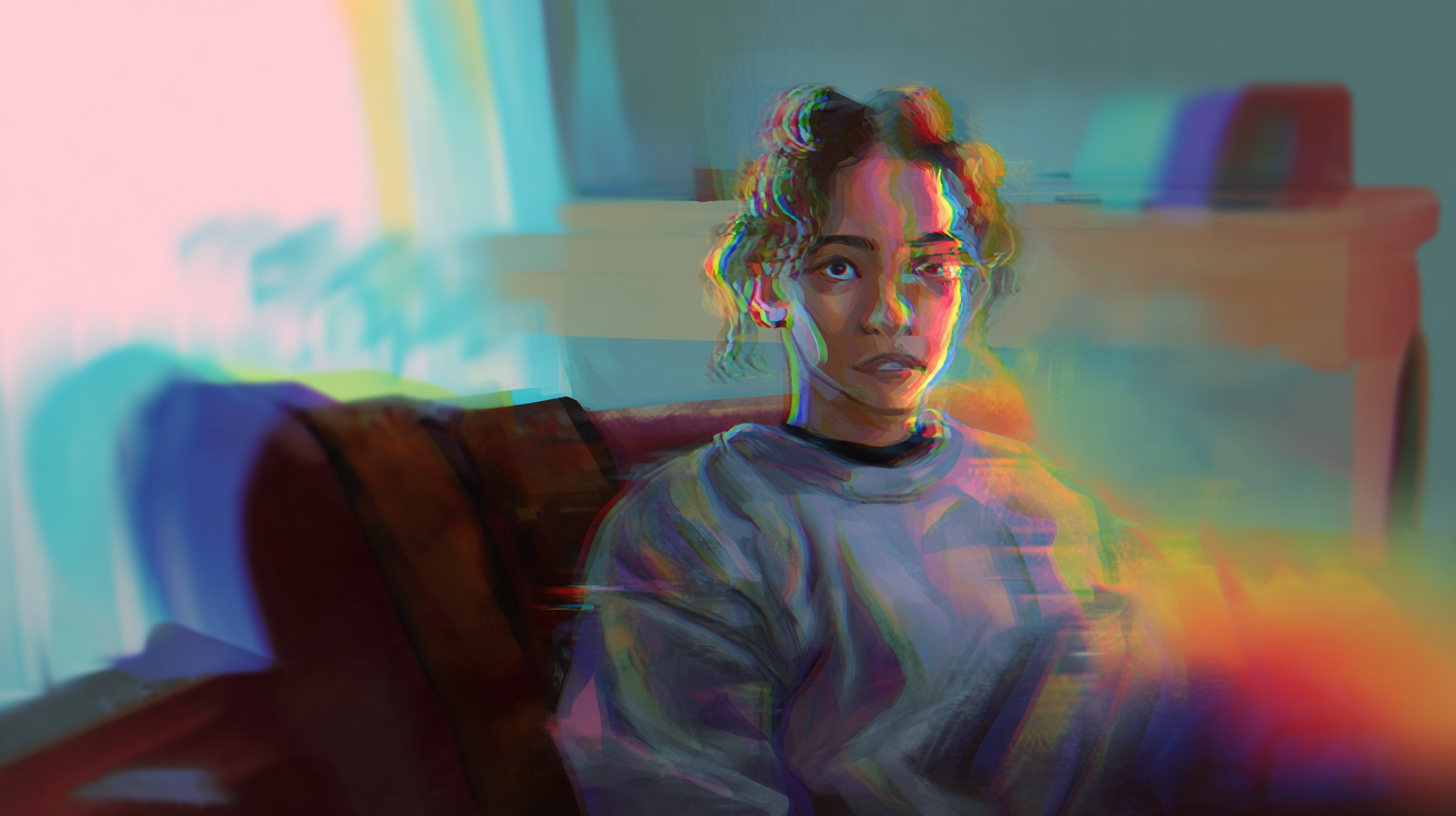
This means helping adolescents understand that feeds are not mirrors. They are funnels. That when an app serves content that perfectly matches their mood, it's not because the app understands them-it's because it has learned how to keep them watching. Feelings become inputs. Vulnerabilities become signals. Identity becomes a dataset.
The most important lesson is a subtle one: a feeling is not a fact, and it is not a diagnosis. Emotions are transient data points, not fixed truths about who you are. Anxiety does not automatically mean disorder. Sadness does not require permanence. Confusion does not need immediate explanation.
But platforms reward certainty. They collapse nuance into labels because labels perform better. Teaching young people to sit with emotional ambiguity-to resist the urge to immediately name and narrativize every internal shift-is a form of resistance.
The second intervention is physiological, not psychological.
"Touch grass" became a meme because it's blunt. But stripped of its cruelty, it contains real clinical insight. The nervous system cannot regulate itself through screens alone. Emotional grounding requires sensory input that algorithms cannot replicate: temperature changes, uneven surfaces, resistance, gravity, smell. Cold water on skin. Wind. Weight. Texture.
Research consistently shows that time spent in natural environments-sometimes referred to as "green time"-reduces stress, improves mood, and restores attention in ways passive digital consumption does not. This isn't about productivity or self-improvement. It's about recalibrating a nervous system trained on frictionless stimulation.
The glass screen is smooth, predictable, and endlessly responsive. The physical world is not. And that unpredictability is precisely what reawakens feeling.
 Matt Hussey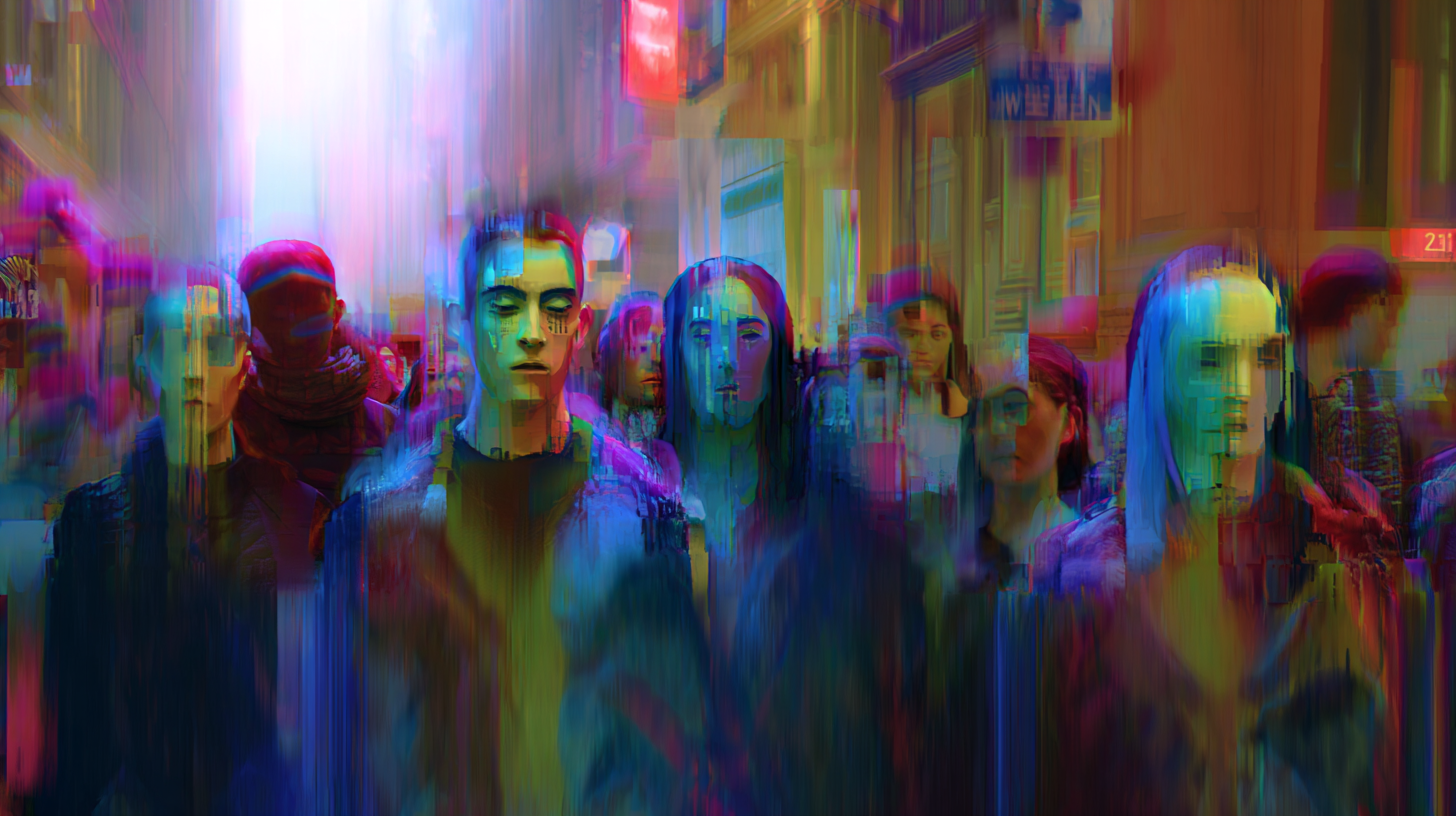
Even small interventions matter. Walking without headphones. Eating without scrolling. Sitting with boredom long enough for it to turn into curiosity rather than panic. These aren't lifestyle hacks; they are acts of retraining. They teach the brain that pleasure doesn't have to be instant to be real.
For parents, educators, and clinicians, the task is not to pathologize the stare-but to translate it. To recognize flatness not as apathy, but as overload. To ask not "Why don't you care?" but "What has caring cost you?"
Because the truth is that Gen Z does care-deeply. About injustice. About the planet. About mental health. About each other. The problem is that caring has been made continuous, public, and algorithmically rewarded until it became unsustainable.
The goal, then, is not to push this generation to feel more, but to feel at their own pace. To reclaim authorship over their inner lives. To understand that while feelings can be data, they are not the platform's data. They belong to the human experiencing them.
The algorithmic adolescence is not destiny. It is a phase-one shaped by tools that can be redesigned, resisted, and reinterpreted. But that requires naming what's happening without shaming the people caught inside it. The blank stare is not the end of empathy. It's a pause.
And pauses, when protected, are where feeling slowly finds its way back in.