The Coloniser's Couch: What Therapy Can Learn from the Language of Power
A trip to Morocco, a 1959 sociolinguist, and a question that every therapist should be sitting with: whose language does the therapy room actually speak?
There is a moment in therapy that most of us have been trained to read as progress.
The client pauses. You offer something - a reflection, a reframe, a formulation built carefully from what they've given you. They go quiet for a moment. Then they nod. Yes, they say. That's it. That's exactly what I've been trying to say.
We're taught to recognise this as the work landing. Meaning has been made. Something has clicked into place. The session feels alive, coherent, purposeful.
But I've been sitting with a different question lately. Not whether the formulation was accurate - it may well have been - but whose language it was in. Whether what just happened was understanding, or something more like translation. And whether, in the act of translating, something was quietly lost.
A conversation in Marrakesh
I was in Marrakesh last year when this question first took a different shape for me.
I was sitting in a riad, half-listening to a conversation at a nearby table. A man was on the phone, and within the space of a few sentences he'd moved through what sounded like three different languages - not translating, not pausing to find his footing, just moving, fluidly, the way water finds its level.
I asked the owner about it later. He smiled in the patient way of someone explaining the obvious. Oh, that's just how we speak here. Arabic at home, French at work, Darija in between. Sometimes all at once. We don't really think about it. I couldn't stop thinking about it.
 Matt Hussey
Not because linguistic code-switching is unusual - it isn't - but because of what it implied about the relationship between language and power. About which tongue gets you through which door. About what happens to the self that speaks the wrong one in the wrong room.
Two languages, different altitudes
When I got home, I found Charles Ferguson. An American sociolinguist, Ferguson published a paper in 1959 that introduced a concept so elegant it's become foundational: diglossia.
What Ferguson had noticed was that in many societies, two languages don't simply coexist - they coexist at different altitudes. He called one the H variety, the high language, and the other the L variety, the low. Not as moral judgements, but as descriptions of social function.
The H variety is the language of institutions. Of law, medicine, finance, education. The language you need to enter the room where decisions are made. The L variety is the language of intimacy. Of home, of family, of the self that doesn't need to perform.
What makes diglossia more than just bilingualism is the strict functional separation. These languages don't compete for the same territory - they occupy entirely different ones, and using the wrong one in the wrong context is immediately, structurally, jarring. Speak the high language to your grandmother and something goes cold. Speak the low language in a courtroom and you are, without a word being said about it, placed.
Matt Hussey
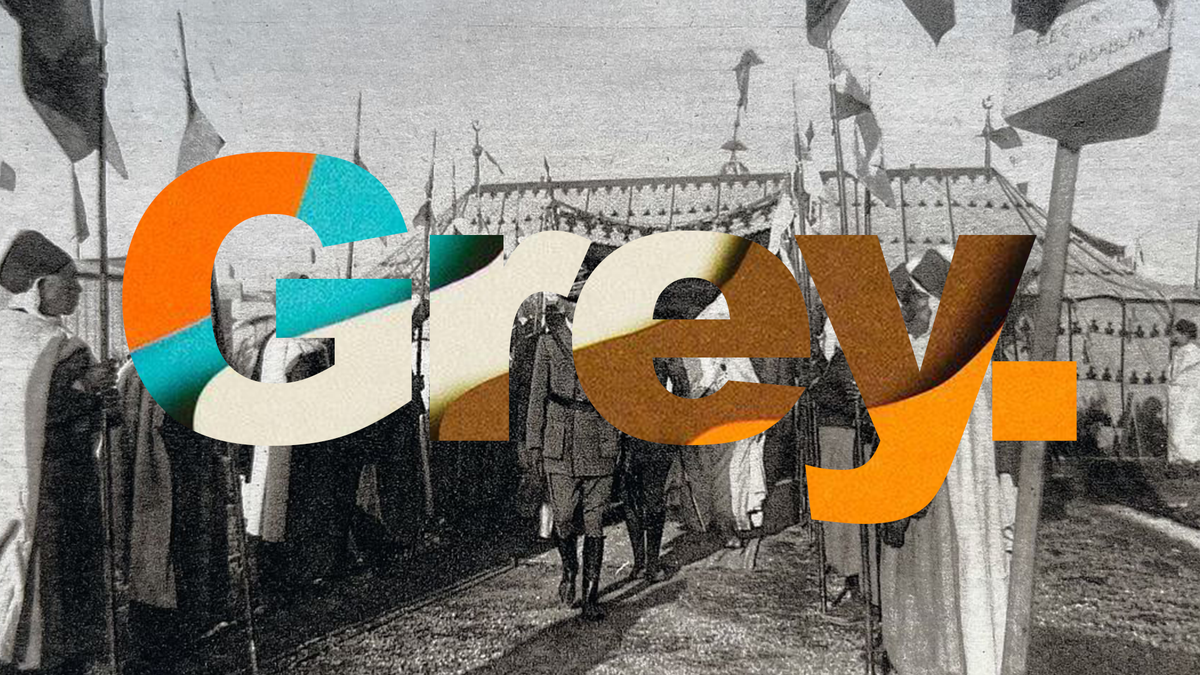
In Morocco, that split runs along a colonial fault line. France established a protectorate in 1912 and built an entire institutional infrastructure in French. When independence came in 1956, the French left.
The French language stayed - now guarding the entrance to professional life from the inside, requiring fluency from anyone who wanted full access to what the society had to offer. Darija, Moroccan Arabic, became the L variety. Rich, expressive, intimate, and insufficient - by itself - to get you through certain doors.
I found this fascinating. I also found it deeply familiar, though I couldn't immediately say why.
The psychiatrist who named the wound
The answer came through Frantz Fanon.
Fanon was a psychiatrist from Martinique, trained in France, who worked in Algeria during the independence struggle of the 1950s. He was also - and I think his clinical training matters here - one of the most precise writers we have on what colonialism does to a person at the level of the self. Not just politically. Not just materially. Psychologically.
His first book, Black Skin, White Masks, has a sentence worth sitting with: "To speak a language is to take on a world, a culture." What Fanon understood, writing from both sides of the colonial encounter, was that the colonised person doesn't simply learn the coloniser's language as a practical skill. They internalise it as a marker of worth. Of being educated, of being modern, of being the kind of person who matters in the world the institutions have built.
Matt Hussey
And this, he argued, is where the real damage lives. Not in the imposition - people can resist what is imposed - but in the aspiration. The child learns French not because someone forces them, but because French is where the future seems to be.
The H variety becomes not just a tool of access but a measure of the self. And the L variety - the mother tongue, the home language, the language of the grandmother - becomes associated, quietly and persistently, with limitation. With the version of yourself that doesn't quite make it.
Fanon called this the colonisation of the psyche. And he was clear that it didn't end with political independence. You could dismantle the protectorate. The inner hierarchy - the internalised belief that the high language was the real one, the legitimate one, the one that counted - required a different kind of work entirely.
The therapy room has a high language too
I am a therapist. I've been one for a long time. And I want to be honest about what happened when I sat with Fanon's argument and began, slowly and uncomfortably, to hear it differently. I heard it as a description of the therapy room.
Not as polemic. Not as an accusation. But as a structural observation that felt, once I'd allowed it in, very difficult to argue with. Because Western psychotherapy has its own H variety. It has a high language - clinical, portable, institutional, built for credibility - and most of us who practice it are among its most fluent speakers. We learned it in training. We are assessed on it in supervision. We are accredited through our command of it. And we bring it, every session, into the room.
Matt Hussey
The question I've been sitting with - the question that sits at the heart of what I've been developing in the Grey Method - is whether that language is as neutral as we've always assumed it to be.
What the client brings that we don't have words for
The short answer is that it isn't. The longer answer requires tracing where the language came from. Western psychotherapy was born inside the Enlightenment - inside the conviction that the self was a rational, coherent, autonomous interior that could be understood, named, and improved if you applied the right conceptual tools.
Freud, Jung, Rogers, the entire tradition that flows from them: all were humanists of their time, building models for a world that believed in the individual as the primary unit of meaning.
This wasn't only intellectual. It was political. As therapy sought legitimacy - particularly in dialogue with medicine and the state - it needed to speak the language of science. Of diagnosis, classification, measurement, replicable treatment. The clinician became the trained observer: objective, neutral, positioned above the experience in order to see it clearly.
Matt Hussey
A particular vision of knowledge is embedded in this arrangement. One that privileges what can be named over what can only be felt. What can be formulated over what resists coherence. What fits the model over what exceeds it. And like all H varieties, it naturalises itself - it stops feeling like a tradition and starts feeling like simply the way the mind works.
But it is a tradition. Built largely by European thinkers, in European contexts, for a particular kind of patient, in a particular century. It carries assumptions about what a self is, what healing looks like, what counts as insight, and what remains - always slightly - beyond the reach of the serious clinical conversation.
The hierarchy we didn't choose but inherited
Consider what actually happens when a client arrives in our room. They bring what linguists would call their idiolect - not just a dialect or a cultural register, but the completely unrepeatable fingerprint of their own meaning-making. The particular metaphors they reach for under pressure.
The words that surface when they're trying to explain something they don't yet understand. The rhythm of their private speech. This language is embodied, contradictory, unfinished, and often assembled from fragments that have no clinical category - family mythology, cultural inheritance, spiritual framework, somatic knowing, private imagery that has never been shared with anyone.
This is their L variety. Their intimate language. And it is, by definition, the part of them that is hardest to translate without loss.
Matt Hussey
We meet it - and I include myself fully in this - with our H variety. With the formulation. The reframe. The carefully constructed interpretation that takes their raw, uncertain material and organises it into something legible to the institution of therapy.
There is a version of this that is genuinely helpful. Language can be containing. Being met and recognised matters enormously, and we should not romanticise confusion or withhold what we know. But there is another version - and I think we need to be more honest about how often it operates - in which what looks like understanding is also something more like appropriation.
The client's experience, in this version, has not been met. It has been translated. Improved. Made portable. It can now travel through notes, formulations, supervision rooms. It belongs, in some functional sense, to the therapist's world.
And the client - often without being able to name what's happened - begins to check their own experience against the expert's interpretation. To doubt the parts that don't translate cleanly. To look for confirmation rather than discovery. To speak, increasingly, in borrowed language.
This is the diglossic dynamic in the consulting room. The H variety belongs to the therapist. The client's L variety - their private, irreducible, untranslatable knowing - is valuable as raw material, but it is not the language the room runs on.
What the Grey Method is trying to do
Fanon's insight was that political liberation and psychological liberation are not the same project. You can change the laws without changing the inner hierarchy of which language counts. He thought this was the most important and most neglected part of decolonisation.
I think something structurally similar is true in therapy. We can commit, sincerely and at the level of values, to client autonomy, to empowerment, to person-centred practice. We can read all the right literature on power and privilege in the therapeutic relationship.
And still - at the level of the actual moment in the room, when the client says something unformed and we feel the quiet pull to shape it into something coherent - we can reach for the H variety without noticing that we've done it.
Because that's how internalised hierarchies work. They don't require intention. They run on habit, on training, on the structure of what we've been rewarded for.
The Grey Method is my attempt to work against this without pretending it can be simply solved. It begins not from expertise but from presence - from the conviction that what the client most needs, before anything else, is for their own knowing to be treated as legitimate. Not as material. Not as evidence. Not as something to be translated into a more useful form. As knowing.
Matt Hussey
This requires something specific of us as practitioners. Not the abandonment of our training - I want to be clear about that, because the Grey Method is sometimes mistaken for a kind of professional nudism, a stripping away of knowledge in the name of authenticity. That's not it. The knowledge matters. The theory matters. The clinical understanding we've built, individually and collectively, is real and valuable.
But Ferguson's insight about diglossia was that the most sophisticated speakers in a bilingual society are not those who have mastered one language perfectly. They are those who can move between registers - who understand, from the inside, that no single language has a monopoly on truth, and that the most important things are often said in the spaces between the available tongues.
Matt Hussey
What the Grey Method asks of us is this kind of fluency. Not fluency in more clinical frameworks. Fluency in uncertainty. The capacity to hold our H variety lightly enough to be genuinely moved by a language we don't control. To sit inside another person's L variety - their private, half-formed, resistant, embodied knowing - without immediately reaching for the professional vocabulary that would make it manageable.
To tolerate, as the primary clinical act, the confusion of not yet knowing how to frame what we're hearing.
This is slower work. It's harder to supervise and harder to measure. It looks less impressive in a session note. But it keeps agency where it belongs - with the person who is living the experience, rather than the person who has learned to name it.
Fluency in uncertainty
I keep returning to the man in the riad. The way he moved between his languages without losing the thread of himself. Not performing fluency - inhabiting it. Each register available to him, none of them in charge.
That's the kind of practitioner I want to be. Not the one who has mastered the H variety of therapeutic knowledge and deploys it with increasing confidence and refinement. But the one who holds it lightly enough to hear when the client is speaking in a language the H variety can't reach.
Because that's usually where the actual work is. In the unfinished sentence. The metaphor that doesn't quite fit any model. The thing they've been trying to say for years that keeps coming out wrong, because the right language for it doesn't exist yet - at least not in the vocabulary the room has been offering.
The Grey Method is, among other things, an attempt to build a room where that language can find its voice. Not to translate it. Not to improve it. To hear it - in all its contradiction and incompleteness - as the most important thing being said.