
The Emotional State of Britain: Burnout, Numbness and the Quiet Crisis Shaping Life in the UK
Britain isn't angry - it's exhausted. A data-driven look at burnout, numbness, and the emotional climate shaping the UK in 2026.
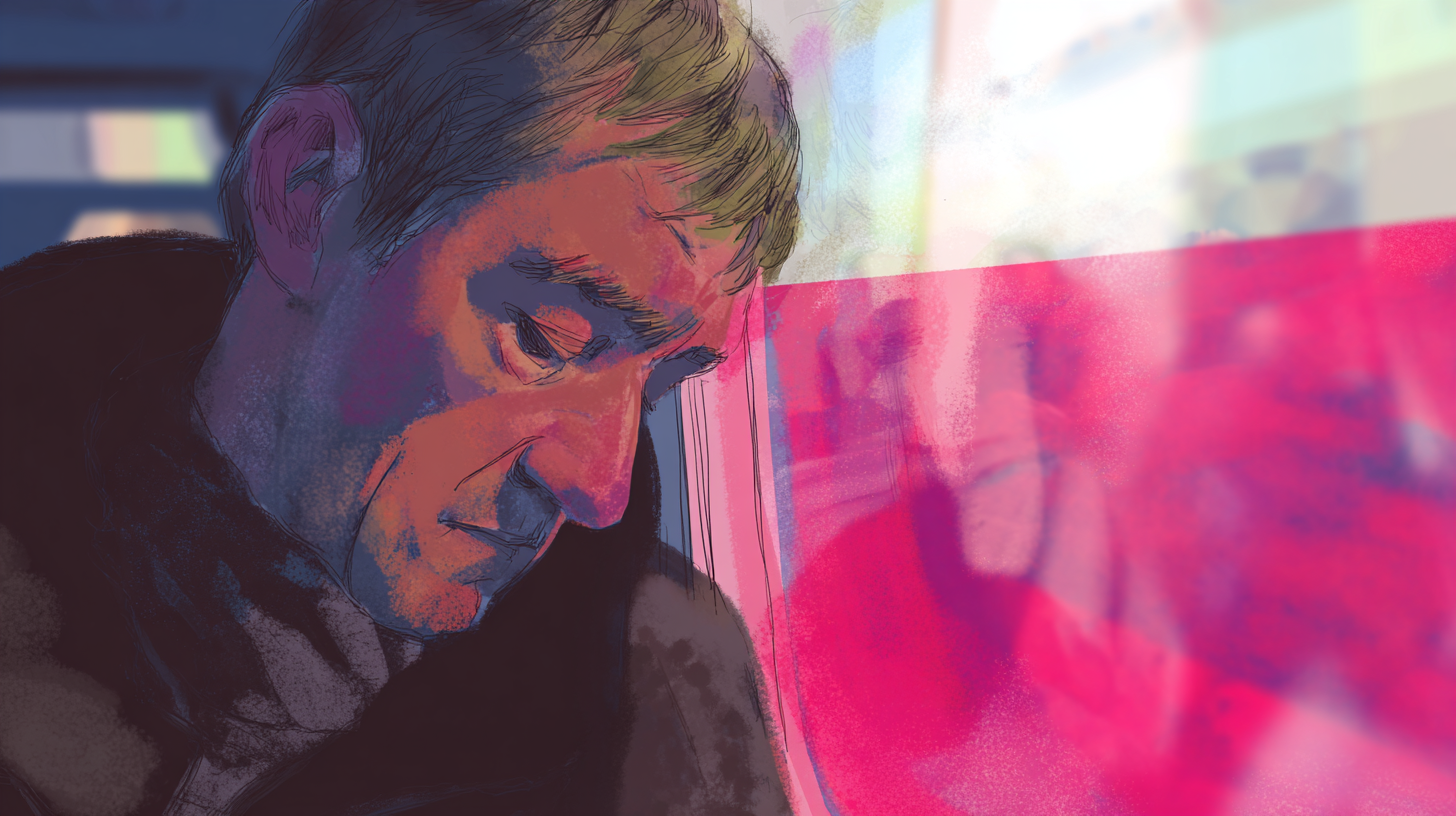
There are many ways to measure a country. We track inflation, employment, productivity, growth. We poll voters, analyse culture wars, map electoral swings. These measuring sticks tell us a lot. But they don't tell us everything. They don't tell us how a country feels.
And feeling, it turns out, is not a soft metric. It shapes behaviour long before it shapes ballots. It determines whether people withdraw or engage, numb out or act, hope or brace. A society's emotional climate is often the earliest indicator of where it's heading - and sadly, the least examined.
That's the gap this series is trying to address.
Because if you listen closely - not to politicians, not to pundits, but to ordinary conversations - a pattern emerges. People aren't just angry or divided. They're tired. Disoriented. Quietly on edge. They take days to reply to friends. They shut out the news because it feels too much. They're doomscrolling's memes about the world ending.
This isn't something polling alone can capture. It doesn't show up cleanly in GDP graphs or party manifestos. It lives in the nervous system: in the low-level dread, the narrowing of ambition, the sense that the future has become harder to imagine.
So this is an attempt to name that terrain. To create a map that can help us understand here's where we are, here's why it feels like this and here's what we need to pay attention to next. I'll be doing it with five distinct pieces. This is the first.
The Functional Freeze
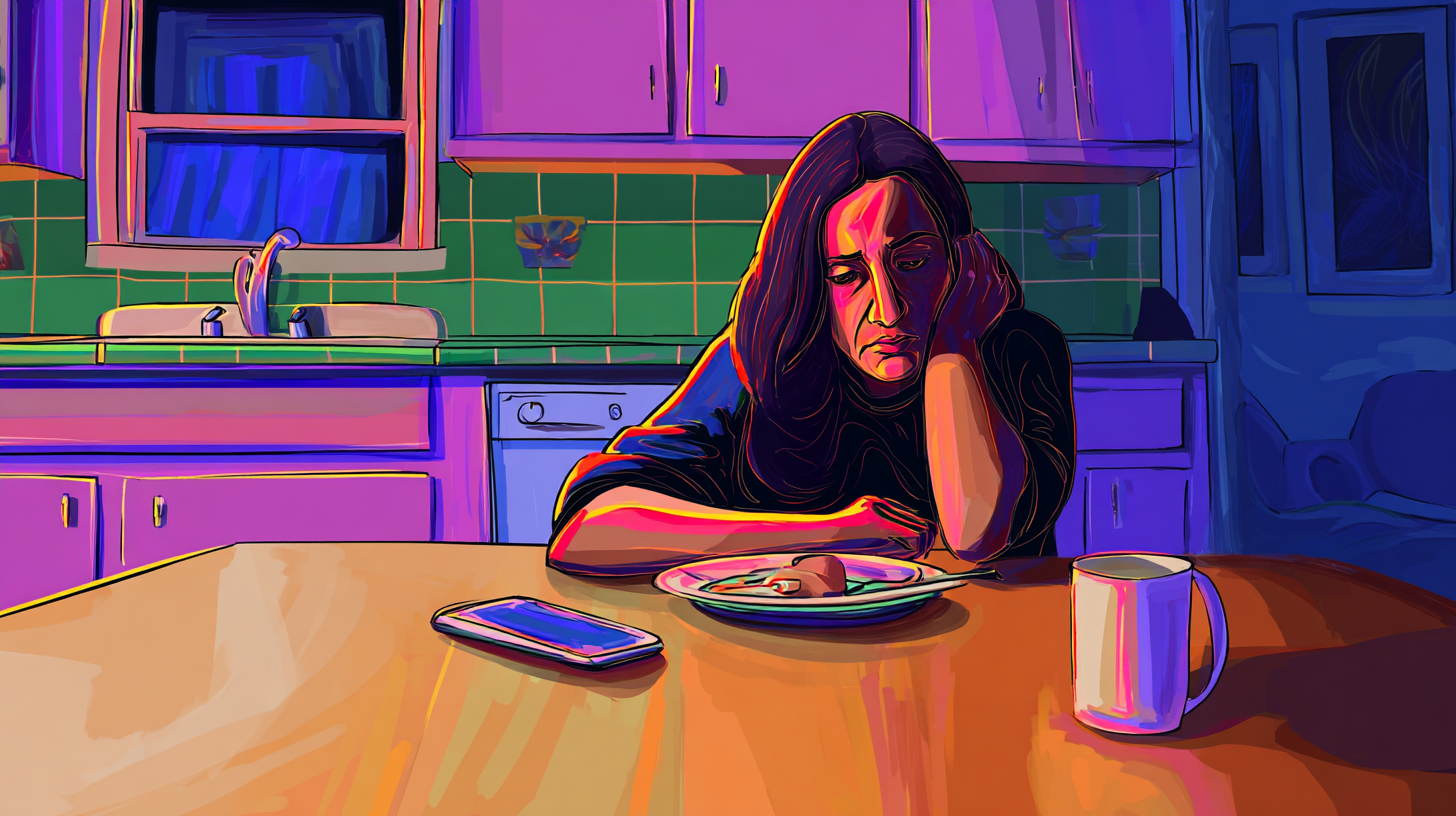
Britain has known decline before. In the 1970s and early 1980s, economic breakdown was loud: strikes paralysed cities, rubbish piled in the streets, power cuts plunged homes into darkness. This moment is different.
Today's Britain feels quieter - not calmer, but muted. There are no mass strikes on the same scale, no sustained riots, no singular flashpoints that release pressure. Instead, people are going to work, paying bills, refreshing banking apps, and lowering expectations. Life continues. But something inside it has stalled.
Sociologists and psychologists have a term for this kind of response: freeze. When a system - biological or social - is exposed to prolonged, uncontrollable stress, it doesn't always fight or flee. Sometimes it locks up, conserving energy, narrowing focus, waiting for danger to pass.
That is what I believe best describes the emotional state of Britain now: a functional freeze.
People are not disengaged because they don't care. They are disengaged because they have cared too much for too long, with too little control. Covid, the cost-of-living crisis, the visible deterioration of the NHS, political instability, and a steady erosion of trust in institutions have not arrived as singular shocks. They have accumulated. The result is not panic, but numbness.
This pattern aligns with what psychologists describe as learned helplessness - a condition first studied in individuals, but increasingly applied to groups and societies. When people experience repeated stressors they cannot influence, they eventually stop attempting to change their circumstances, even when opportunities appear. The response is not laziness or apathy; it is self-protection.
 Matt Hussey
Recent UK public attitude research shows how widespread this feeling has become. Large-scale surveys consistently find that a majority of Britons believe the country is "heading in the wrong direction" and that decline is no longer temporary but structural. This belief matters. When people think hardship is permanent, they stop planning, stop imagining futures, and narrow life down to survival.
What replaces anger in this environment is vigilance. A sense that something else is coming. Another bill. Another scandal. Another failure. People describe it casually - "I'm just tired", "I can't think past next month", "I'm fine, just drained" - but collectively, it amounts to a nation living in a state of quiet anticipation.
Political theorist and sociologist William Davies describes this condition as a "nervous state": a society where instability is no longer debated abstractly but felt physically - through insomnia, anxiety, irritability, and exhaustion. Economic and political stress stop being ideas and start being sensations.
This is why the current mood can feel confusing. Britain does not look like it's collapsing. But it doesn't feel like it's moving either. The social contract - work hard, gain security, build a future - has frayed quietly, without a single breaking moment. And so people adapt, not by rebelling, but by bracing.
The chapters that follow do not argue that Britain is uniquely broken, nor that its people are failing. They argue something simpler and more unsettling: that the emotional flatness many people feel is a rational response to prolonged instability - and that the data now reflects it.
This is not a nation in denial. It is a nation holding its breath.
The Diagnosis: Living in a Nervous State

Britain's emotional condition isn't just a response to hardship. It's a response to instability without resolution.
High prices alone don't produce numbness. Political disagreement alone doesn't either. What pushes a society into chronic tension is the belief that disruption is permanent - that there is no endpoint, no corrective mechanism, no return to baseline.
That belief is now widespread in the UK.
A Country That Believes It Is Declining
According to the More in Common report Shattered Britain, a large majority of Britons believe the country is in decline, not transition. Around seven in ten people agree that Britain is "heading in the wrong direction," and roughly half believe the cost-of-living crisis will not meaningfully end, but will simply become the new normal.
This I believe, matters psychologically more than any single economic indicator.
Research in social psychology consistently shows that perceived permanence of hardship has a more corrosive effect on wellbeing than hardship itself. When people believe suffering is temporary, they mobilise. When they believe it is endless, they conserve energy. Planning collapses. Ambition shrinks. Attention narrows to immediate survival.
In Britain today, that contraction is visible everywhere: in delayed life decisions, reduced social participation, and a quiet withdrawal from long-term thinking.
 Matt Hussey
The Collapse of the Future
The feeling many people describe - "I can't think ahead anymore" - is not anecdotal. It aligns closely with what economists and sociologists call future insecurity: the sense that personal effort no longer reliably maps onto outcomes.
The UK has experienced repeated shocks that reinforce this belief:
- Years of real-terms wage stagnation
- Housing costs rising far faster than incomes
- Public services becoming harder to access even as demand rises
- Political volatility that delivers little visible change in daily life
When effort stops producing security, the emotional system adapts. Motivation gives way to vigilance. Hope is replaced by risk-management. This is the psychological backdrop to Britain's current mood: not panic, but guardedness.
From Political Crisis to Bodily Stress
William Davies, the guy I mentioned earlier has a useful framework for understanding this shift. In Nervous States, Davies argues that prolonged political and economic instability no longer operates primarily at the level of belief or ideology. Instead, it registers directly in the body.
Uncertainty becomes physical:
- disrupted sleep
- persistent muscle tension
- difficulty concentrating
- emotional flattening or irritability
Davies' core insight is that modern crises bypass rational debate and lodge themselves in the nervous system. People don't need to follow every headline to feel the effects; instability is absorbed somatically. This helps explain why Britain's current malaise doesn't look like ideological conflict. It looks like fatigue.
Why This Isn't "Just Pessimism"
It's tempting to frame this as cultural negativity or media-fuelled gloom. But the emotional pattern matches what psychologists observe in environments where control is low and unpredictability is high.
Repeated exposure to uncontrollable stressors produces a state where people stop responding emotionally in obvious ways. Anger is metabolically expensive. So is hope. Numbness, however, well that's cheaper.
 Matt Hussey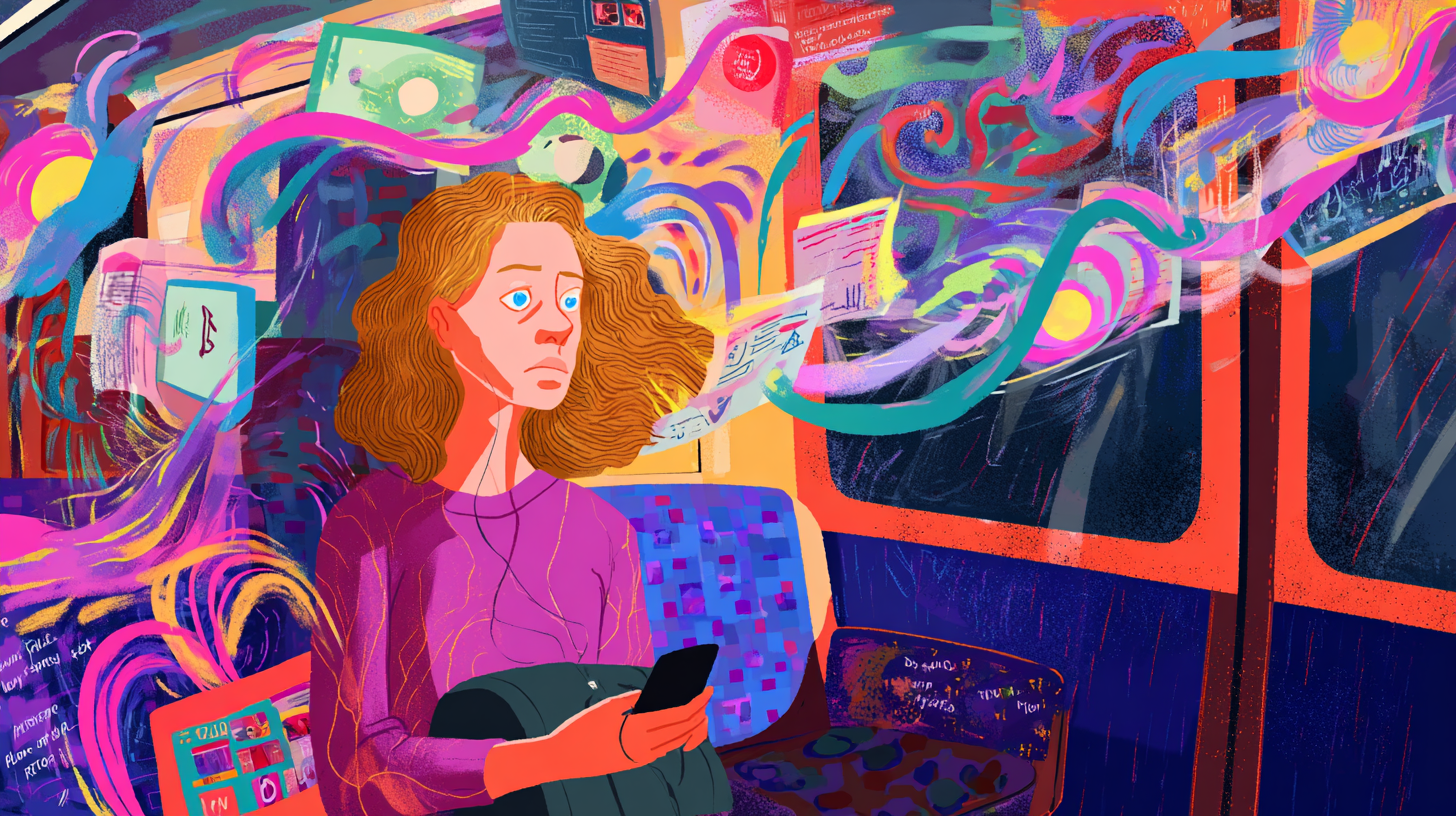
That's why the dominant feeling isn't outrage, but resignation. Not despair, but flatness. And crucially: this emotional shift often precedes political change, rather than following it. Before people protest, they disengage. Before they disengage, they brace.
Britain is currently in that bracing phase.
The Broken Social Contract
Underlying all of this is a widely shared, often unspoken realisation: the post-war social contract - work hard, play by the rules, gain security - no longer feels dependable.
This is not an abstract grievance. It's a daily calculation:
- Will this job ever lead to stability?
- Will housing ever feel secure?
- Will public services be there if I need them?
When those answers become uncertain, people stop investing emotionally in the future. They become cautious, inward-facing, and risk-averse. Not because they lack character - but because their environment is teaching them to be.
This is what a nervous state looks like at scale. Not a society in revolt. A society holding itself together, carefully, waiting for proof that effort will be worth it again.
It's Not You. It's the System.

There is a quiet cruelty in how Britain currently talks about mental health.
We acknowledge distress more openly than ever, yet we increasingly treat it as a personal malfunction - something to be managed privately, optimised away, or soothed through resilience training and self-care routines. The message is subtle but persistent: you are struggling because you're not coping well enough. But what if coping is no longer the problem?
When Therapy Is Asked to Do the Work of Politics
Clinical psychologist Dr Sanah Ahsan has argued forcefully that we are asking mental health interventions to solve problems they were never designed to address. In a widely shared Guardian essay, she writes that the dominant narrative around wellbeing has become detached from material reality - encouraging individuals to regulate their emotions while leaving the conditions producing those emotions intact.
The point is not that therapy is useless. It's that therapy cannot compensate for instability. Mindfulness does not lower rent. Breathing exercises do not shorten NHS waiting lists. Positive reframing does not restore a sense of long-term security.
When people feel persistently anxious, flat, or disengaged in environments that are economically and socially unsafe, those reactions are not symptoms of pathology. They are signals of adaptation.
 Matt Hussey
Distress as a Rational Response
Psychology has long recognised that emotional states are shaped by context. Chronic exposure to uncertainty, lack of control, and threat reliably produces withdrawal, numbness, and hypervigilance. These are not failures of resilience; they are protective responses.
This perspective sits within a broader tradition often described as liberation psychology - an approach that emphasises the link between mental health and social conditions such as inequality, insecurity, and injustice. The central claim is simple: when environments are unstable, distress increases. Treating the distress without addressing the environment risks misunderstanding both.
From this angle, Britain's emotional flatness looks less like a crisis of character and more like a population adapting to prolonged precarity. People are not disengaging because they are apathetic. They are disengaging because engagement feels risky.
Why the Mood Is Quiet, Not Explosive
One of the most striking features of the current moment is its lack of overt conflict. For a country under such visible strain, Britain remains remarkably subdued.
Part of this is cultural. The traditional "stiff upper lip" - once framed as resilience - has evolved into something closer to toxic stoicism. Emotional suppression is recast as maturity. Endurance is mistaken for health. People learn to cope silently until they can't.
Another part is psychological. Anger requires energy and a belief that expression will lead somewhere. Numbness does not. In conditions where change feels unlikely, emotional flattening becomes economical.
This helps explain why humour and satire have become dominant outlets. Political parody, viral clips, and deadpan absurdism function as pressure valves - ways to acknowledge the madness without confronting it directly. Laughter, in this context, is not joy. It is regulation.
Why Individualising the Problem Makes Things Worse
When systemic stress is framed as individual weakness, two things happen: First, people internalise blame. They assume their exhaustion is personal failure rather than a shared condition. This deepens isolation and shame. I see that a lot in my client work.
Second, collective solutions disappear from view. If distress is an individual issue, then structural reform feels irrelevant - or unrealistic. The result is a society that knows it is struggling but cannot articulate why, or imagine how things might be different.
This is how emotional climates stagnate. Britain's current mood - quiet, tense, withdrawn - is not an absence of feeling. It is a containment strategy. People are holding themselves together in an environment that offers little reassurance that effort will be rewarded or care will be available when needed.
Seen this way, the emotional state of the country stops looking mysterious. It looks logical. And that logic carries consequences. Because when distress is normalised but misattributed, it doesn't disappear. It moves inward. It reshapes behaviour. It changes how people relate to work, politics, each other - and themselves.
The question is no longer whether something is wrong. It's what happens next when a whole society is quietly holding its breath.
Young Women: the UK's Canary in the Coal Mine
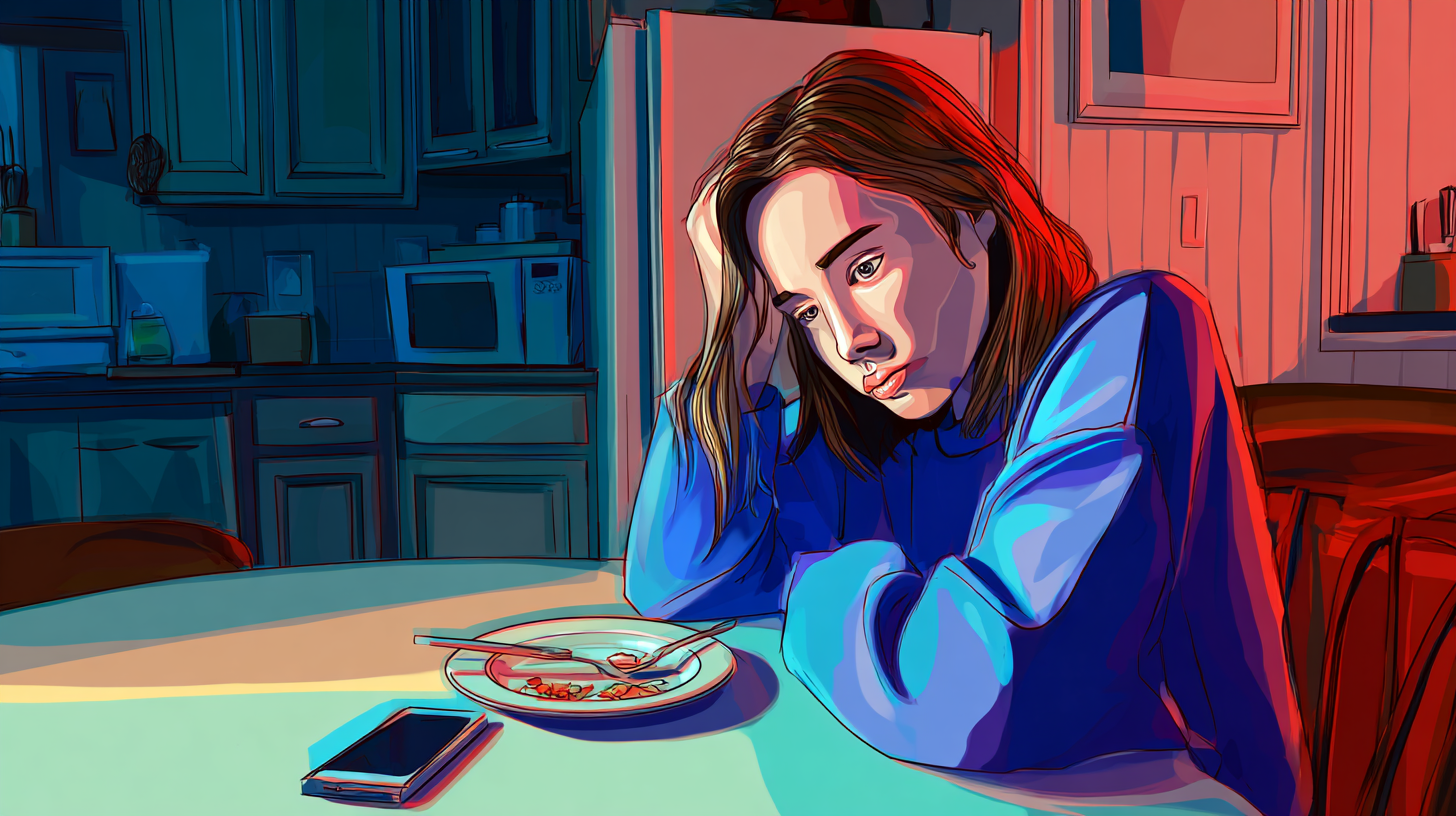
If you want to know where a country is going, don't look at its leaders. Look at its young people. Across societies, youth mental health has long functioned as an early-warning system. When conditions are improving, younger generations tend to feel more hopeful than their parents. When conditions are deteriorating, distress appears earlier, more intensely, and more internalised among the young.
Right now, the signals coming from Britain's youth - particularly young women - are difficult to ignore.
A Generation Absorbing the Pressure
According to NHS Digital, rates of common mental disorders among young people have risen sharply over the past decade, with the most pronounced increases among young women.
In its Mental Health of Children and Young People in England series, NHS Digital reports that 28.2% of women aged 16-24 meet criteria for a common mental disorder, including anxiety and depression. This is not a marginal increase. It represents a near-doubling compared to the early 2010s.
Even more concerning is the long-term trend in self-harm. NHS data shows that self-harm prevalence among young women has roughly tripled since the early 1990s, a rise that predates the pandemic and has continued through it.
These are not short-term reactions to a single event. They reflect sustained psychological strain.
Why This Matters More Than It Looks Like
Historically, periods of social stress have often produced externalised responses among young people: protest, subcultures, collective action, sometimes violence. What distinguishes the current moment is how much distress is being turned inward.
 Matt Hussey
Instead of mass mobilisation, we see rising anxiety, depression, and self-harm. This matters because internalisation is quieter - and therefore easier to miss. It doesn't disrupt public order. It doesn't force immediate political response. But it carries long-term consequences for participation, trust, and social cohesion.
A generation that experiences the world as unsafe tends to:
- take fewer risks
- delay or avoid life milestones
- disengage from institutions they don't trust to protect them
- prioritise emotional survival over collective action
These are rational adaptations - but they reshape the future. And this is turning up in polling data now. Gen-Z is now viewed as more conservative than the two generations before it.
The Emotional Logic of Internalisation
The pattern aligns with what psychologists observe in environments characterised by chronic uncertainty rather than acute crisis. When young people grow up believing that:
- housing is unattainable,
- stable work is fragile,
- institutions are overwhelmed,
- and crises are continuous rather than episodic,
Their nervous systems adapt accordingly. Anxiety becomes anticipatory. Low mood becomes defensive. Self-blame replaces outward anger. This is not about fragility. It is about exposure. Young people today are encountering adulthood under conditions of prolonged economic precarity, visible institutional strain, digital comparison and evaluation, and constant ambient threat - from climate to conflict to automation.
The result is not rebellion, but exhaustion before life has properly begun.
Why Young Women Are the Sharpest Signal
The gender gap in distress is not incidental. Young women are disproportionately exposed to precarious work, housing insecurity, online harassment and surveillance and intensified appearance and performance pressures.
They are also more likely to internalise stress rather than externalise it - a pattern well-documented in psychological literature and reflected in NHS data trends.
 Matt Hussey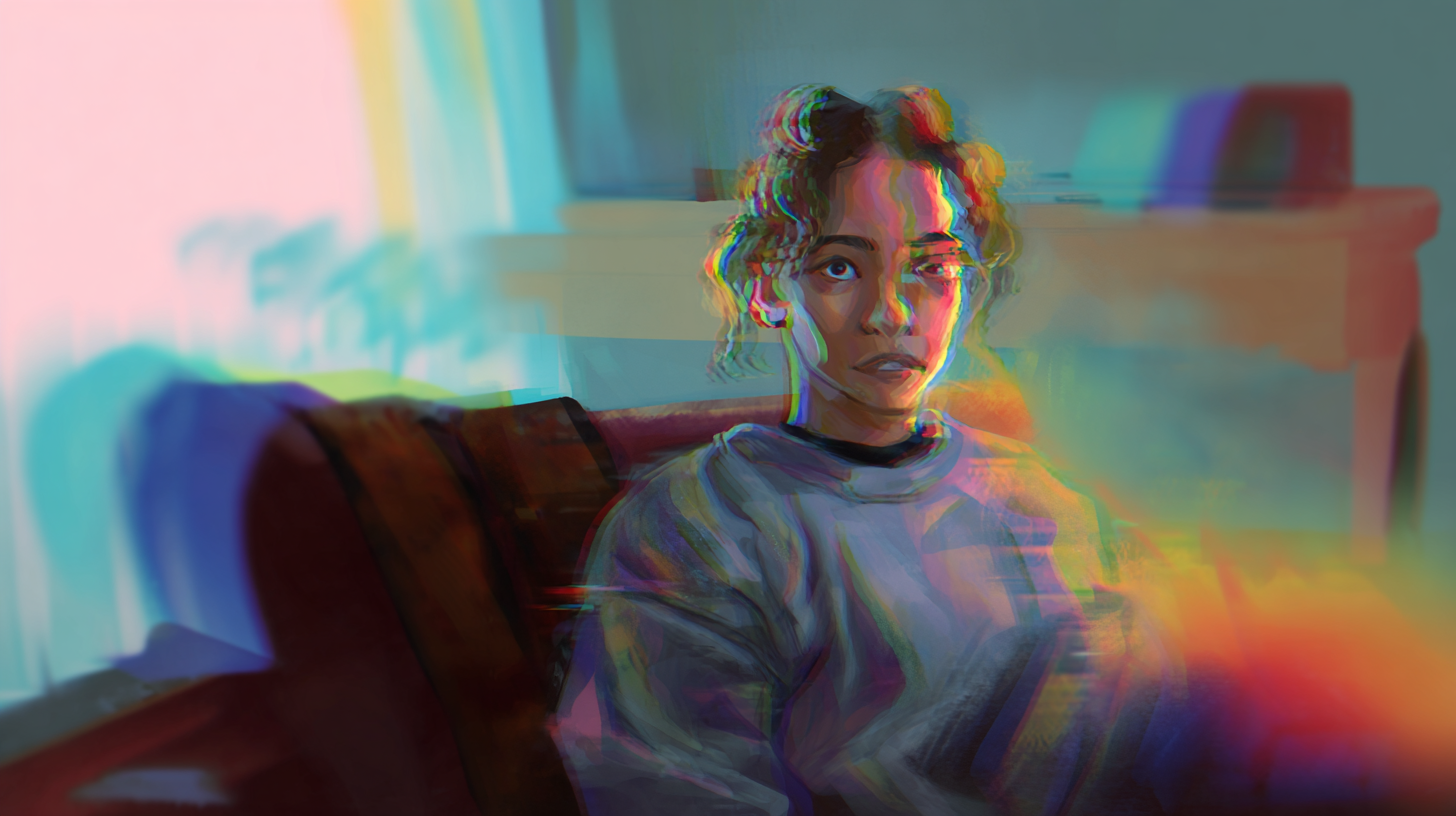
Seen this way, the rise in anxiety and self-harm among young women is not a mystery. It is the emotional imprint of a society asking its youngest members to adapt to instability as normal.
What This Tells Us About the "Quiet"
The absence of unrest should not be mistaken for resilience. When distress is internalised at scale, it doesn't erupt - it accumulates. It reshapes expectations. It lowers horizons. It produces a generation that is cautious, watchful, and unsure whether the future will hold them.
That is why youth mental health matters so much to the emotional weather of a country. It is not just a health issue. It is a forecast. And right now, the forecast suggests a society that is not exploding - but absorbing. Quietly. Painfully. Collectively.
How Britain Heals

It's tempting, at this point, to reach for solutions that sound decisive. More funding. Better leadership. Structural reform. All of these matter - but they sit at a level of abstraction that most people no longer feel connected to.
One of the defining features of Britain's current emotional state is precisely this: a loss of faith that large-scale systems will meaningfully respond. So healing, if it's going to happen, won't begin with grand gestures. It will begin with conditions.
Healing Is Not Optimism
There is a persistent misunderstanding that emotional renewal requires positivity - a narrative shift, a morale boost, a change in attitude.
The evidence suggests otherwise.
Psychological research consistently shows that wellbeing improves not when people are told to feel hopeful, but when their environments become more predictable, fair, and humane. Stability precedes optimism. Safety precedes engagement.
In other words, people don't need to be inspired first. They need to feel held.
What the Data Actually Points To
Across the research I looked at it for this series - from mental health prevalence to public attitudes - a few common threads emerge. Emotional repair tends to follow when people experience:
- Predictability: knowing roughly what to expect from work, bills, housing, and services
- Dignity: being treated as more than a problem to be managed or optimised
- Belonging: having spaces - physical or social - where one is not performing, competing, or being measured
- Agency: the sense that effort leads somewhere, even modestly
These are not abstract ideals. They are measurable conditions linked to reduced anxiety, lower withdrawal, and higher participation. Crucially, and this is what we've got so wrong for so long is: none of them require emotional heroics from individuals.
 Matt Hussey
From Individual Resilience to Social Repair
One of the quiet failures of the past decade has been the over-reliance on the language of resilience. People have been encouraged to bend without breaking, to adapt endlessly, to cope.
But resilience without repair becomes endurance. Endurance without hope becomes numbness. What Britain needs now is not tougher individuals, but softer systems - systems that absorb shock rather than transmit it downstream to households and nervous systems.
This might look like:
- mental health services that prioritise access and continuity over thresholds and triage
- workplaces that offer predictability, not just flexibility
- housing policy that reduces insecurity rather than normalising it
- community infrastructure that rebuilds social contact outside of consumption
None of these are radical ideas. They are, in fact, deeply conservative in the original sense: aimed at preserving social fabric.
Why Belonging Matters More Than Growth
Economic growth, when it comes, does not automatically heal emotional damage. What repairs trust is felt fairness - the belief that gains are shared, that losses are not borne alone, that people are not disposable.
This is why belonging will keep reappearing across this series:
- in the masculinity recession
- in adolescent distress
- in fears around automation and AI
Belonging is the emotional opposite of replaceability. And replaceability is one of the most corrosive feelings a society can generate.
A Way Forward That Isn't a Fantasy
It's important to be honest: none of this will resolve quickly. Emotional climates shift slowly, often lagging behind policy or economic change. But they do shift.
The same data that shows exhaustion also shows something else: people are not cynical about the idea of repair. They are sceptical of performance. They are hungry for competence, consistency, and care that doesn't feel conditional.
The numbness described throughout this series is not indifference.
It is a pause. A protective response to too much instability for too long. And pauses, by definition, are not permanent.
 Matt Hussey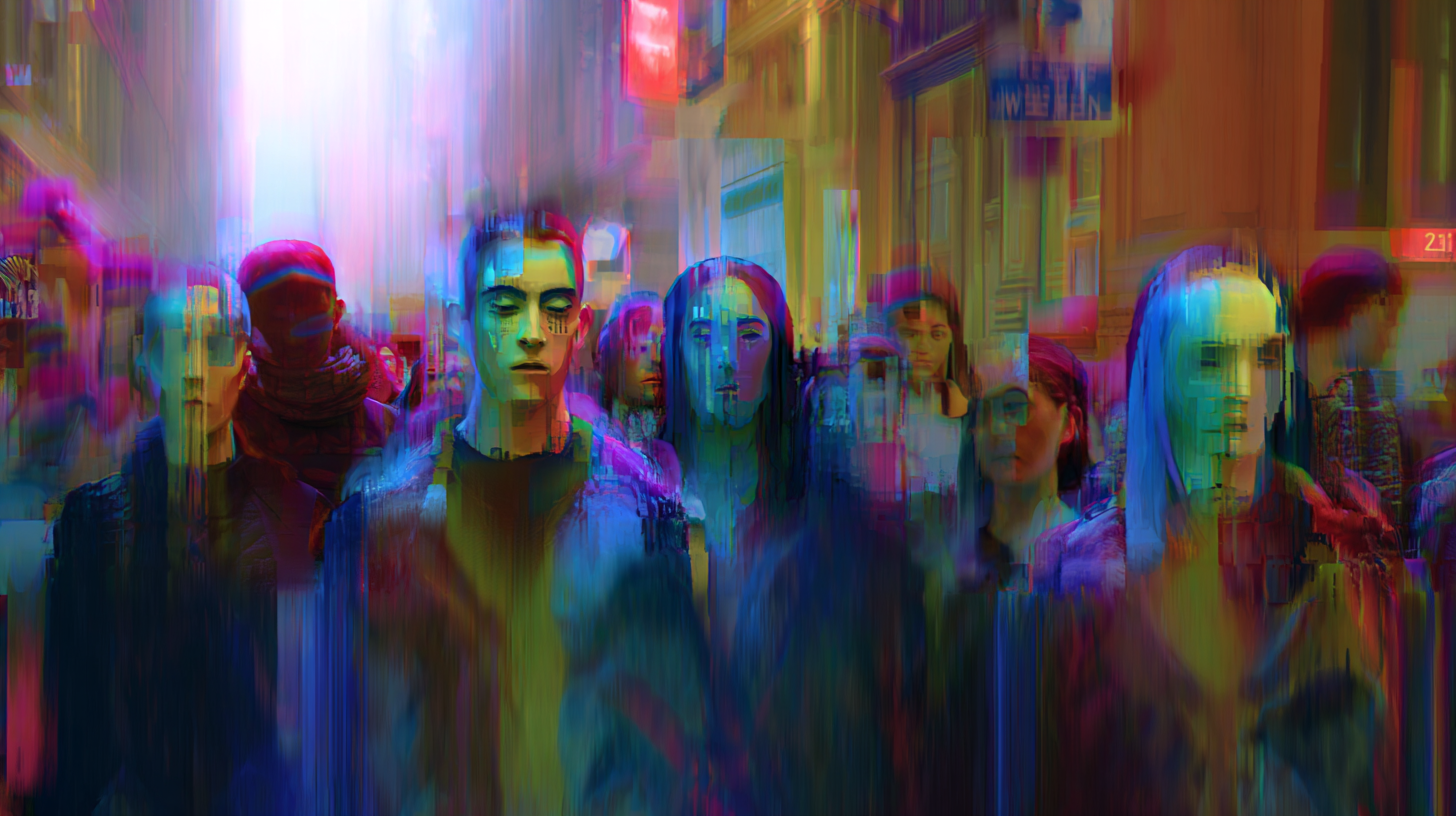
Naming as a First Step
This series isn't about offering solutions so much as naming reality. Because before a society can move, it has to feel where it is. Here's where we are:
- emotionally strained, not apathetic
- withdrawn, not disengaged
- tired, not broken
If Britain is to heal, it won't be through noise or spectacle. It will be through restoring the conditions that allow people to exhale - and then, gradually, to look up again. That begins with taking the emotional life of the country seriously.
Not as a side issue. Not as a soft concern. But as the ground everything else stands on.