
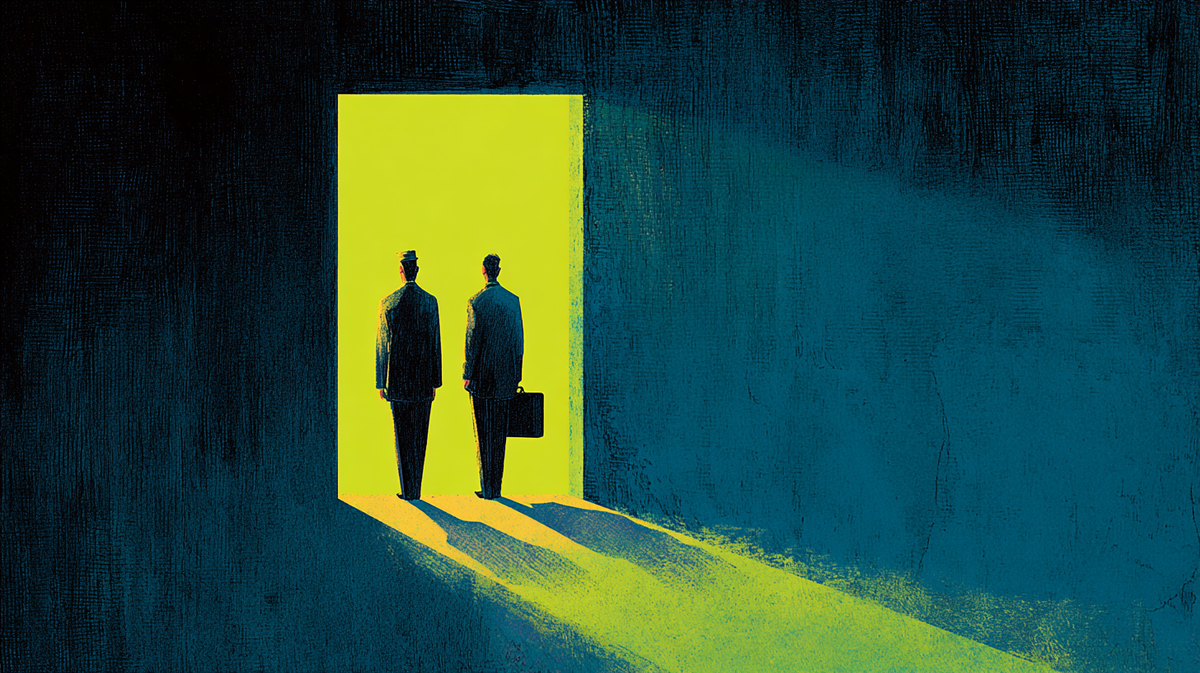
James Mitchell and Bruce Jessen were psychologists trained to protect the human mind. Then America asked them to destroy it - and they said yes.
I want to tell you about two men whose names you probably don't know.
I came across them the way you sometimes come across the most disturbing things - sideways. I was deep in the research for another piece, tracing the money that flows through the architecture of human suffering, when a name appeared in a footnote. Then another name beside it. Then an $81 million contract.
I went searching for more information. They weren't venture capitalists. They weren't pharma executives or tech founders building platforms off the back of loneliness. They were psychologists. Licensed, credentialled, trained in the architecture of the human mind.
And what they built with that training is one of the most disturbing stories I have encountered in years of writing at the intersection of psychology and power. This is the story of James Mitchell and Bruce Jessen, the torture teachers. The men who built a program that led to death and suffering, with the full approval of the governing body designed to prevent it. And once you know it, you won't be able to un-know it.
Before the phone call
To understand what Mitchell and Jessen became, you need to understand what they were.
Both men were Air Force psychologists. Both served at the SERE school - Survival, Evasion, Resistance and Escape - the programme that prepares US military personnel for the worst-case scenario: capture by an enemy that doesn't play by the rules. At SERE, recruits are subjected to controlled versions of the tactics used by hostile states. Stress positions. Sleep deprivation. Isolation. Simulated waterboarding. The whole brutal menu.
The psychologists aren't the interrogators in this setting. They're the safeguards. Their job is to monitor - to watch the recruits, to know when someone is breaking, to ensure that the training doesn't cross into real psychological damage.
 Matt Hussey
Mitchell was, for a period, the chief psychologist at the Air Force survival school at Fairchild Air Force Base. Jessen was his predecessor in the role before moving to an advanced school of survival training.
They were, in other words, the people watching the line. Trained to see it. Trained to know when it was being approached.
Then came September 11, 2001. Mitchell had retired from the Air Force just one month before the towers fell. And shortly after the attacks - in the winter of 2001 - a phone call came.
The pivot
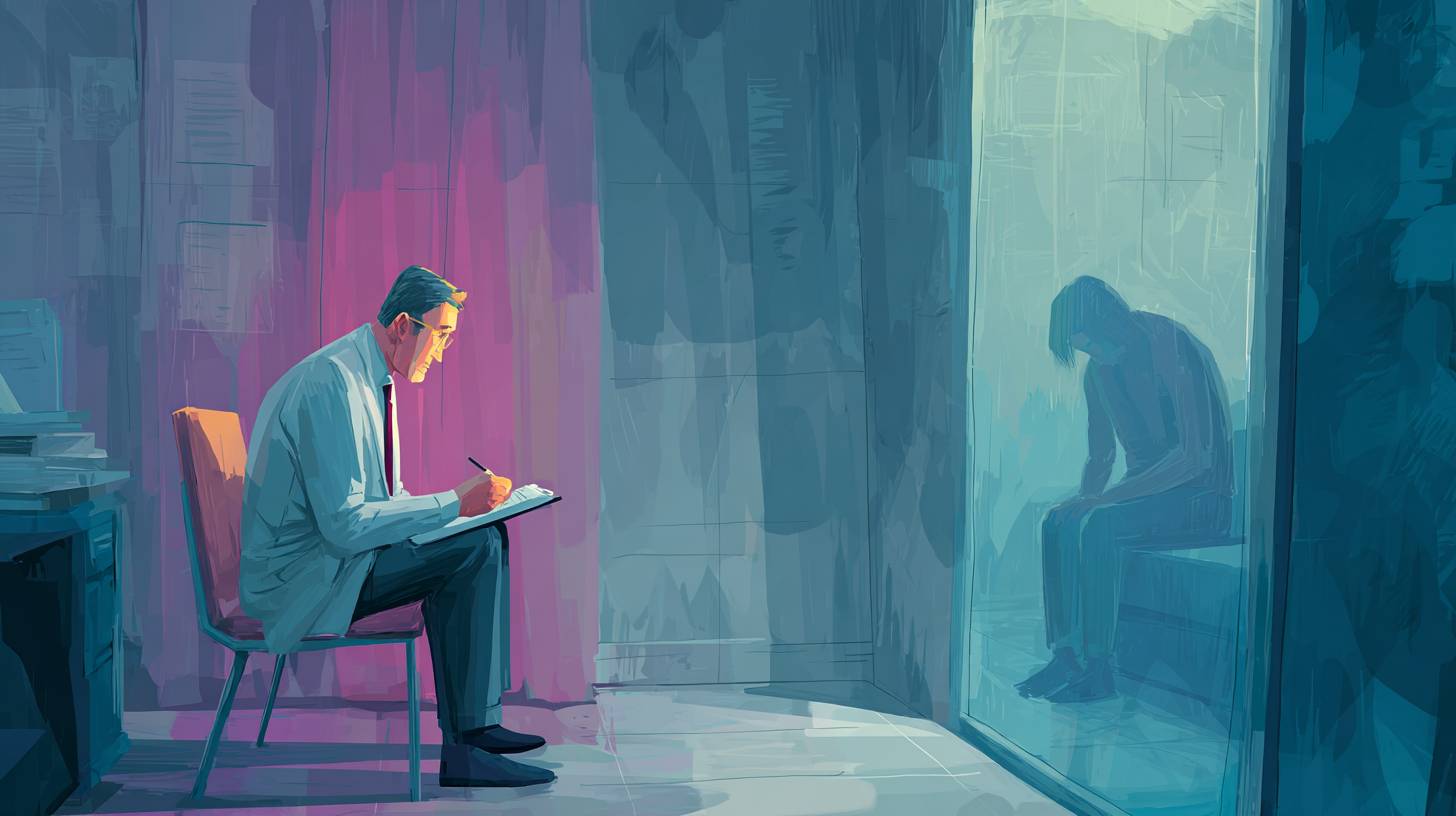
The CIA was in a state of urgent improvisation. The agency, which had publicly disavowed coercive interrogation after exposure of its operations in the 1960s and 1980s, suddenly found itself with high-value detainees and no interrogation programme. It needed something. Fast. What it found was Mitchell and Jessen.
But let's be clear here: the CIA didn't find two accomplished interrogators with deep expertise in counterterrorism, or seasoned intelligence officers with a decade of field experience in Islamic extremism.
Neither had carried out a real interrogation, only mock sessions in the military training they had overseen. Their PhD dissertations - the academic foundations of their psychological credentials - were on controlling high blood pressure through diet and exercise, and empathy in pre-service teacher education. No, I'm not joking. I wish I was.
Matt Hussey
They had, as the Senate Intelligence Committee would later confirm in its exhaustive report, "no specialized knowledge of al-Qaeda, no background in counterterrorism, and no relevant cultural or linguistic experience." None of it. Zero.
What they had was psychology credentials and an intimate knowledge of a programme designed to protect American soldiers from the very things they were now being asked to do to someone else.
The CIA's own acting general counsel at the time, John Rizzo, would later write in his memoir that he found some of what Mitchell and Jessen were recommending "sadistic and terrifying." One proposed technique - mock burial, in which a detainee would be made to believe he was about to be buried alive - was considered too extreme even for this. It was rejected. The rest was not.
The torture theory
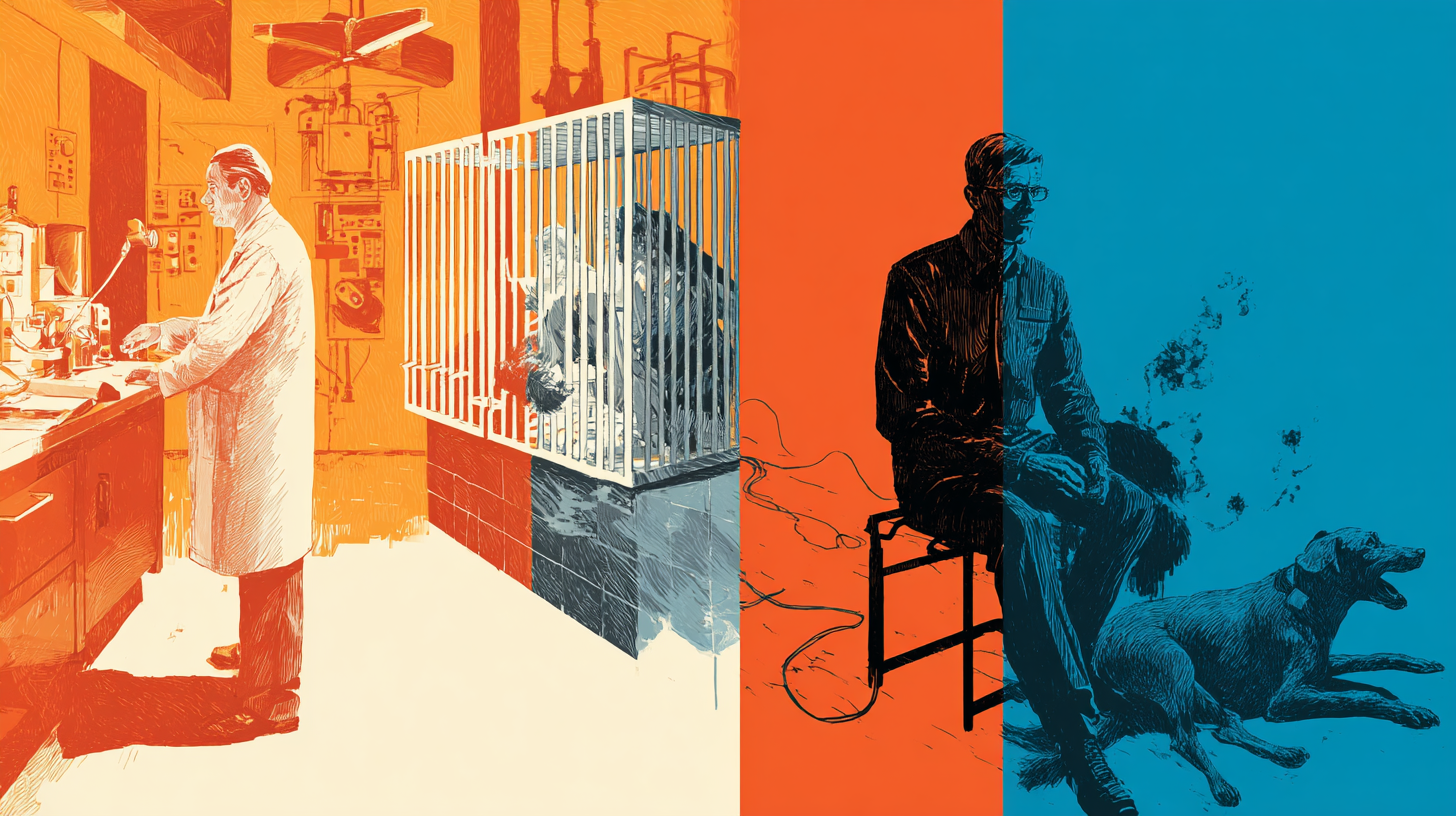
What Mitchell and Jessen brought to the CIA was a concept. A single psychological idea, lifted from academic research and reverse-engineered into a blueprint for breaking a human being.
In the 1960s, the psychologist Martin Seligman - now best known as the founder of positive psychology, the man who built a career on human flourishing - conducted a series of experiments on dogs.
He administered electric shocks to animals that had no means of escape. After repeated exposure to inescapable pain, something strange happened: even when the option to escape was introduced, the dogs didn't take it. They lay down and whined. They had stopped believing that their actions had any effect on their suffering. Seligman called it learned helplessness.
The theory was developed to understand depression. To understand how people lose the will to act, to hope, to try. It was, at its origin, an act of compassion - an attempt to map suffering so that it might be relieved. Mitchell and Jessen had a different use in mind.
Matt Hussey
In April 2002, CIA psychologist Kirk Hubbard, along with Mitchell and Jessen, met with Seligman at his home to discuss the theory of learned helplessness in depth. Seligman has always maintained he had no idea the CIA was exploring how his research might be applied to interrogation. He may be right. What is documented however, is that he gave a three-hour lecture on the subject at a SERE conference shortly afterwards, at Mitchell and Jessen's request.
And what Mitchell and Jessen did with what they learned was this: they proposed that the same psychological state Seligman had identified in traumatised dogs - the collapse of agency, the dissolution of the will to resist - could be deliberately induced in a human being. And that a human being in that state would give up whatever information they held.
The theory had never been tested. It could not ethically or legally be tested. It was proposed on the basis of experiments conducted on dogs in the 1960s. They sold it to the CIA anyway.
And here is the detail that I keep returning to, that I think carries the full weight of what followed: the SERE training programme that Mitchell and Jessen had spent their careers overseeing had its own internal rule - a line written explicitly into its own manuals - that instructors must "take maximum effort to ensure that students do not develop a sense of learned helplessness" during training.
They knew. They had always known. The line they were paid to hold at SERE was precisely the line they were now proposing to cross - deliberately, systematically, on human beings held without recourse in secret facilities across the world.
The practice

In April 2002, a man named Abu Zubaydah was captured in Pakistan. He had been shot in the groin during his arrest. The FBI nursed him back to health, built rapport, used standard interview techniques. He provided information. Real information. The FBI's approach was working. Then Mitchell arrived.
What happened next is documented in CIA cables, medical records, and the Senate Intelligence Committee's 6,700-page report - the longest oversight report in Senate history - based on six million pages of the CIA's own internal records.
Mitchell, according to sources cited by investigative journalist Jane Mayer, announced that Zubaydah had to be treated "like a dog in a cage." He described the approach as an experiment. In his own words, as they appear in the record:"When you apply electric shocks to a caged dog, after a while, he's so diminished, he can't resist."
Over the following weeks, Zubaydah was stripped naked and placed in a cold room. He was slammed repeatedly against a specially constructed wall. He was confined in a box so small he could not straighten his limbs. He was subjected to 180 hours of continuous sleep deprivation. He was waterboarded 83 times.
CIA medical personnel in matching black uniforms monitored his condition. Their notes, obtained as part of the Senate investigation, record the longest duration of waterboarding cloth over his face - seventeen seconds - and note, with clinical detachment: "No useful information so far."
Matt Hussey
Abu Zubaydah was not an anomaly. He was, as Mitchell and Jessen themselves described in an internal cable, a "template." The programme they developed was exported to black sites around the world. At least 119 individuals were subjected to it. At least 26 were later confirmed to have been wrongfully held.
One man, Gul Rahman, died - chained, partially naked, to a concrete floor - when lack of heat at a CIA detention facility caused fatal hypothermia. Multiple detainees experienced hallucinations. Several attempted self-harm. At least one CIA officer who participated in the programme later died by suicide.
Mitchell and Jessen were not passive architects watching from a distance. They personally conducted interrogations. They personally waterboarded detainees. And - in one of the most grotesque conflicts of interest in the history of the profession - they were also the people tasked with evaluating the effectiveness of their own techniques on the same individuals they were interrogating.
In 2005, they formed a company. Mitchell Jessen and Associates, registered in Spokane, Washington. The CIA outsourced the management of the entire programme to them. By 2006, with all contract options exercised, the deal was valued at $180 million. Before it was terminated in 2009, they received $81 million.
Two psychologists. Eighty-one million dollars. A programme built on a theory derived from traumatised dogs. And not a single qualification in interrogation, counterterrorism, or the culture and language of the people being destroyed.
What they already knew
Now here is the part of this story that I want you to sit with. Because it is not a footnote. It is the story. The CIA didn't stumble into torture in 2002 without any map of where it leads. It had been there before. And it had its own conclusions.
In Vietnam, the CIA developed the Phoenix programme - a vast network of interrogation sites and detention facilities designed to extract intelligence from suspected Viet Cong operatives. It was, by any measure, an intelligence-gathering failure.
More than 26,000 prisoners were tortured to death or summarily executed. The intelligence produced was largely worthless. The model was then exported wholesale to Latin America - carried through Project X, a secret Army Intelligence training programme, into the interrogation rooms of right-wing military regimes from Brazil to Guatemala.
The CIA had its own manual - the KUBARK Counterintelligence Interrogation manual, classified and written in 1963 - that outlined coercive interrogation techniques in extraordinary clinical detail. And even within that document, within its own justifications, there is a quiet acknowledgement: the threat of pain, it notes, is often more effective than pain itself. The manual - a guide to torture, written by the CIA, for the CIA - was itself expressing doubt about torture.
Matt Hussey
Then in 1989, CIA officials testified before Congress with a conclusion drawn from all of it - Vietnam, Latin America, decades of covert operations: "inhumane physical or psychological techniques are counterproductive because they do not produce intelligence and will probably result in false answers."
That was the CIA's own testimony. To Congress. In 1989. Thirteen years before Mitchell and Jessen were handed their contract.
And then the Senate Torture Report, released in 2014, confirmed it all over again - this time in 6,700 pages of the CIA's own internal records: coercive interrogation techniques did not produce the vital, otherwise unavailable intelligence the CIA claimed. The use of coercive techniques regularly resulted in fabricated information.
The committee reviewed twenty of the most prominent examples of counterterrorism "successes" the CIA attributed to enhanced interrogation. Not one held up. In every case, the intelligence had either been obtained before coercion began, came from other sources entirely, or was simply false - fed back by people who had been broken and would say anything to make it stop.
Matt Hussey
The ticking time bomb scenario - the Jack Bauer justification, the one that made the whole thing feel necessary on the TV show 24, the one that made Americans accept what was happening - never occurred. Not once. Not a single time.
They built a machine to produce intelligence that torture had already proven, across decades of evidence, it could not produce. The only question is whether they didn't know, or whether they did.
The institution that looked away
I've been a therapist for long enough to know that individual moral failure doesn't happen in a vacuum. Somewhere, there is always an institution that made space for it.
In 2015, a 542-page independent investigation - the Hoffman Report, named for its lead investigator David Hoffman, a former federal prosecutor - confirmed something that had been alleged for years and dismissed for years: that the American Psychological Association, the largest body of psychologists in the world, the keeper of "do no harm," had actively colluded with the Department of Defense and the CIA to keep psychologists inside the interrogation programme.
The APA's first ethical principle is beneficence and nonmaleficence - the requirement to take care to do no harm. Its mission is to use psychological knowledge to benefit society and improve people's lives.
What the Hoffman Report found was that senior APA leadership had quietly rewritten the organisation's ethics guidelines to align them with the requirements of the Bush administration's interrogation programme.
Matt Hussey
A task force - the Psychological Ethics and National Security task force of 2005 - had been assembled in partial secrecy, its membership carefully selected to include a majority with close ties to the Department of Defense. It produced a report that gave permission for psychologists to participate in interrogations.
The collusion, Hoffman found, had involved the CEO, the deputy CEO, five APA presidents, and senior officers from the organisation's ethics, science, governance, policy, legal, and communications offices.
Why did this matter beyond the obvious? Because psychologists were the only health profession that hadn't said no. By 2006, both the American Medical Association and the American Psychiatric Association had explicitly prohibited their members from participating in interrogations.
Matt Hussey
The APA stood alone in its permissiveness. And as legal scholars and former intelligence officials have noted, the presence of health professionals provided the interrogation programme with something it desperately needed: an air of legitimacy. A defence against prosecution. Psychologists in the room meant it must be safe. It must be within bounds. It must be science.
This is what institutions do when their interests align with power. They rewrite the rules until what's happening looks permissible. They protect the powerful and call it policy. They fire the ethics director - which the APA did, in the immediate aftermath of the Hoffman Report's release - and call it accountability. To date, no psychologist has been censured by the APA for participating in torture. Not one.
The reckoning that didn't come
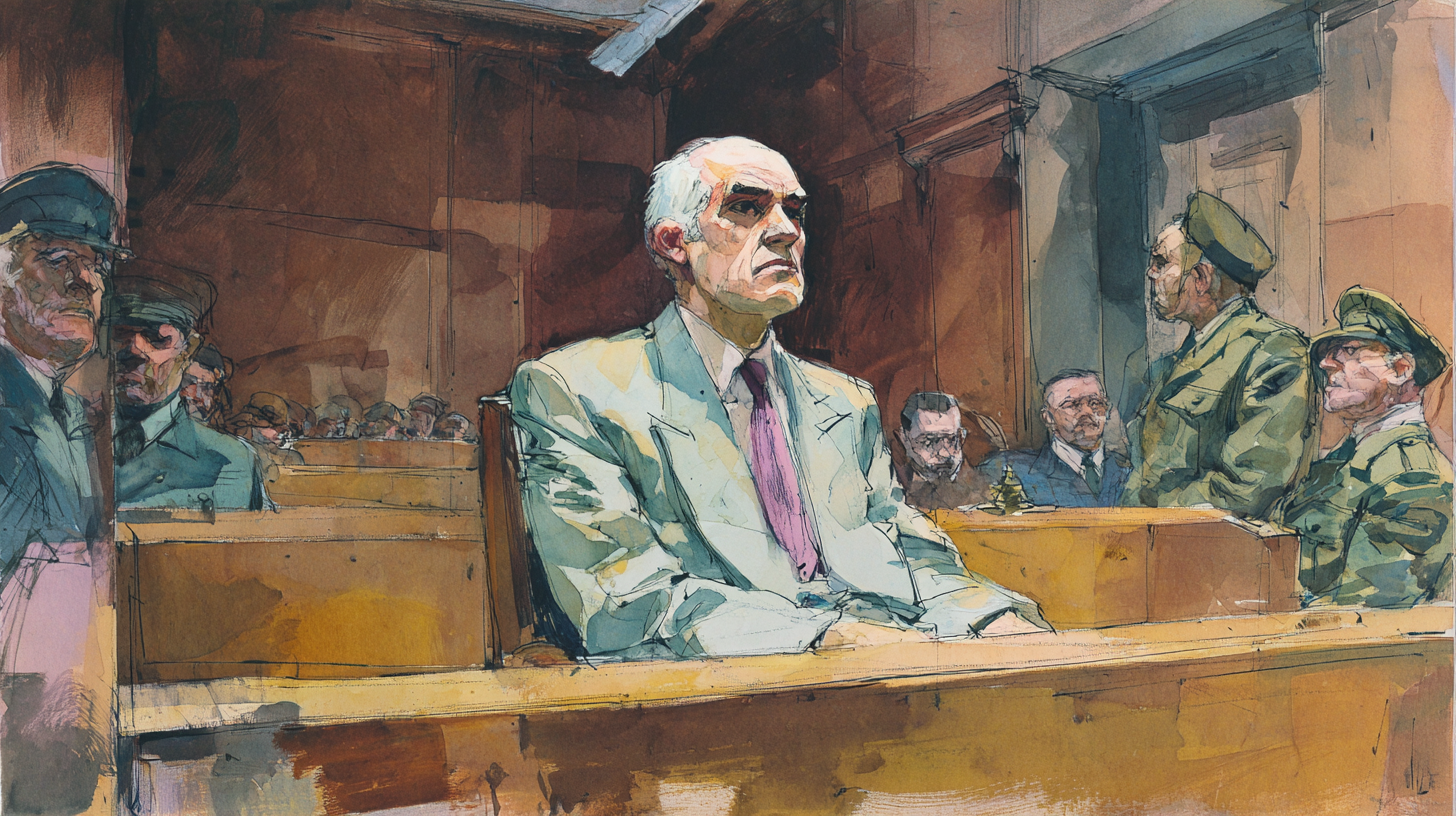
In 2015, the ACLU filed a lawsuit on behalf of three survivors - Suleiman Abdullah Salim, Mohamed Ahmed Ben Soud, and the estate of Gul Rahman, who died - against Mitchell and Jessen personally.
Because they were contractors, not government employees, they could be sued as private citizens. It was one of the only legal avenues that remained, every other route having been closed by classification, immunity, and executive privilege.
In 2017, the case was settled. The terms were confidential. Mitchell and Jessen issued a joint statement acknowledging that they had "worked with the CIA to develop a programme that contemplated the use of specific coercive methods." They said that certain individuals had performed acts "without their knowledge or consent." Jessen said they had "served their country at a time when freedom and safety hung in the balance."
Nobody was charged with a crime. Nobody lost their licence. The CIA had agreed, as part of the original contract, to cover at least $5 million in legal fees for Mitchell and Jessen. The federal government paid for their defence.
And Mitchell? At a pre-trial hearing at Guantánamo Bay in 2020, he took the stand and was asked whether, knowing what he now knows, he would do it again. "I'd get up today and do it again," he said.
What the profession becomes
I want to be careful here. I'm a therapist. I'm writing about other therapists. There is a version of this piece that becomes self-serving - a comfortable distance from those two men, a reassurance that what they did is unthinkable, aberrant, nothing to do with the rest of us. I don't think that's honest.
What Mitchell and Jessen had that made them useful to the CIA was not just credentials. It was the clinical vocabulary - the language of psychological states, thresholds, compliance, regulation - that made systematic torture sound like a programme.
The APA's complicity wasn't a coincidence. Psychologists inside the interrogation room gave the whole operation a professional grammar. Science. Monitoring. Evaluation. The thing you were doing to a human being became a procedure. The person breaking down in front of you became a subject.
This is what happens when the tools of understanding are handed to the logic of control. The framework built to relieve suffering becomes the framework used to engineer it. Learned helplessness - a concept developed to explain how depression traps people - becomes the operational goal of an interrogation programme. The psychologist trained to notice when someone is breaking becomes the person calculating how much further they can be pushed.
Matt Hussey
The Physicians for Human Rights - who have documented this programme for two decades - described what happened as "one of the gravest breaches of medical ethics by US health professionals since the Nuremberg Code was developed." The Nuremberg Code. The framework built after Nazi physicians conducted experiments on concentration camp prisoners. That is the comparison being made. By doctors. About other doctors.
Mitchell and Jessen are not in prison. They are not in front of an ethics board. They are, somewhere, living ordinary lives. Jessen quietly resigned from a ministerial position in his church in 2014 - not because of any legal consequence, but to protect his congregation from the publicity.
The CIA has not apologised. The APA has not prosecuted anyone. The full, unredacted Senate Torture Report - all 6,700 pages of it - remains classified. I started this piece with two names in a footnote. I'll end it with a question that I can't resolve.
The profession of psychology rests on a foundational commitment: do no harm. Not "do no harm unless authorised." Not "do no harm except in exceptional circumstances." Not "do no harm until someone offers you $1,800 a day and a contract worth $81 million." Just: do no harm.
Mitchell and Jessen were not monsters from outside the profession. They were inside it. Credentialled by it. In one case, formally certified by its largest association to provide continuing professional education to other psychologists - a certification the APA granted and then, years later and too late, quietly revoked.
The question this story leaves me with - the one I take back into the therapy room, into every conversation about the ethics of this work - is not what those two men did. It's what the profession built around them that made it possible. The guidelines rewritten. The ethics board silenced. The legitimate cover granted. The contract signed and extended and signed again.
Institutions don't fail all at once. They fail slowly, in increments, each small compromise making the next one feel less like a compromise at all. And by the time someone is in a black site, kneeling in front of a man strapped to a board, the institution that trained them to care for minds has already been working very hard, for a very long time, to make sure no one is watching.
That's what I can't stop thinking about. Not the men. The system that said yes.