When Freedom Overwhelms: The Dark Psychology of Too Much Choice
How dark psychology exploits choice overload, decision fatigue, and cognitive strain to make people vulnerable to simplified, manipulative systems.

Dark psychology is often associated with overt manipulation - gaslighting, coercion, cult dynamics. But some of the most effective psychological influence today operates through something far more subtle: excess.
Too many choices. Too many options. Too many versions of who you could be. In the modern marketplace - from streaming platforms to career paths to dating apps - abundance is sold as freedom.
Yet psychological research shows that overwhelming choice can increase anxiety, reduce satisfaction, and make people more vulnerable to simplified, often manipulative recommendations.
This article examines how choice overload becomes a dark psychology tool, how cognitive overload weakens autonomy, and why Gen Z - raised inside algorithmic abundance - may be particularly exposed.
The Paradox of Choice - When Freedom Backfires

Dark psychology is often imagined as something imposed from the outside: coercion, deception, manipulation. But some of the most powerful psychological influence begins internally - when the mind is overwhelmed.
Modern consumer culture is built on the promise of limitless choice. Thousands of films at our fingertips. Infinite fashion aesthetics. Endless career paths. Dating apps with more potential partners than any previous generation could realistically encounter in a lifetime.
Choice is sold as autonomy. But psychologically, abundance behaves differently. The concept most closely associated with this paradox comes from psychologist Barry Schwartz, whose book The Paradox of Choice synthesised decades of behavioural research to argue that while some choice is good, excessive choice produces diminishing returns - and eventually psychological strain.
The strain shows up in predictable ways:
- Increased anxiety before deciding
- Greater fear of making the "wrong" choice
- Heightened anticipated regret
- Lower satisfaction after choosing
When options multiply, the stakes feel inflated. Every decision begins to carry the ghost of the paths not taken.
One of the most cited experiments in this area was conducted by Sheena Iyengar and Mark Lepper in 2000. In what became known as the "jam study," shoppers were presented with either 6 or 24 varieties of jam. While more people stopped at the larger display, significantly fewer actually purchased from it. When choice increased, action decreased.
 Matt Hussey
More exposure. Less commitment. The psychological mechanism is straightforward: working memory is limited. Evaluating 24 alternatives requires exponentially more cognitive comparison than evaluating 6. The mental effort required to optimise grows faster than the human capacity to process it.
And this is where the dark psychology dimension emerges. Excessive choice does not merely exhaust. It destabilises confidence. When every decision contains dozens of counterfactual futures, certainty becomes scarce. In that uncertainty, people begin to look for relief - for ranking systems, for "most popular" tags, for influencers, for curated pathways.
Overchoice doesn't remove agency. It makes agency feel fragile. In that fragility lies opportunity - as I'll explore next.
Cognitive Overload as a Vulnerability

Choice overload is not just uncomfortable. It is destabilising. The human brain is not built for infinite comparison. Working memory - the system responsible for holding and manipulating information - is sharply limited. Once cognitive load exceeds capacity, performance degrades. Attention narrows. Emotional reactivity increases. We default to shortcuts.
Under these conditions, autonomy becomes more fragile than we like to admit.
One of the most influential lines of research here comes from Roy Baumeister, whose work on ego depletion and decision fatigue demonstrated that repeated acts of decision-making reduce subsequent self-control. In a series of studies, participants required to make numerous small choices performed worse on later tasks requiring persistence and impulse regulation.
Put simply: the more decisions you make, the worse you become at making them.
Later work in behavioural science has complicated the strength of the original "ego depletion" model, but the broader finding remains robust: cognitive strain alters decision quality. Judges, for example, have been shown to grant parole less frequently later in the day - reverting to safer default options as mental fatigue sets in.
 Matt Hussey
Fatigue increases conservatism. Strain increases reliance on defaults. This is where dark psychology enters. When cognitive resources are depleted, people rely more heavily on heuristics - mental shortcuts such as:
- Authority bias ("experts must know")
- Social proof ("most people chose this")
- Availability ("I've seen this before")
Under overload, these shortcuts are not signs of irrationality. They are adaptive mechanisms. The brain protects itself by simplifying. But simplification creates an opening.
In environments saturated with options - streaming libraries, e-commerce platforms, personal branding ecosystems - individuals are forced into near-constant micro-decisions. What to watch. What to wear. What to post. What to pursue. Each choice may seem trivial in isolation, but cumulatively they generate cognitive wear.
By the end of the day, the mind is no longer optimising. It is conserving. And conservation makes people more likely to:
- Accept pre-curated bundles
- Trust "recommended for you" labels
- Defer to influencers
- Choose whatever appears first
Behavioural economist Daniel Kahneman described this as the shift from System 2 (deliberate, analytical thinking) to System 1 (fast, intuitive processing). System 1 is not foolish - it is efficient. But it is also more susceptible to framing, emotional salience, and persuasive design.
Dark psychology does not require deception. It requires depletion. When people are cognitively saturated, they do not demand freedom. They seek relief. And relief often comes in the form of someone - or something - narrowing the field for them.
Algorithmic Simplification - When Systems Decide for You

Choice overload begins as a psychological condition. But it becomes something more powerful when systems learn to anticipate it.
Modern platforms do not simply host abundance. They manage it. Every streaming service, social network, fashion retailer, and job board now runs on recommendation engines designed to filter overwhelming possibility into curated pathways.
On the surface, this feels helpful. Who wants to scroll through 60,000 titles? Who wants to compare 800 nearly identical trainers? But recommendation systems do not merely reduce complexity. They shape perception.
The sociologist Shoshana Zuboff has argued that the contemporary digital economy operates not only by predicting behaviour, but by subtly modifying it. Behavioural data is harvested, modelled, and then used to steer future action. The goal is not simply relevance - it is influence.
 Matt Hussey
In conditions of cognitive overload, this steering becomes more effective. When the brain is fatigued, ranking cues gain power. Labels such as:
- "Trending"
- "Most Popular"
- "Recommended for You"
- "Best Seller"
...carry disproportionate weight. They reduce uncertainty. They imply social proof. They promise efficiency. And under strain, efficiency feels like safety.
Research into algorithmic filtering suggests that recommendation systems can narrow exposure while maintaining the illusion of breadth. You still see thousands of options. But the top layer - the visible layer - becomes increasingly personalised and reinforced. The system learns what you linger on, what you scroll past, what you hesitate over. It begins to pre-structure your field of vision.
Over time, this creates a subtle psychological shift: choice feels abundant, but discovery feels constrained. This is not conspiracy. It is infrastructure.
Persuasive technology researcher B. J. Fogg has long argued that behaviour is shaped most effectively when motivation, ability, and prompts align. Overload reduces ability (cognitive clarity). Recommendation engines provide prompts. The result is smoother behavioural steering.
Dark psychology, in this context, does not need to lie. It only needs to simplify at precisely the moment confusion peaks.
 Matt Hussey
There is also a commercial incentive embedded in this process. Platforms optimise for engagement, retention, and conversion. What surfaces first is not necessarily what is most enriching, but what is most likely to hold attention. Emotional salience - outrage, novelty, desire - tends to outperform nuance.
Under overload, people increasingly interpret visibility as value. If it's at the top, it must be good. If it's trending, it must matter. Behavioural economists like Richard Thaler have shown how "choice architecture" - the way options are presented - profoundly influences decisions without removing formal freedom. Defaults, rankings, framing effects: all shape outcomes while preserving the appearance of autonomy.
This is the quiet brilliance of modern persuasive systems. They do not eliminate options. They choreograph them. And when the mind is saturated, choreography feels like clarity.
Gen Z and Identity Saturation - When Infinite Choice Meets a Developing Self
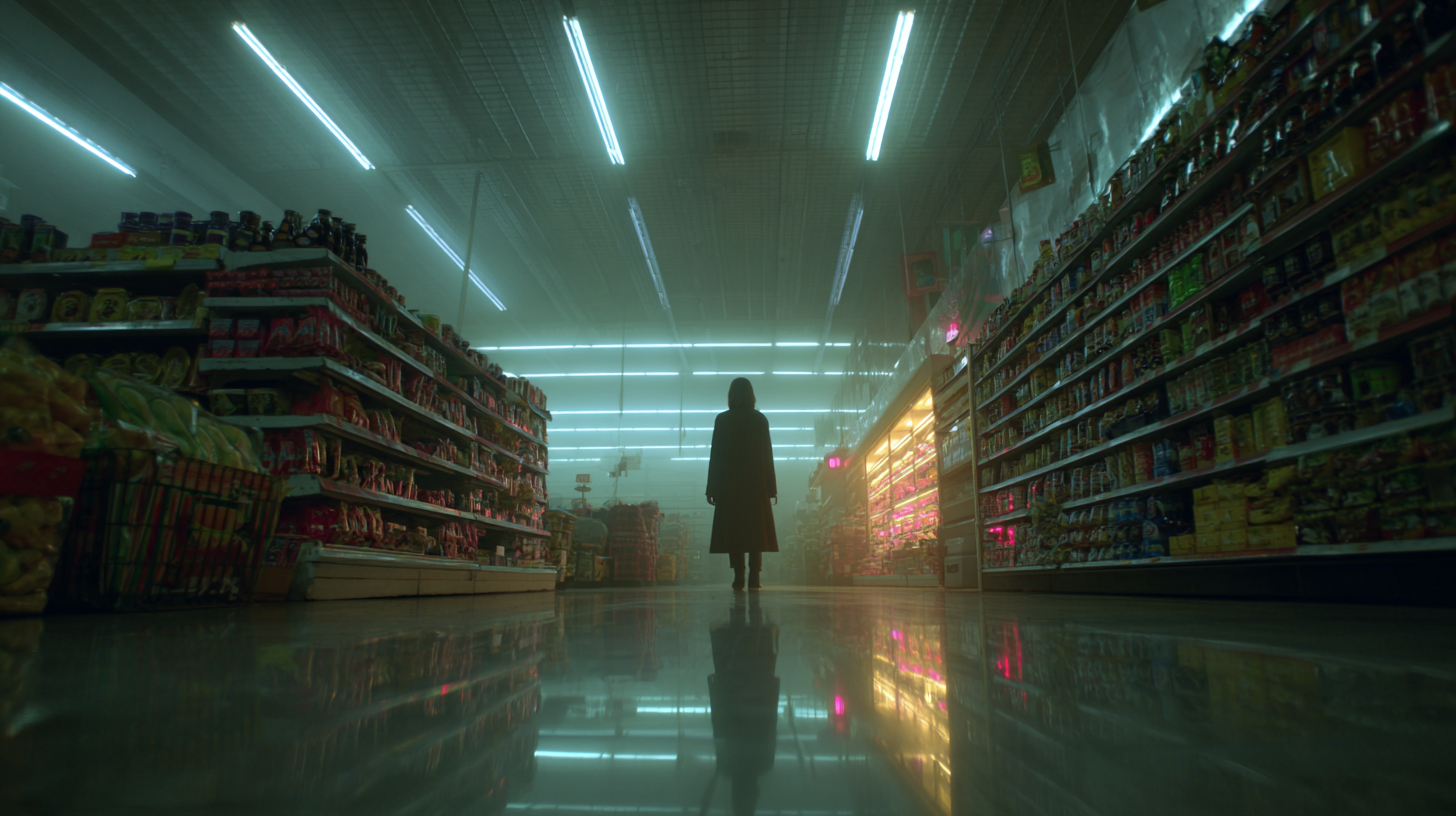
If earlier generations inherited narrower lanes, Gen Z inherited an open field. Career paths are no longer linear. Relationships are no longer bound by singular scripts. Aesthetic identities proliferate hourly. Political affiliations splinter into subcultures. Every version of selfhood is visible somewhere, monetised somewhere, validated somewhere.
In theory, this is liberation. Psychologically, it can be destabilising.
Developmental psychologist Jeffrey Arnett described modern late adolescence and early adulthood as a period of "emerging adulthood" - marked by prolonged identity exploration, instability, and self-focus. Compared to previous generations, today's young adults spend more years experimenting before committing to long-term roles.
Exploration, in healthy doses, fosters autonomy. But exploration without boundaries can generate chronic uncertainty. When every option remains open, commitment begins to feel like foreclosure. Each decision closes off dozens of imagined futures.
 Matt Hussey
The self becomes provisional. Layer onto this the architecture of digital life. Social media does not merely present options; it presents curated lives. Careers look frictionless. Bodies look perfected. Political certainty looks morally heroic. Algorithms surface hyper-optimised identities, creating an environment where comparison never rests.
The psychological literature on social comparison - pioneered by Leon Festinger - shows that individuals evaluate themselves relative to others. In a world saturated with upward comparisons, self-doubt intensifies. Identity becomes reactive.
Now add choice overload. When identity formation coincides with:
- Infinite lifestyle options
- Constant comparison
- Algorithmically ranked desirability
...decision-making becomes existential rather than practical.
Which career?
Which values?
Which aesthetic?
Which tribe?
Each answer feels like a declaration of selfhood. This is where dark psychology finds generational traction. When identity feels unstable, simplified frameworks become seductive. Clear hierarchies. Defined in-groups. Strong moral boundaries. Influencers who speak with certainty. Ideologies that reduce complexity to narrative.
These structures do not simply reduce cognitive load. They stabilise identity. Psychological research on identity fusion, led by William Swann, suggests that when personal identity merges tightly with group identity, individuals experience heightened certainty and belonging. In environments of chronic ambiguity, this fusion can feel grounding.
 Matt Hussey
The vulnerability is not intellectual weakness. It is developmental exposure. Gen Z did not choose infinite option architectures. They were born into them. When overload intersects with identity formation, the appeal of reduction - curated pathways, aesthetic templates, ideological clarity - becomes more than convenience. It becomes psychological scaffolding.
Dark psychology does not need to manufacture insecurity. It only needs to offer structure where insecurity already exists.
The Salesman's Trick - How Overwhelm Becomes a Persuasion Strategy

Not all overload is accidental. In many commercial environments, abundance is not merely a by-product of modern life. It is part of the choreography.
Walk into a large electronics store and you'll often find a wall of nearly indistinguishable televisions. Visit a subscription pricing page and you may be presented with three, four, sometimes five tiers of access, each differentiated by minor variations in features. Scroll through an online clothing retailer and the same item appears in twenty shades and six slightly altered cuts.
At first glance, this signals generosity. Range. Freedom. But behavioural economics has long demonstrated that the structure of choice profoundly shapes outcomes. Nobel laureate Richard Thaler and legal scholar Cass Sunstein popularised the term "choice architecture" to describe how the presentation of options influences decisions without eliminating them. Defaults, framing, anchoring, and decoy options all steer behaviour in predictable ways.
Overwhelm can amplify those effects. When consumers face too many comparable options, they experience comparison fatigue. Subtle differences blur. Evaluation becomes effortful. In that state, a strategically positioned "recommended" choice feels like relief.
 Matt Hussey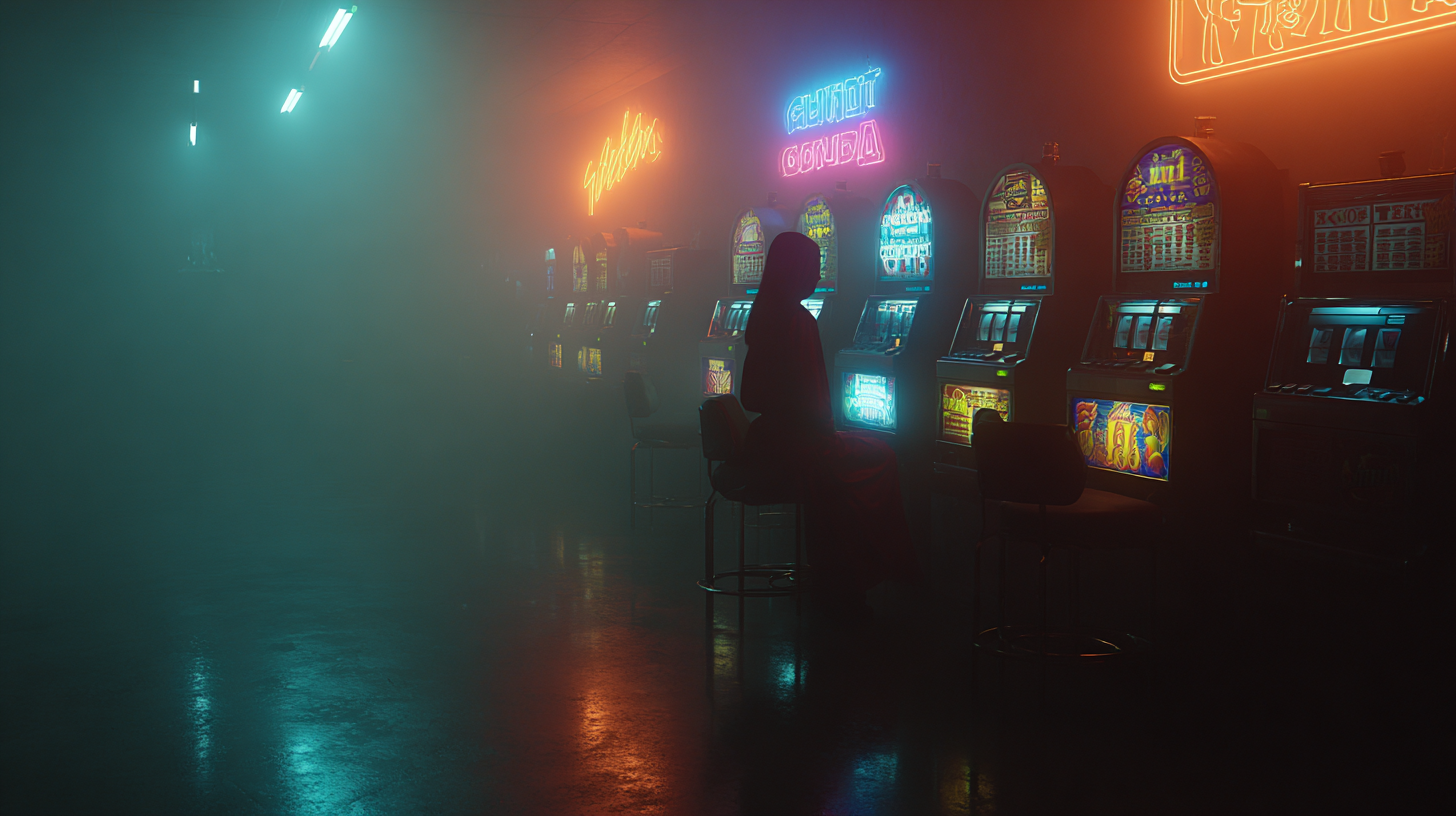
Research on the "decoy effect," explored by behavioural scientist Dan Ariely, shows that introducing a third, less attractive option can nudge consumers toward a targeted middle option. The inferior alternative makes the preferred choice appear more reasonable by comparison. The psychology is not coercive. It is comparative.
- Present abundance.
- Introduce subtle asymmetry.
- Allow the mind to seek resolution.
In digital environments, this process scales. Subscription tiers are framed so that one appears "most popular." Streaming services auto-play the next episode. E-commerce sites highlight "Only 2 left in stock."
Scarcity and popularity cues function most powerfully when the cognitive field is already cluttered. Under strain, consumers rely on signals rather than analysis. What feels like preference may, in fact, be path-of-least-resistance selection.
Dark psychology enters when overwhelm is not mitigated but engineered - when abundance creates anxiety that only the seller can soothe. In such environments, simplification becomes part of the product itself.
The salesperson does not need to pressure. They need only to narrow. And narrowing, when someone is tired of deciding, feels almost benevolent.
There is a subtle moral tension here. Not all nudging is harmful. Public health interventions rely on structured defaults to increase organ donation rates or retirement savings participation. But when the same mechanisms are used to maximise engagement, extract attention, or increase spending, the line between assistance and exploitation thins.
The consumer retains formal freedom. But the architecture does much of the deciding.
Reclaiming Cognitive Space - Resisting Dark Psychology in an Age of Excess

If dark psychology exploits overload, then resistance begins with limits. Not limits imposed from above. Limits chosen deliberately.
Choice overload weakens autonomy because it erodes clarity. The mind under strain does not deliberate; it shortcuts. It defers. It seeks relief. The counter-move, then, is not heroic willpower. It is environmental design.
Behavioural science consistently shows that self-control is more effectively preserved through structure than through effort. Pre-commitment strategies - explored by economist Thomas Schelling - demonstrate that people are better at governing their behaviour when they reduce future decision points in advance. Defaults can protect as easily as they can manipulate. Let me explain this a bit more.
When individuals constrain exposure - fewer feeds, fewer comparison triggers, fewer open tabs of possibility - they conserve executive function. Cognitive bandwidth returns. Decisions become slower, but more stable.
Psychologist Gerd Gigerenzer has argued that humans thrive not under infinite choice, but under "bounded rationality": environments where complexity is structured and information is usable. The mind performs best not when everything is possible, but when the field is legible.
 Matt Hussey
Reclaiming cognitive space means:
- Reducing algorithmic intrusion into default decision-making
- Creating friction before commitment (delayed purchasing, scheduled reflection)
- Anchoring choices to articulated values rather than ambient trends
- Reintroducing offline deliberation where possible
This is not digital asceticism. It is psychological hygiene.
There is also a deeper layer. Overload destabilises because it detaches decisions from meaning. When every choice is optimised for visibility, comparison, or social proof, intrinsic motivation erodes. Research in Self-Determination Theory, developed by Edward Deci and Richard Ryan, suggests that autonomy, competence, and relatedness are foundational to well-being. Excessive externally structured choice can paradoxically undermine felt autonomy.
Freedom does not mean infinite options. It means meaningful alignment. Dark psychology flourishes when people are cognitively saturated and emotionally untethered. It offers clarity where there is noise, structure where there is drift. But that clarity is often purchased at the cost of agency.
Resistance, therefore, is quiet. It looks like choosing fewer platforms. Choosing fewer metrics. Choosing fewer versions of oneself. It looks like accepting that not every possible path needs evaluation. The modern manipulation is not the removal of choice.
It is the inflation of it. And the most subversive act may be this: to narrow your world on your own terms - before someone else narrows it for you.
Frequently Asked Questions: Dark Psychology and Choice Overload
What is choice overload in psychology?
Choice overload is a psychological phenomenon in which having too many options increases anxiety, decision paralysis, and post-decision regret. Rather than improving satisfaction, excessive choice often reduces confidence and leads to lower overall happiness.
Is the paradox of choice scientifically supported?
Yes. Research by psychologists such as Barry Schwartz and Sheena Iyengar shows that while some choice increases autonomy, excessive choice can reduce motivation, increase cognitive strain, and lower satisfaction. Meta-analyses suggest the effect is context-dependent but real under high-complexity conditions.
What is decision fatigue?
Decision fatigue refers to the deterioration in decision quality after making many decisions. As cognitive resources decline, individuals rely more on shortcuts, default options, emotional cues, and authority signals rather than deliberate reasoning.
How does dark psychology relate to choice overload?
Dark psychology refers to the study of how psychological mechanisms can be exploited to influence or manipulate behaviour. In the context of choice overload, dark psychology operates by overwhelming individuals with options, increasing cognitive fatigue, and making them more likely to accept simplified, curated, or manipulative recommendations.
How do algorithms use choice overload?
Digital platforms present vast amounts of content but rank and filter it using recommendation systems. When users are cognitively overloaded, they are more likely to trust "recommended" labels, trending content, or default selections. This creates a subtle form of behavioural steering while preserving the illusion of freedom.
Why does too much choice cause anxiety?
Excessive choice increases anticipated regret and fear of missing out. Each decision implies rejecting multiple alternatives, which raises psychological stakes. The brain must compare more variables, increasing cognitive load and emotional tension.
Is Gen Z more affected by choice overload?
Gen Z faces unprecedented levels of lifestyle, career, aesthetic, and ideological options amplified by social media and algorithmic platforms. During key identity formation years, this abundance can increase uncertainty, comparison pressure, and susceptibility to simplified narratives.
What is cognitive overload?
Cognitive overload occurs when the amount of information or decisions exceeds working memory capacity. When overloaded, individuals shift from analytical thinking to intuitive shortcuts, increasing vulnerability to framing effects and persuasive cues.