What Is Cyberchondria - And Why Is AI Making It Worse?
Cyberchondria is the health anxiety spiral triggered by online symptom-searching. A new wave of AI tools is making it significantly worse. Here's what that means.
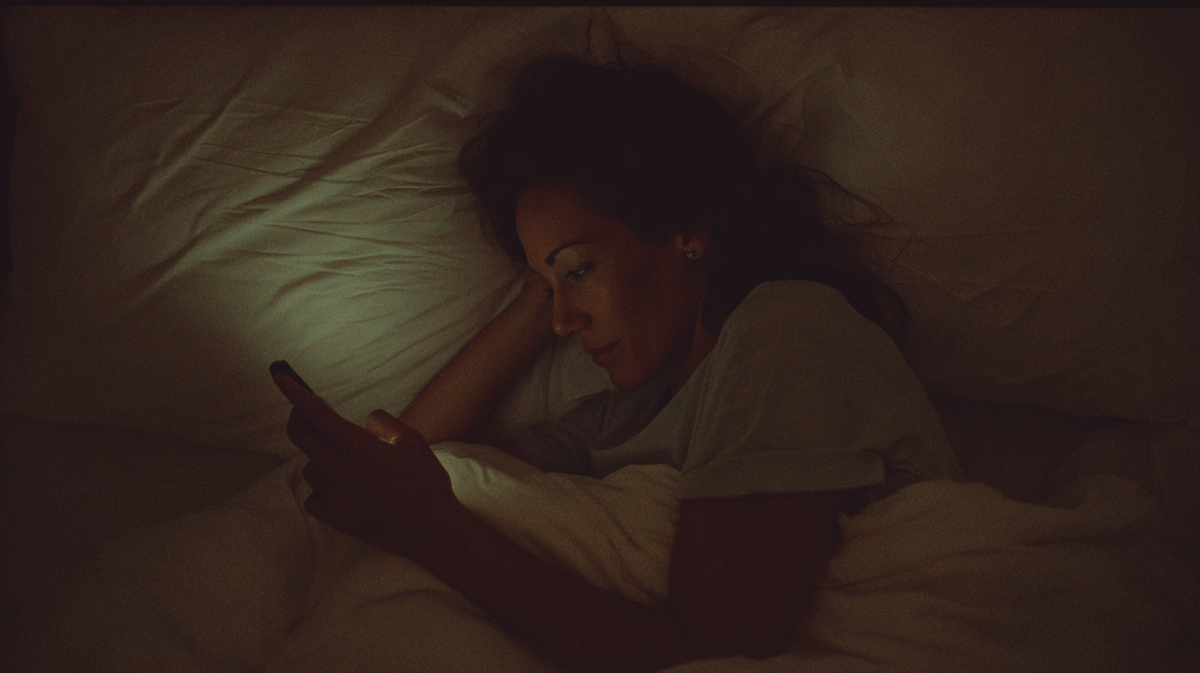
You type your symptoms into the chat at 11pm. Fatigue. A dull ache behind the sternum. A feeling you can't quite name. The AI gives you an answer in four seconds - differential diagnoses, listed cleanly, in descending order of probability.
Number three on the list is cardiac. You don't sleep. By morning you've read forty-seven articles, cross-referenced two symptom checkers, and booked an emergency GP appointment. The doctor finds nothing. You go home and search again. Welcome to the world of cyberchondria.
What is cyberchondria?
Cyberchondria is a pattern of excessive online health information searching that worsens rather than relieves health anxiety. Unlike a straightforward Google search, the cyberchondria spiral is self-reinforcing: each search generates more alarming information, which generates more searching. Especially if the answer you find initially doesn't reassure you in the way you would have hoped.
 Matt Hussey
The term was first coined in the UK press in the mid-1990s and is now a documented clinical concern. But rather than just a bad habit of searching too much, cyberchondria has been associated with a raised distrust of healthcare professionals, functional impairment, and reduced quality of life.
It is not a slur and it is not a metaphor. It is a recognisable behavioural pattern - compulsive, anxiety-driven, and largely invisible to the clinical systems that are supposed to catch it. Most people who experience it never name it. They just describe a night they'd rather forget. But thanks to AI, it's getting a lot worse.
How AI changed the symptom-searching spiral
For two decades, the cyberchondria spiral was powered by Google. You searched a symptom, you got a list of links, you clicked the most alarming one, you clicked another. The architecture of that spiral was chaotic - ten blue links, competing sources, no through-line. Anxiety-inducing, yes. But you could, if you wanted, close the tab.
Something shifted in the last eighteen months. The search box that used to return a list now returns a voice. Conversational AI - ChatGPT, Gemini, Claude - doesn't give you links to follow. It gives you a diagnosis to sit with. It speaks in the first person. It sounds like someone who has read everything and is telling you calmly what they found. For the anxious mind, that is not a neutral upgrade. That is a more convincing trap. It also has all your previous chats stored, so its language his more attuned to your needs.
 Matt Hussey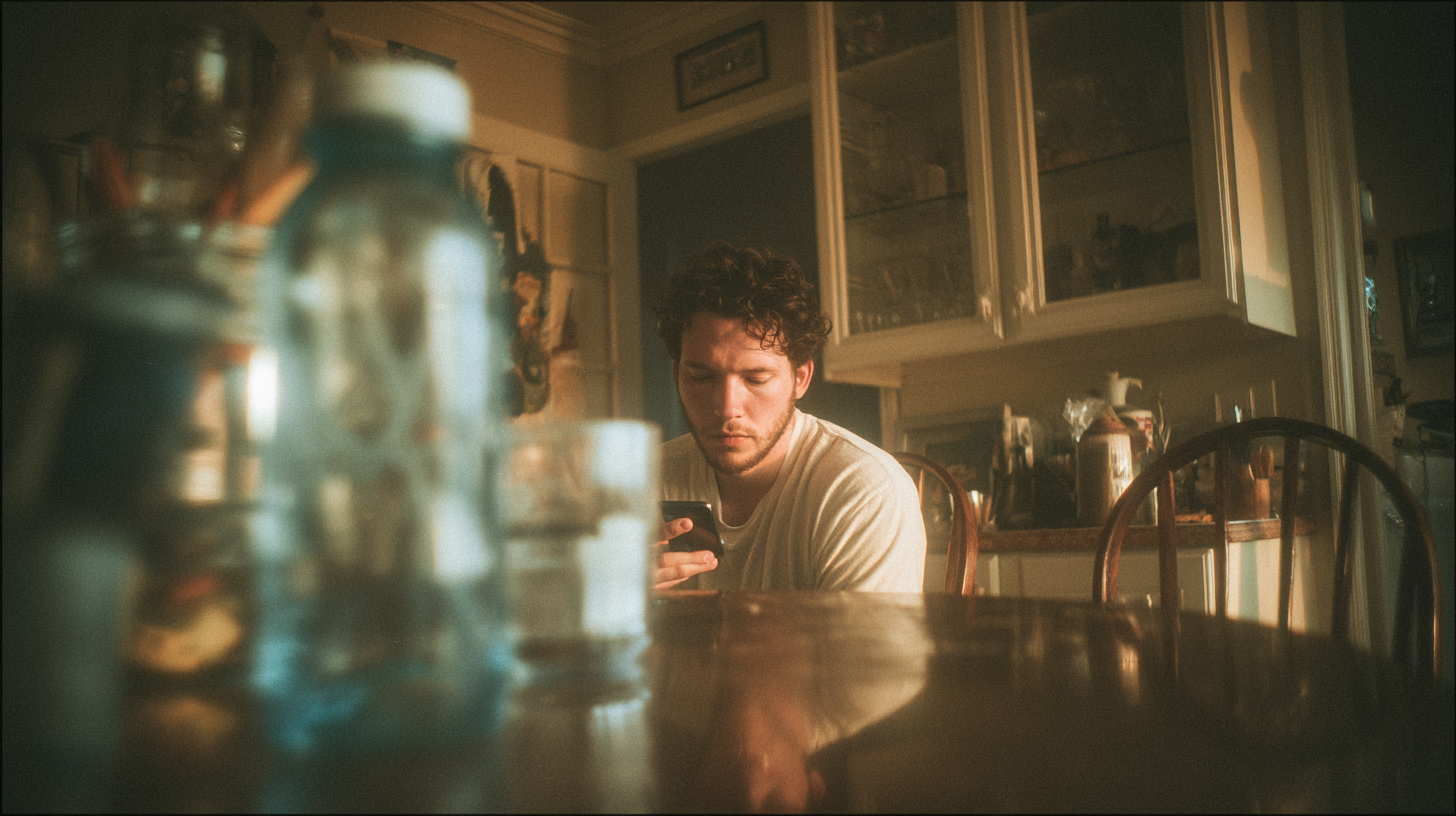
This new spiral is more compelling, more personal and much harder to break than closing a tab. Google doesn't really remember you in any meaningful way after you've closed the tab - an AI chat bot does. And you could talk to it for hours.
What the research shows
A recent study published in Current Psychology examined 849 users consulting generative AI for health information. Its finding was direct: AI exacerbates cyberchondria.
The more people trusted the AI's diagnostic capability, the deeper the spiral ran. Counterintuitively, the study found those with higher education were more at risk than those who didn't get a college degree. In essence: the more you know, the better you are at finding things to worry about.
In a separate survey by the University of South Florida and Florida Atlantic University, fielded across 500 adults in May 2025, they found similar results: between 20 and 30 percent of respondents were already showing symptoms consistent with cyberchondria.
Of those: 33% said they feel compelled to search the same symptoms repeatedly. And 25% said that searching online for health information made them more anxious or distressed. Nearly a third said they kept looking even after reading an answer - because the answer hadn't made them feel better. It rarely does. The search was never really about information.
The cost no one is measuring
A major scoping review of 87 studies, published in the Journal of Medical Internet Research in late 2025, found cyberchondria consistently associated with one outcome that rarely makes the headlines: erosion of trust in healthcare professionals.
People caught in the spiral don't arrive in clinical encounters open to what a doctor might find. They arrive having already decided what they have, using the appointment to seek confirmation rather than consultation. The GP becomes someone to convince. The therapist becomes someone to manage.
Research examining the link between health anxiety and distrust shows the two feed each other directly: the more anxious the patient, the less they trust the system, the more they search.
 Matt Hussey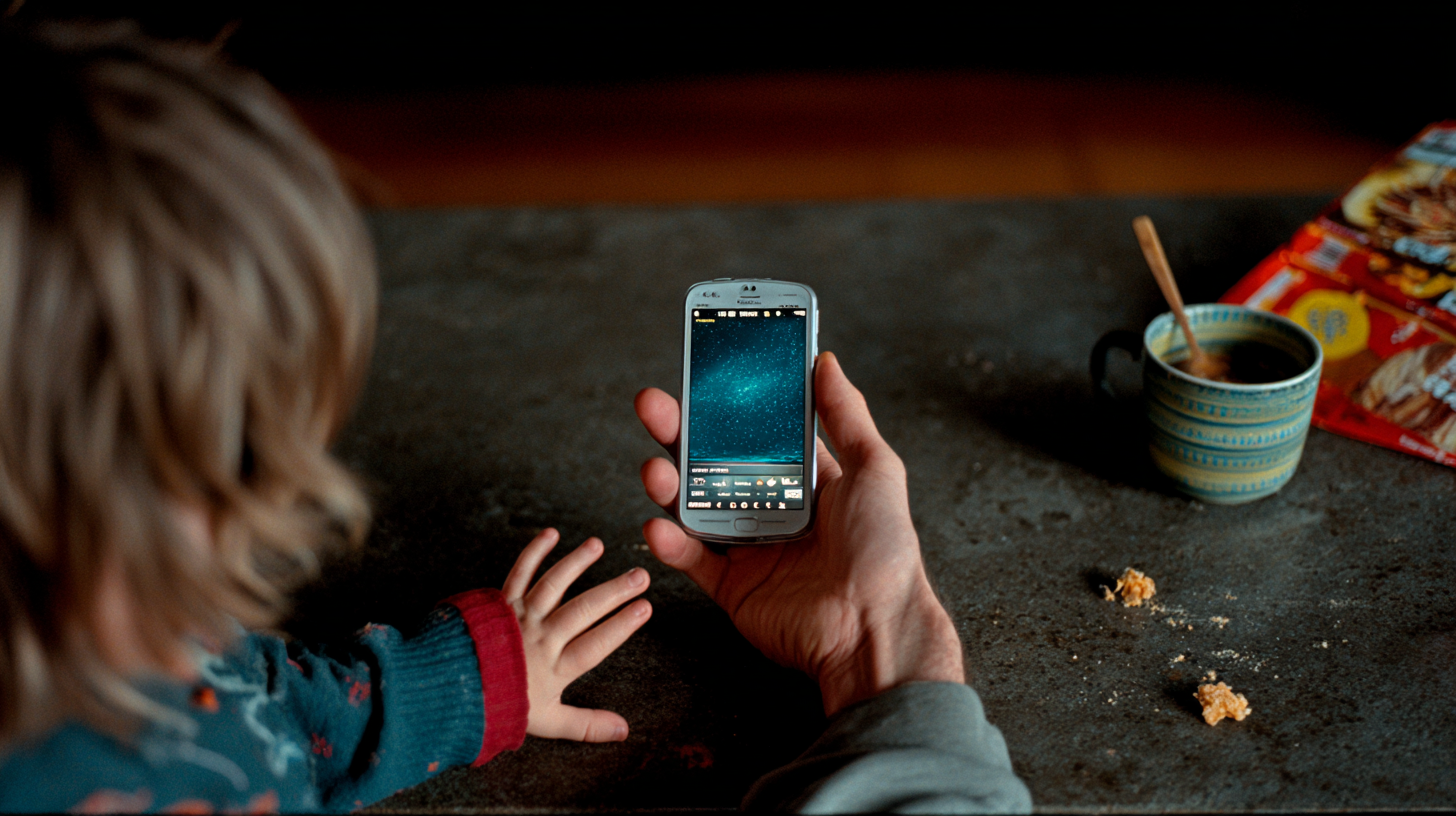
AI now sits inside that loop - indistinguishable in tone from authoritative medical guidance, and carrying none of the relational accountability that might interrupt it. It cannot notice that the person reading its answer is dysregulated. It cannot say I'm worried about you. It just answers. The next question is already loading.
This is the cost that doesn't show up in any metric. Not in GP appointment rates, not in A&E attendance, not in therapy referrals. It shows up in the room - in the quality of the therapeutic relationship, in how available a client actually is, in how much of the session is spent managing what the AI said at 2am rather than the thing the client came to talk about.
Why this matters for mental health care
There is no clinical framework that has caught up with this. NICE guidelines on health anxiety were written before any patient could receive a personalised differential diagnosis from their pocket at midnight.
There is little, if any guidance available that names AI as a variable in health anxiety presentations. Therapists are not yet routinely trained to ask what did the AI tell you? as a standard intake question - even though, for a growing number of clients, that is now the most clinically relevant question in the room.
Meanwhile, the backdrop is not reassuring. Trust in physicians and hospitals among US adults fell from 71.5% in April 2020 to 40.1% by January 2024. Cyberchondria did not cause that collapse. But it lives inside it, and AI is accelerating the conditions that make it worse.
 Matt Hussey
When trust in professional medicine is already fragile, a tool that speaks with clinical confidence but carries no clinical responsibility is not a neutral presence. It is an active force in a system already under strain.
The USF researchers who ran the Florida survey called for improved digital literacy and safeguards built into chatbots. Neither exists yet at any meaningful scale. What exists, for now, is a clinical gap - and the people falling through it are doing so quietly, at night, one search at a time.
Here's something important to name in all this: you weren't searching for a diagnosis. You were searching for the particular comfort of being told you are going to be alright. The internet was always a poor substitute for that.
The AI is a more convincing one - it speaks in full sentences, it listens to specifics, it sounds like someone who knows. The problem isn't that it answers. It's that it answers in exactly the voice you were hoping for, and still cannot give you the one thing you actually needed.