
Everyone's a Runner Now. But What Are We Running From?
Running used to be something people did. Now it's something people are. Here's what that shift reveals about who we've become - and what we're still avoiding.

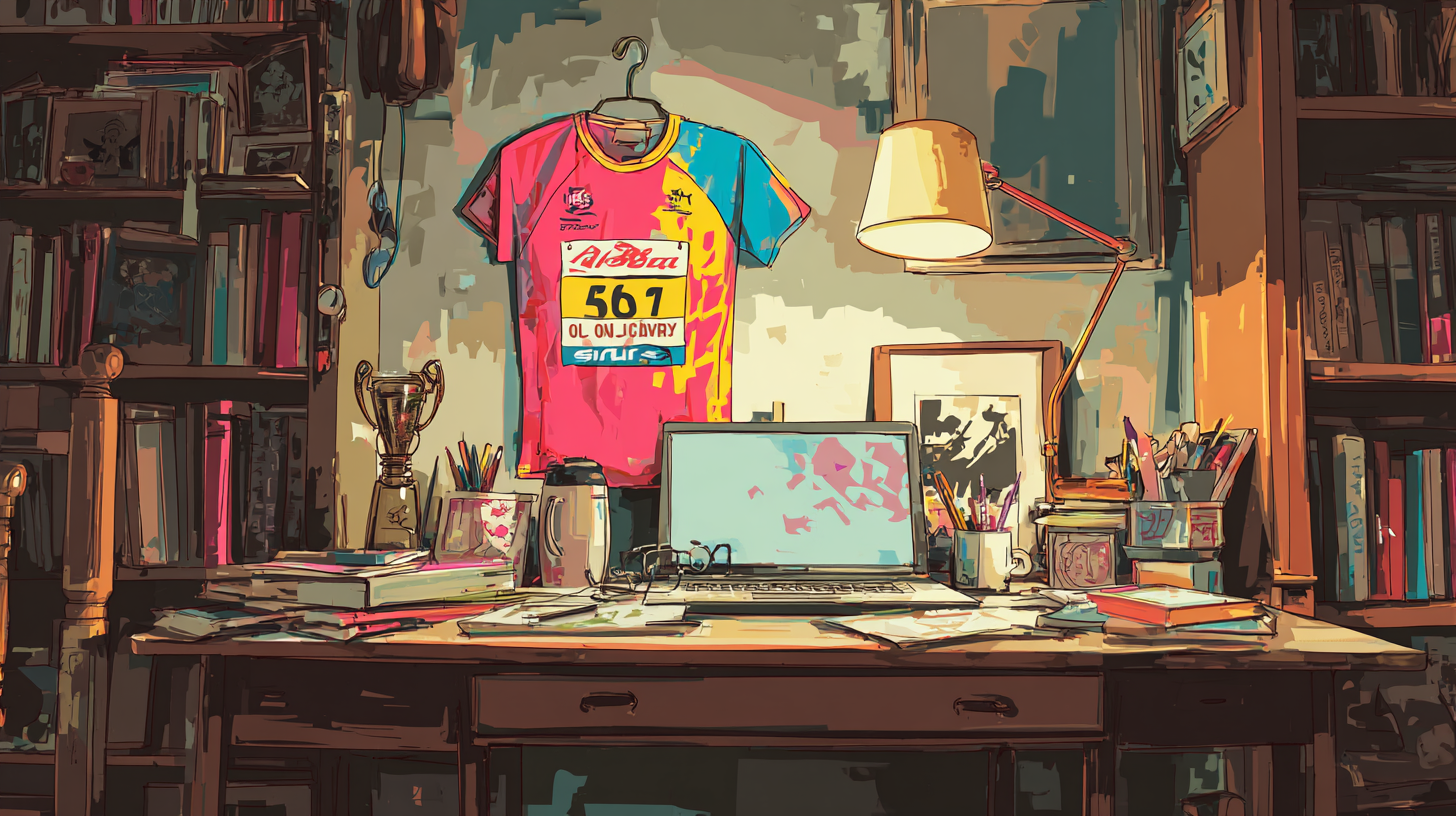
I've been watching a YouTuber for about three years. He makes videos from a tiny, meticulously arranged studio - same desk, same lamp, same small square of the world. He never appears to leave it. He's the kind of person you imagine exists entirely indoors, surviving on caffeine and food you microwave in pots. But last month, there was a race bib on his wall.
Not a prop. Not ironic. A real race bib, pinned up like a certificate, visible in the background of a video about something else entirely. The week after, he mentioned it - casually, mid-sentence - the way people mention things that have become part of who they are.
I noticed it because I'd already been noticing it everywhere else. A friend I've known for a decade, who has never once expressed interest in sport, now posts their Saturday parkrun times with the quiet regularity of someone filing a report. My father in law, who is in his 70s, completed a half marathon the other week - I think his 10th in the last five years. This isn't a coincidence. It's a cultural instruction. Running is a monster. And the numbers behind it are staggering.
 Matt Hussey
Forty per cent of the UK population now runs at least once a week. Sixteen million people in the UK have laced up in the past three months alone. A record 840,318 people applied for the London Marathon ballot in 2025.
Globally, Strava - the app that turns your runs into a social broadcast - now has 180 million users across 190 countries, and running club participation on the platform grew by 59% in a single year. There are, the last time I checked, more than 99 million posts on Instagram tagged #running. Ninety-nine million.
Running hasn't just become popular. It's become a personality. A shorthand for a certain kind of person. A thing that people - YouTubers, aunts, colleagues you've never seen move faster than a slow walk to a meeting - now use to announce who they are.
But why? I went and found out.
The Numbers Aren't the Story - But They Frame It
Running is, by Strava's own data, the fastest-growing social sport on the platform. Not just growing. The fastest-growing social sport full-stop. Before we get to the psychology behind that, it's relevant to look at when this all happened.
Running had been growing steadily in the 2000s, alongside other activities like cycling. People were becoming more mobile. But the number that stays with me - the one that reframes everything - is this: according to a RunRepeat survey, 28.76% of current runners started during the pandemic.
Nearly a third of the entire running population didn't exist as runners before March 2020. They were created in a specific moment of collective rupture. That's not a fitness trend. That's a psychological event that needs explaining.
March 2020: The Rupture That Created a Generation of Runners

Think back to what it felt like when the gyms closed.
Not the practical inconvenience - but the specific physical claustrophobia of suddenly having no prescribed container for your body. The commute gone. The office gone. The pub gone. The gym gone. And screens - which had previously been optional - becoming the entire texture of reality.
Something very old got activated in people. People who normally exercised just once or twice a week increased their exercise frequency by 88% during the early pandemic. They went outside. They ran.
Not, initially, because they wanted to be runners. But because the alternative was sitting inside a shrinking world, watching the news, and trying to locate themselves in a situation that made no sense. Running offered something screens couldn't: a body in space, moving, in actual contact with the physical world.
Matt Hussey
The rhythm of it. The bilateral, repetitive motion that neuroscience has long associated with nervous system regulation - the same mechanism that underpins EMDR therapy, the same quality of movement that research links to reduced anxiety and improved emotional processing. That tool became a defence against the mundanity of lock down.
Nobody ran in March 2020 because they wanted a Garmin. They ran because they needed to feel like they existed outside of a screen. The body, when sufficiently disoriented, asks for the most basic thing: to move.
What happened next is the interesting part. The pandemic ended - or rather, it released its grip - and the running didn't stop. It accelerated. The crisis behaviour became a habit, and the habit became an identity. What had begun as survival became a self-concept. And the question of why that particular behaviour crystallised into a personality is the thing worth pulling on.
Why Running Specifically? The Identity Economics of a Red Face and a Garmin
It's worth asking why running became the identity vehicle. Not swimming. Not cycling (though cycling too - but differently, with its own particular flavour of self-regard). Not yoga, not the gym, not hiking. But running.
The answer has nothing to do with cardiovascular fitness and everything to do with legibility. Running is brutally, publicly visible as effort. You cannot fake it. The red face, the heaving lungs, the soaked kit - these are not aesthetically flattering, which is precisely the point.
They are evidence. They cannot be photoshopped or carefully lit. When someone posts a post-run selfie, the suffering is written on their face in a way that a gym mirror selfie simply cannot replicate. Running carries proof of endurance, and endurance - in the current cultural moment - is a virtue.
It's also democratically accessible in a way that feels true, even if the economics complicate that. You need trainers and a road. The entry cost is low. And yet the social infrastructure that has built up around running - the races, the clubs, the GPS watches, the carbon-plated shoes (featured in 44% of all marathons logged on Strava in 2024, up 14% from 2023) - creates ample room for aspiration and expenditure.
Matt Hussey
Running is the sport that lets you believe you belong to something egalitarian while quietly spending £400 on shoes.
And then there's Strava's social infrastructure, which transformed the individual act of running into something performative in the most literal sense: a performance for an audience. Every run published is a small broadcast.
The route, the pace, the elevation. Strava logged 80 million sunrise activities in 2024 - which means 80 million times someone woke before the world did, went outside, and made that choice visible to others. The morning run isn't just exercise. It's a statement about the kind of person you are. Disciplined. Committed. Someone who shows up.
Running as Therapy You Don't Have to Talk About
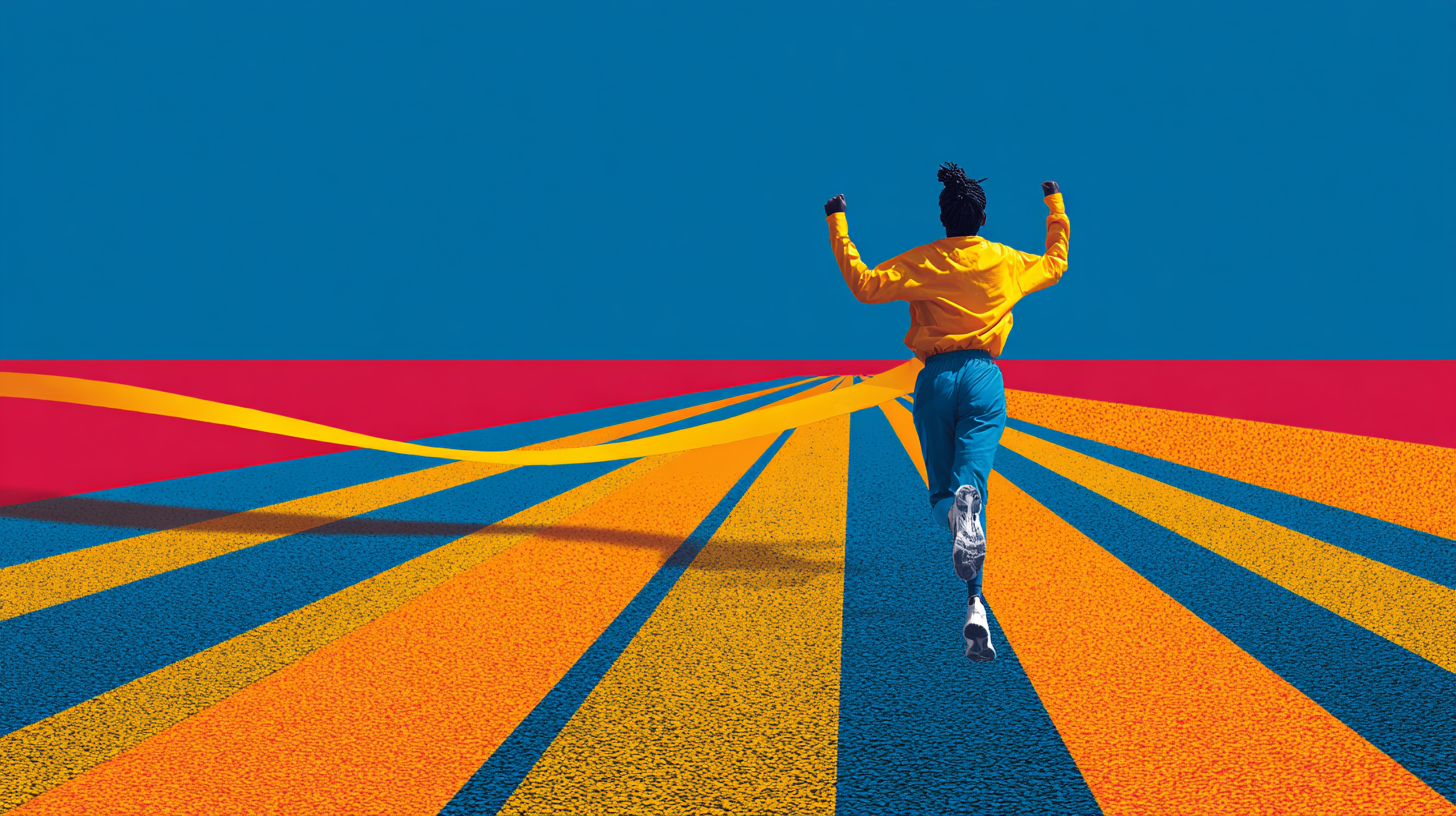
Running has become a message that therapy carries: the socially legible signal that you are working on yourself. But it's cheaper, it's shareable, and - critically - it doesn't ask you to feel anything uncomfortable while you're doing it.
I want to be careful here, because this isn't a critique of running. The psychological benefits are real. A well-being score of 56 among those who run at least once a week versus 45 for those who don't - that's a meaningful gap.
Three quarters of all runners agree that running is good for their mind as well as their body. The bilateral, rhythmic movement genuinely regulates the nervous system. The discipline of showing up, especially in the dark or the cold, genuinely builds something real.
But there is a distinction - one that I notice in the therapy room, and increasingly notice everywhere else - between exercise as a tool for emotional regulation and exercise as a substitute for it.
Matt Hussey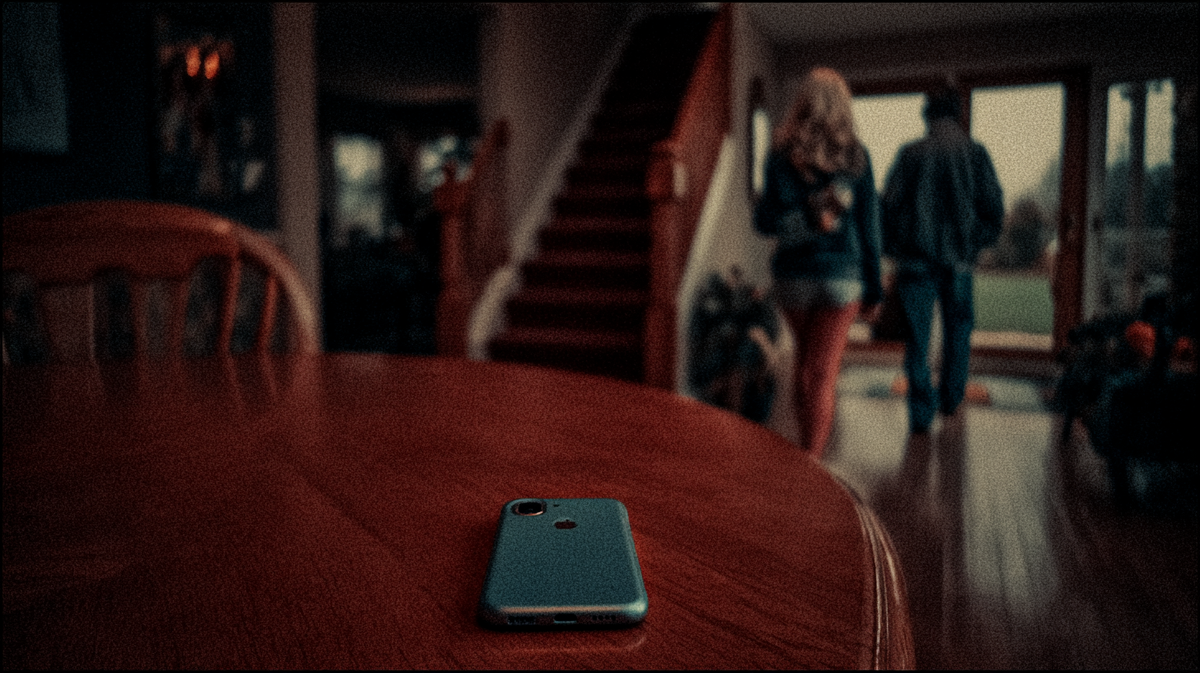
Call it performative endurance: the use of physical suffering as a proxy for psychological inquiry. The run is real. The effort is real. The regulation it produces is real. What it isn't, necessarily, is insight. You can run ten kilometres and return home feeling temporarily calmer without having moved an inch closer to understanding why you felt so bad when you left.
This matters because of what running has absorbed as cultural function. Fifty per cent of runners aged 25-34 agree that running is a part of who they are. Not something they do - something they are.
When an activity becomes an identity at that depth, it starts doing the psychological work that identity always does: it provides a self-concept that doesn't require you to examine the self underneath it.
The explosion in running clubs is interesting through this lens. A 59% increase in running club participation in 2024, with58% of respondents saying they made new friends through fitness groups.
Matt Hussey
Running clubs are, on their surface, a beautiful thing - community, accountability, shared purpose. But they are also, it's worth noticing, a form of intimacy that requires very little disclosure. You belong by showing up. You're welcomed by your consistency. Nobody asks what's going on. The conversation, reliably, is about the run.
That's not a flaw. It can be exactly what someone needs - especially someone for whom the vulnerability of therapeutic disclosure feels impossible. But it is worth naming what it is: connection through proximity and shared physical suffering, rather than through the kind of opening up that is harder to do and harder to quantify.
What the Brands Understood Before We Did: Running as Moral Performance
The brands didn't create the running identity. They read it, named it, and sold it back to us at scale.
Adidas's Run For The Oceans campaign is the cleanest example. Since launching in 2017, it has turned kilometres into environmental pledges - for every ten minutes of tracked running, the equivalent of a plastic bottle is removed from the ocean.
By 2019, the campaign had raised $1.5 million and engaged nearly a million runners worldwide. The mechanism is elegant: it takes a private act (going for a jog) and attaches it to a public moral purpose (saving the ocean). Your run is now a contribution. Your data is now a donation.
This is the logical endpoint of the identity economy of running: the sport didn't just become a personality, it became a virtue. You are not just disciplined. You are environmentally conscious. You are not just consistent. You are part of something larger than yourself.
Matt Hussey
Strava understood the same thing from a different angle. Their annual Year in Sport report - the fitness equivalent of Spotify Wrapped - reflects back to each user a curated narrative of their year as an athlete. Here is who you were. Here is how far you ran. Here is the community you ran with. Share it.
The psychological mechanism is identical to every other platform that has learned to produce shareable identity: take a person's behaviour, algorithmically reframe it as character, and invite them to distribute that framing to their network.
Gen Z is 75% more likely than Gen X to cite racing as motivation for running, and 40% of Gen Z Strava users want to exercise with friends more in 2025. The run club, for the youngest runners, isn't a fitness tool - it's a social infrastructure.
Gen Z are actively replacing pub nights with run club meetups. Which is fascinating. The pub is transactional, unstructured, requires you to simply exist in a space and make conversation. The run club gives you something to do, a shared purpose, a reason to be together that isn't just togetherness. It is, in its own way, a lower-stakes form of belonging.
The brands selling running understand that they are not selling fitness. They are selling a version of yourself that you can wear on your wrist, post on Strava, and pin a race bib on your wall to prove.
What We're Actually Running From - and Why That's Not the Whole Story
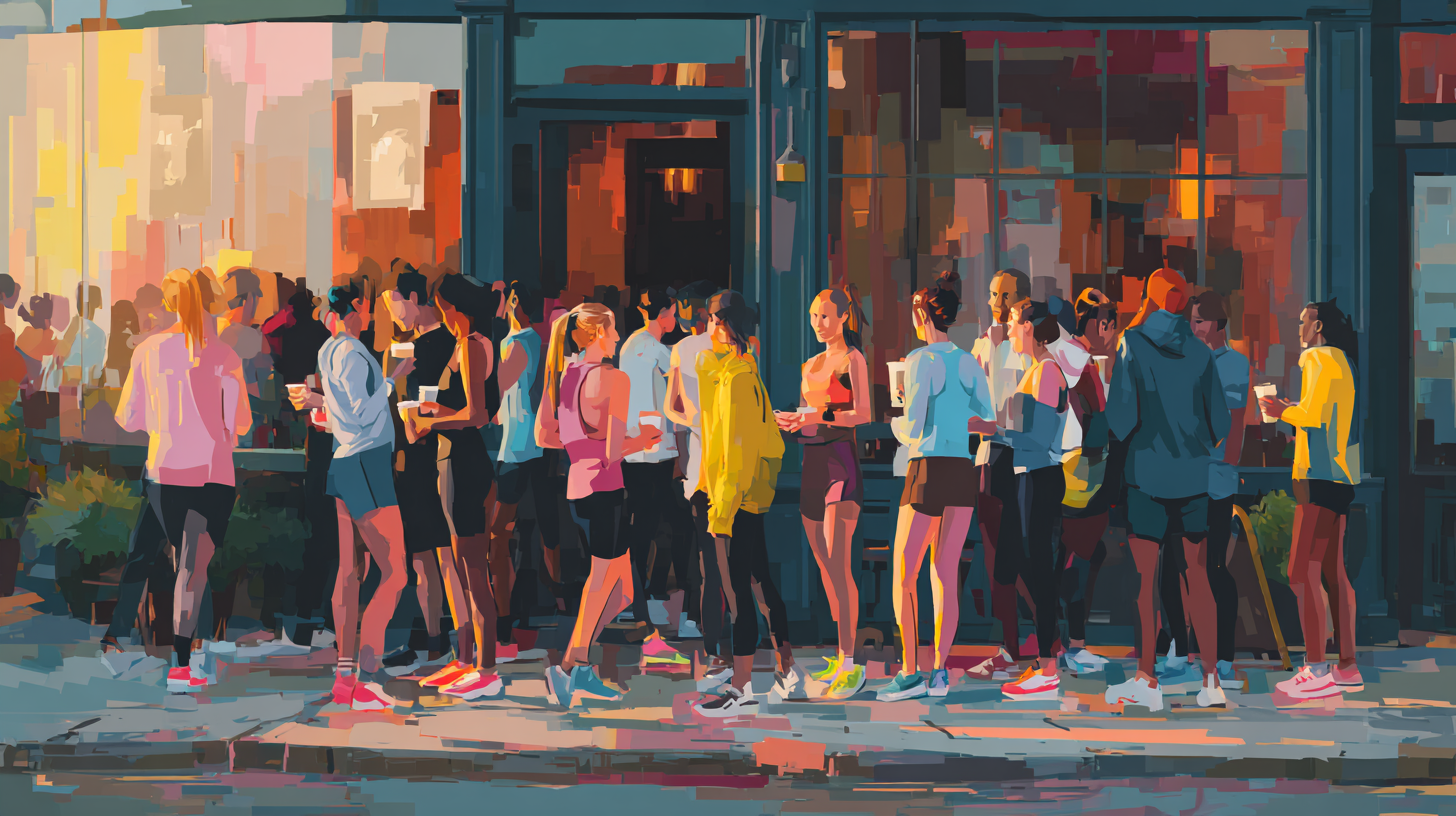
I want to end somewhere honest, because the essay's title poses a question it would be cheap to answer simply.
Running from something implies that what you're doing is flight. And for some people, some of the time, that's accurate. The run is what stands between them and the contents of their own head. It's the daily management of an internal state that would otherwise overwhelm them. That's not a trivial thing. That's a real thing. And the fact that it works - that the bilateral rhythm, the physical exhaustion, the accomplished distance genuinely quietens something - means it's not nothing. It's medicine, of a kind, even when it isn't labelled as such.
But here's what I've noticed, both clinically and in the growing world of people who run: the most honest runners aren't the ones with the best times. They're the ones who will tell you, usually in a moment of unexpected candour, that they run because otherwise they can't sleep, or because the anxiety gets too loud, or because sitting still with their thoughts is something they haven't yet learned to tolerate.
They say it without embarrassment, which is itself significant. There is something about the post-run state - the chemical quietness, the earned tiredness - that loosens the guard enough to tell the truth.
Matt Hussey
Fifty per cent of runners aged 25-34 say running is part of who they are. The question underneath that statistic - the one that deserves more space than it currently gets - is: who were they before the running? Not worse. Not less valid. But perhaps less certain.
Running gave them a self that felt solid, legible, and earned. In an era where almost every other form of identity is contested, conditional, or algorithmically assembled, there is something almost touching about a sport that simply rewards you for showing up and going the distance.
The issue isn't that people run to feel better. The issue is when running becomes the only available answer to a question that might need more than a kilometre to resolve.
The most useful thing running can do - and occasionally does - is exhaust the noise enough to let the real question surface. The runner's high, at its best, isn't euphoria. It's clarity. A few minutes of genuine quiet in which, if you're paying attention, you might notice what you've been outrunning.
Most of us aren't there yet. We're still lacing up.