Solastalgia: The Climate Grief Your Therapist Has No Map For
Millions of people are grieving landscapes that have already changed beyond recognition - not a future catastrophe, but a present one. There's a word for it. And the mental health profession still doesn't know what to do with it.
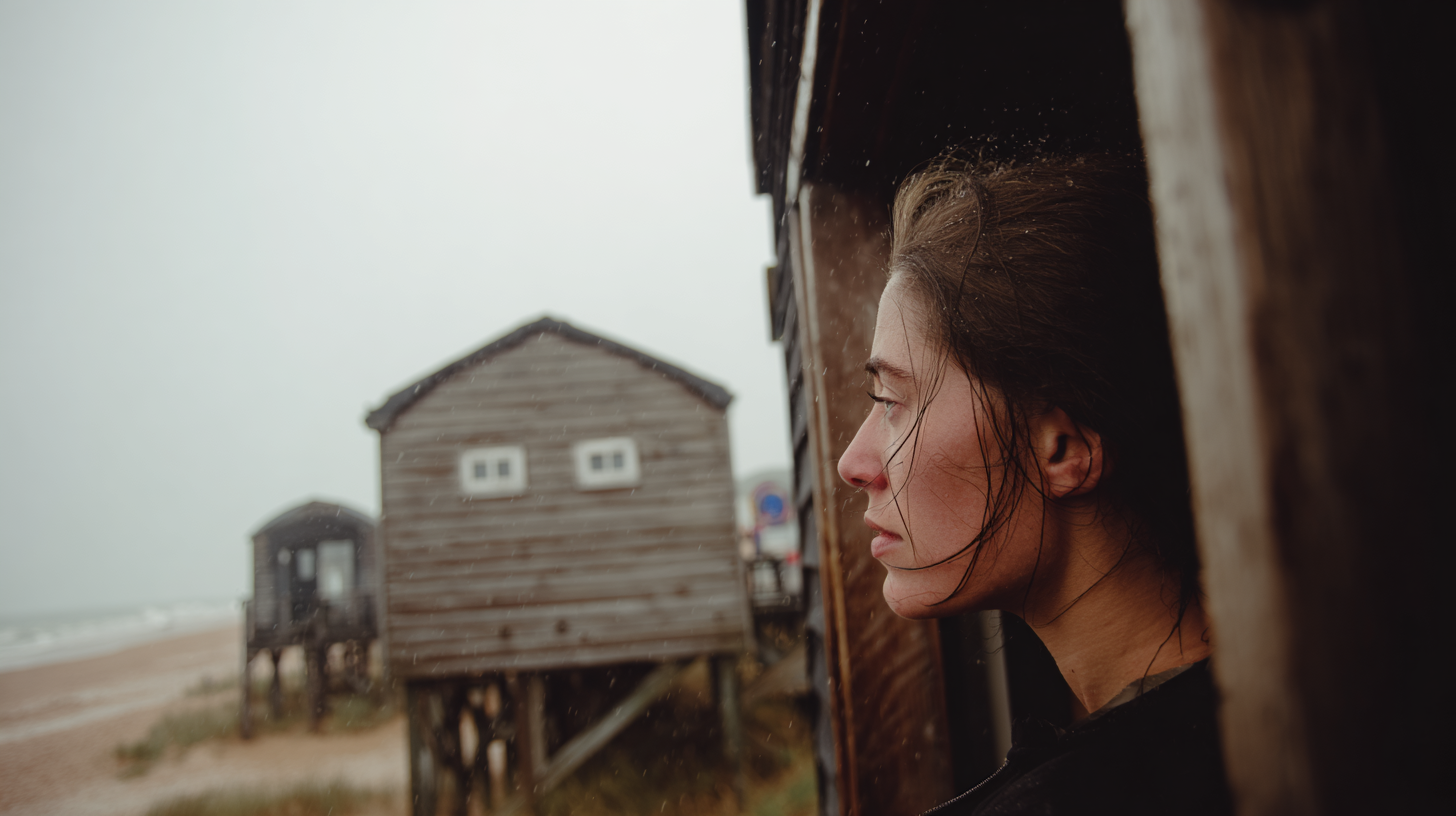
"We had a bungalow further to the coast... There was a road up there, but it's gone in the sea now and our bungalow has gone."
The person who said this wasn't describing a flood. There was no storm, no emergency broadcast, no single moment of catastrophe to point to. Just the slow, incremental fact of it: a road, then a bungalow, then the ground beneath them - taken, over years, by water that didn't care what had been built there.
What do you call the grief that follows something like that? Not the acute shock of sudden loss, but the long, accumulating weight of watching a place you knew - a place that held you - disappear by degrees?
There is a word for it. Most therapists have never heard it. It's called solastalgia - a word coined in 2003 by the Australian environmental philosopher Glenn Albrecht to describe a specific kind of pain.
Not nostalgia - which is the grief for a place you have left. Solastalgia is the grief for a place you are still standing in. The homesickness you feel when you never moved - but the home did.
The Holderness coast in East Yorkshire is the fastest eroding coastline in Europe, losing approximately 1.8 metres of land per year. Residents there - many of whom have watched roads, houses, and farmland simply slide into the North Sea - have been submitting evidence to a parliamentary inquiry into climate and weather resilience since late 2025.
One academic submission to that inquiry explicitly described the psychological toll using Albrecht's term: long-term anxiety, stress, and mental anguish. Solastalgia. This wasn't a clinical setting. It was a parliamentary evidence document. The word is moving, whether the profession is ready or not.
 Matt Hussey
But Holderness is only the most visible instance of something much wider. Across the UK - and across the world - people are carrying a form of grief that doesn't fit any of the categories therapy was built around. Seasons that arrive wrong. Woods that are quieter. Rivers that run the colour they didn't used to.
A sense, ambient and chronic, that the particular texture of the world they were attached to is dissolving - and that there is nowhere to bring this that will be properly received.
"Solastalgia is a condition of existence, an emotion, not a lesion on the brain."
Glenn Albrecht, Philosopher - Earth Emotions (Cornell University Press)
The Evidence
In August 2025, a team at the University of Zurich published a scoping review in BMJ Mental Health - the most comprehensive clinical assessment of solastalgia to date, drawing on 19 studies and data from more than 5,000 participants across Australia, Germany, Peru, and the US.
Their finding was unambiguous: solastalgia is consistently associated with depression, anxiety, and PTSD. It appears to be clinically significant across a wide range of populations - from farming communities affected by drought to urban residents in cities like Amsterdam and Lahore.
They also found something that should concern the profession more than it currently does: the strength of the association was stronger for ongoing, chronic environmental destruction than for discrete natural disasters. In other words, the slow loss - the kind that never makes the news - may be doing more psychological damage than the kind that does.
In the research, 59% of young people aged 16-25 across 10 countries reported being "very or extremely worried" about climate change - with more than 45% saying these feelings were already affecting their daily functioning. More than half reported feeling sad, anxious, angry, powerless, helpless, or guilty.
 Matt Hussey
A separate study, published by Simon Fraser University in February 2026, synthesised 48 international qualitative and mixed-methods studies on climate emotions in children and adolescents.
It found something sharper and more specific than the 'eco-anxiety' frame usually captures: grief and mourning for disappearing species and landscapes; anger aimed at older generations; and what researchers called eco-paralysis - the psychological shutdown that occurs when individual action feels pointless against planetary-scale loss.
The report called for school curricula, therapeutic support, and policies that treat these emotions as real - not as overreactions, and not as the same thing as clinical anxiety.
The Clinical Gap
Here is the problem. Grief therapy, as it is currently practised, requires an event. A death, a departure, a date you can point to: before this, and after this. Solastalgia has none of those.
At its most severe, eco-distress involves worry, rumination, intolerance of uncertainty, avoidance, and doomscrolling - a symptom constellation that looks like generalised anxiety disorder and responds poorly to the standard CBT approaches developed for it, because the threat is real and ongoing rather than catastrophised and contingent.
The Zurich team were explicit in their conclusions: they called for research into whether conventional methods for grief disorders, depression, or anxiety can treat solastalgia - or whether new specialised approaches are necessary. That question remains unanswered. The profession is being asked something it isn't ready to answer.
 Matt Hussey
Neither NICE, nor BACP, nor the APA have published clinical guidance specifically for solastalgia or place-based ecological grief. The Climate Psychiatry Alliance has begun training clinicians in place-based grief, but this is fringe work, not mainstream protocol.
Most therapists are encountering this in the room - a client who is grieving something large and ambient and unnameable - and reaching for frameworks that were never designed for it. They give it another name. They treat it as anxiety. They look for the cognitive distortion. And they miss what is actually happening: a person in mourning for a world that is changing faster than their sense of it can keep pace.
A December 2025 perspective paper in Climate and Development put this bluntly: solastalgia represents a failure of psychiatric systems to recognise a clinically significant and globally widespread form of suffering. It is, the paper argues, both a diagnostic gap and an ethical failure. The world is full of people whose distress is being misclassified - or not classified at all - because the profession has not yet built the category they belong to.
The Wider Ripple
There is a class dimension to this that rarely gets named. Solastalgia tends to affect wealthier populations less - those with the financial flexibility to move, to rebuild, to access environments that have not yet been degraded.
It lands hardest on farming communities, coastal residents, rural populations, indigenous peoples, and those in areas of long-term industrial damage. These are, by and large, the same communities least likely to have access to therapy at all - and least likely to encounter a therapist trained in climate psychology if they do. The clinical vacuum is, like most clinical vacuums, not distributed equally.
In the UK, the EFRA committee's parliamentary inquiry into climate and weather resilience, launched in September 2025, received evidence from communities across the Isle of Wight, North Norfolk, Suffolk, and the Holderness coast - populations documenting not just the material loss of land but the psychological and social fractures that come with it: abandonment, identity loss, a community's sense of itself dissolving.
 Matt Hussey
None of the policy solutions being discussed are mental health interventions. They are engineering ones. The psychological toll remains, largely, invisible at the policy level.
The woman on the Holderness path still walks it. She can't entirely explain why. The landscape she loved is reduced - it keeps reducing, by that metre each year - and yet she goes back.
Maybe it is the same reason people visit graves. Not because the person is there. Because some grief insists on being witnessed in the place where the loss occurred. Even when the place is the thing that's gone.
What solastalgia asks of the therapy profession is something genuinely new: a framework for grief that doesn't require a body, a date, or a boundary. Grief that is collective and ongoing. Grief that is, in the most literal sense, about home. The profession hasn't built that yet. The world, meanwhile, keeps changing.